
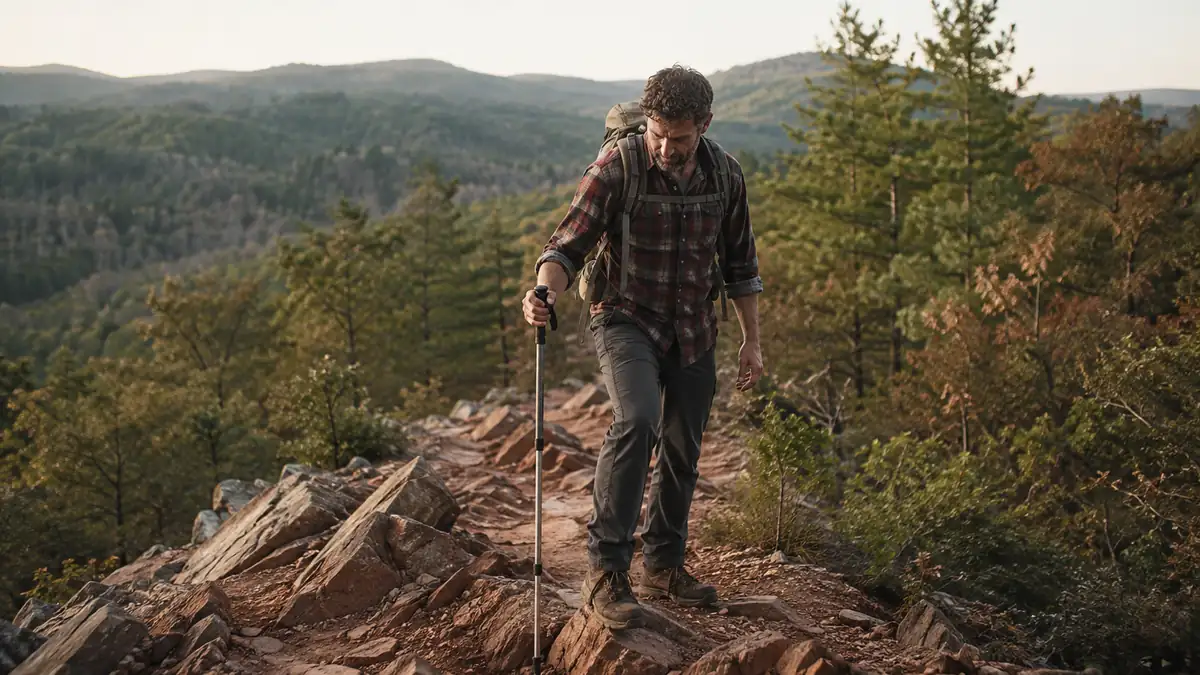
If you want the short answer before I walk you through why: I've had a pair of TrailBuddy trekking poles in my truck bed and on my back for two full seasons now, through creek crossings in the Winding Stair range and steep switchbacks I had no business climbing without help, and they're still the poles I reach for on every trip out. Cascade Mountain Tech makes a good pole too, particularly their carbon fiber line, and I'm not going to stand here and tell you it's a bad buy, because plenty of hikers I trust swear by it. But aluminum and carbon fiber solve the trail differently, and if you're standing in the aisle trying to pick between a pair of TrailBuddy poles and a Cascade Mountain Tech set, you need to know exactly what you're trading before you hand over your card.
Here's the trade-off that actually matters, and it's the one most gear reviews gloss over. Cascade Mountain Tech built a name for itself on carbon fiber shafts, and carbon is lighter in the hand, no argument there. Swing a carbon pole all day on a long ridge walk and your arms will thank you by mile eight. But carbon has a failure mode that aluminum doesn't. When it gets pinched wrong, wedged in a rock crack, or loaded sideways while you're catching yourself on a scramble, it can snap clean instead of giving. I watched it happen to a hiking partner on a trip through the Ouachitas, a good pole one minute and two useless pieces the next. TrailBuddy's poles are 7075 aluminum, the same grade you'll find in a lot of climbing gear, and aluminum bends before it breaks. That's not a small distinction if you're off trail, working a game trail through brush, or crossing rock where a pole is going to take a real hit sooner or later. Neither one is objectively wrong. It's a question of whether you'd rather carry a little less weight or trust your pole to bend instead of shatter the one time it really counts.
This isn't a comparison I built off two spec sheets sitting at a desk. I've run TrailBuddy poles through two full hunting and hiking seasons, on ground that ranges from packed forest service road to loose rock scrambles above 2,000 feet, in temperatures from a sweaty August afternoon to a frosted-over November morning. I've borrowed a buddy's Cascade Mountain Tech carbon poles for enough trips, including a five-day stretch through rougher country, to know how they behave under the same kind of load. Neither pole showed up here off a marketing page. Both have been in the mud, both have caught a fall or two, and both have earned their place in this comparison the hard way.
| TrailBuddy | Cascade Mountain Tech | |
|---|---|---|
| Shaft Material | 7075 aluminum, built to flex under a hard sideways load | Carbon fiber on their higher-end models, stiffer and lighter in hand |
| Durability Under Impact | Bends or dents before it fails outright, still usable after a bad hit | Lighter, but can shatter or splinter if pinched or loaded wrong |
| Weight Feel | A bit more heft in the hand, noticeable on a long ridge day | Lighter swing weight, easier on the arms mile after mile |
| Lock Type & Adjustment | Flip-lock clamps, quick to adjust even with gloves on | Twist-lock or flip-lock depending on model, needs a firm hand to seat right |
| Grip & Strap Comfort | Cork-blend grip with an extended lower section for uphill grabs | EVA foam grip, comfortable but wears smoother over a season |
| Accessories Included | Trail baskets, snow baskets, rubber tips, and a carry bag in the box | Basket and tip options vary by model, often sold separately |
| Best Use | Rocky, technical, off-trail terrain where a pole takes real abuse | Long-mileage trail days where shaving ounces matters most |
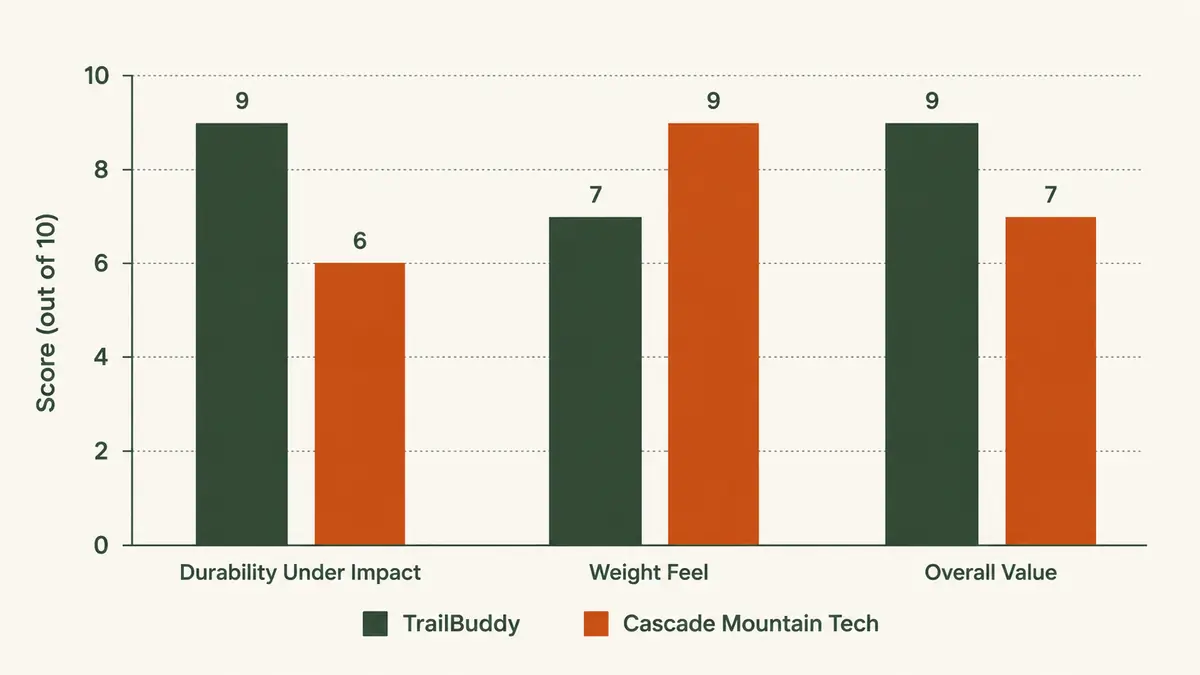
After two seasons I started keeping a simple field score for both poles, nothing official, just my own gut rating out of 10 for how each one actually performed on real ground. TrailBuddy scored a 9 out of 10 on durability under impact against Cascade Mountain Tech's 6 out of 10, which lines up with everything I've watched happen to both poles firsthand. On weight feel in the hand, Cascade Mountain Tech edged ahead, a 9 out of 10 next to TrailBuddy's 7 out of 10, and that's the honest tradeoff for carrying an aluminum shaft. On overall value for what ships in the box, TrailBuddy scored a 9 out of 10 against Cascade Mountain Tech's 7 out of 10, mostly because of what comes included versus what you end up buying separately.
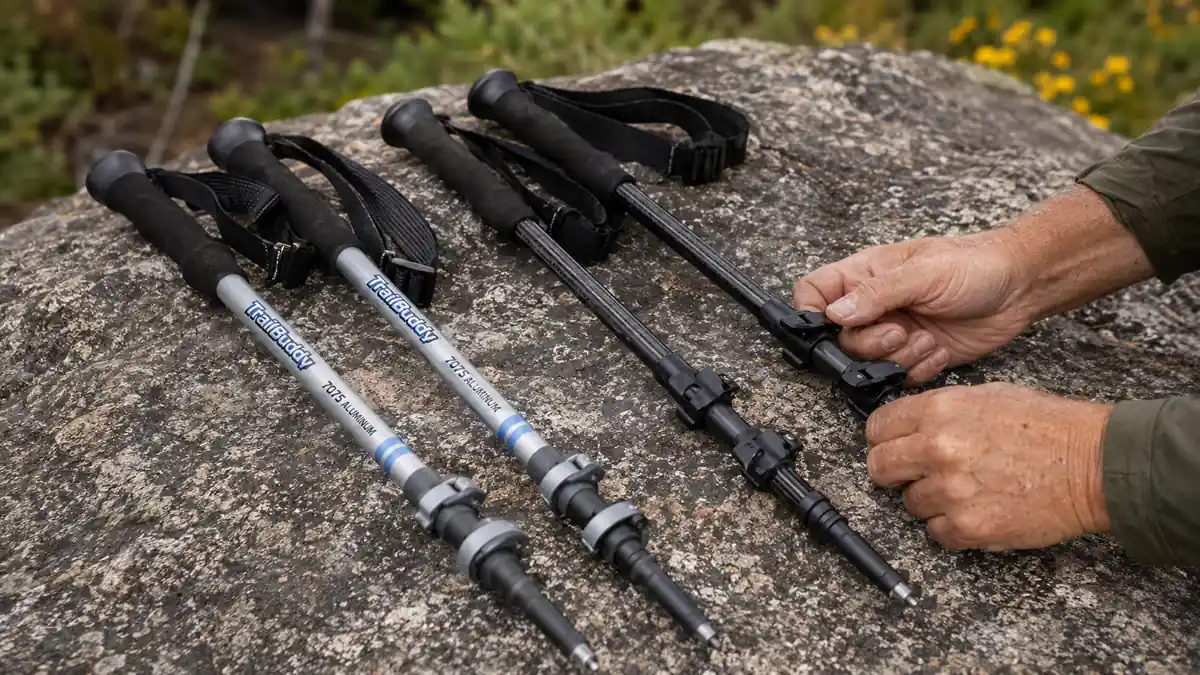
Where TrailBuddy Wins
TrailBuddy earns its keep on the kind of ground that punishes gear. That 7075 aluminum shaft has taken hits over two seasons that would have ended a lighter carbon pole, wedged between rocks on a creek crossing, jammed hard catching a slip on wet leaf litter, leaned on harder than I probably should while easing down a steep grade with a full pack. Every time, the pole bent a hair or just held, and I kept moving instead of standing there looking at two broken halves. The flip-lock clamps are the other piece I've come to count on. Cold mornings with numb fingers, gloves on, trying to adjust pole length before first light, and the flip-lock still locks down solid without me fumbling with a twist mechanism that needs a firmer grip than my hands have at 5 a.m. in November. The extended cork-blend grip matters more than it sounds like it would too. On a steep uphill push I choke down on the lower grip section instead of readjusting pole length every time the pitch changes, which saves real time on a long climb.
The other place TrailBuddy pulls ahead is simply taking load off my knees and hips on the way down. I'm not a young man anymore, and after a long descent with a loaded pack, having poles that plant solid and don't flex unpredictably under my weight makes the last two miles back to the truck a lot more manageable. That's not a medical claim, just a plain fact about carrying less of your own weight through your legs on a steep grade. In my full review of the TrailBuddy poles I go into more detail on how they've held up trip after trip, but the short version is this: I've put these through mud, rock, ice, and brush, and they're still the pair I grab first, not a backup pair I keep around in case the good ones fail.
What sold me on TrailBuddy long term wasn't any single feature, it was what came in the box and never needed replacing. Trail baskets for dirt and rock, snow baskets for the handful of cold weather trips I take every winter, rubber tips for road walking into a trailhead, and a carry bag that's held up better than I expected. Cascade Mountain Tech often sells those extras separately depending on the model, which is a small thing until you're standing at a trailhead in October wishing you'd packed the snow basket you never bought.
Where Cascade Mountain Tech Wins
Cascade Mountain Tech deserves real credit here, especially in their carbon fiber models. If you're the kind of hiker logging serious mileage, long ridge walks, thru-hike style days where every ounce in your hand matters by mile fifteen, that lighter swing weight adds up. A friend of mine who put in a long stretch of the Ouachita Trail last spring ran a pair of their carbon poles the whole way and never once complained about arm fatigue, which is saying something on a trip that long. The lock adjustment on their models, once you get the hang of seating it right, holds fine on groomed trail where you're not putting a pole through the kind of sideways stress that off-trail terrain throws at you. For a hiker who sticks to maintained trail systems and cares more about shaving weight than surviving a hard lateral hit, Cascade Mountain Tech is a legitimate, well-built option, and I wouldn't talk anybody out of it.
Where it gets shakier is exactly the terrain I spend most of my time in, rock scrambles, creek crossings, brush-choked game trails where a pole gets wedged or loaded wrong more often than not. Carbon doesn't forgive that kind of abuse the way aluminum does. I'm not saying every Cascade Mountain Tech pole out there is going to snap on you, most hikers never push a pole hard enough sideways to find that limit. But if your trips run rougher than a groomed trail, that's the tradeoff you're accepting for the lighter feel in your hand, and it's worth knowing before you're the one standing there with half a pole.
I'll also give Cascade Mountain Tech credit on price, since their aluminum-model lineup competes fine on cost with TrailBuddy, and their carbon models, while pricier, still land in reasonable territory for what carbon fiber usually runs. If budget and ounces are your two top priorities and you're mostly on maintained trail, that combination is hard to argue with. It's only once the terrain turns rougher, or the trip runs long enough that a broken pole means real trouble, that I start steering people back toward aluminum.
Tired of Trekking Poles That Snap the One Time You Need Them?
A pole that shatters on a hard sideways hit leaves you stuck a mile from the truck with a bad knee and no support. TrailBuddy's 7075 aluminum shaft bends before it breaks, and it's the pair I've trusted through two full seasons of rock, mud, and steep country.
Amazon Check Today's Price on Amazon →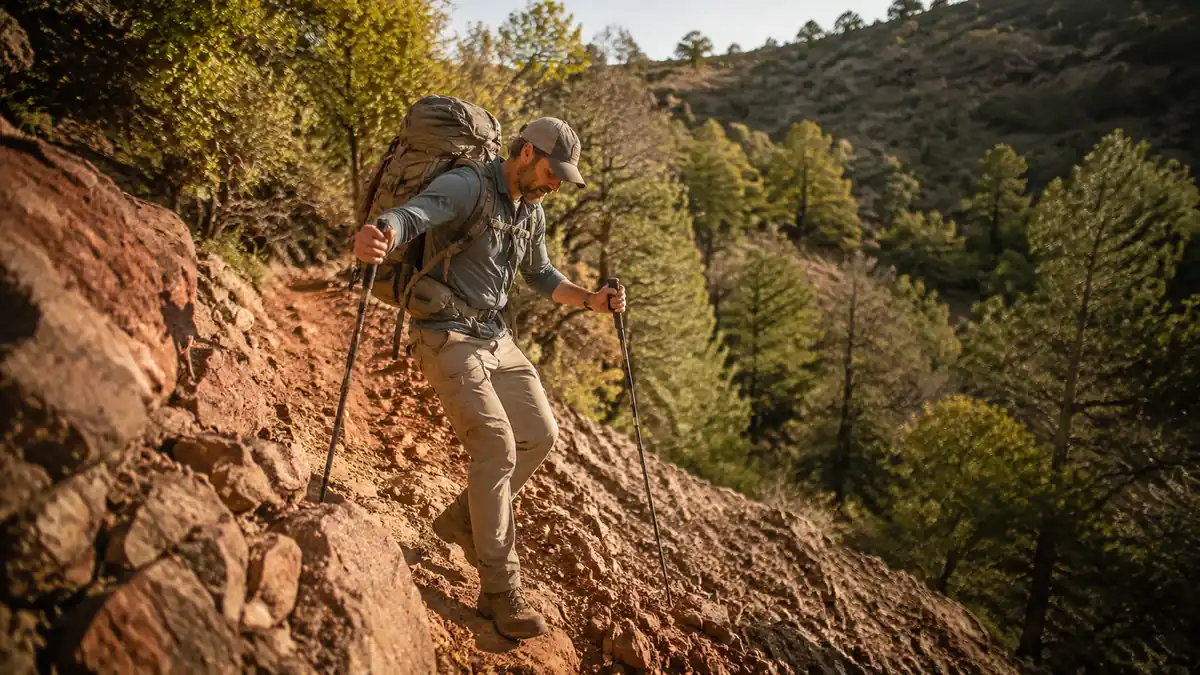
Who Should Buy Which
If most of your hiking happens on maintained trail, long-mileage days where you're counting ounces and not worried about wedging a pole in a rock crack, Cascade Mountain Tech's carbon lineup is worth a look, and I won't talk you out of it. But if your trips run rougher, off-trail scrambles, creek crossings, hunting country where a pole takes real abuse and needs to still work when you're two miles from the truck, TrailBuddy is the pair I'd hand you. I've gone back over the honest verdict after a season of use more than once when a buddy asks if these poles are worth carrying, and the answer hasn't changed: they took a beating and kept working.
Cost is worth checking too, since it shifts from one week to the next, but neither of these poles is going to wreck a gear budget. Buy the one that matches the ground you actually cover, not the one that looks lightest on a store shelf. For me, on the kind of country I hike, hunt, and haul gear through, the choice comes down to aluminum that bends over carbon that might not, and that's why TrailBuddy rides in my pack on every trip out, not just the easy ones.
One more thing worth saying plainly: I don't think anybody who buys Cascade Mountain Tech is making a mistake. I've hiked next to guys running their poles for years without a single problem. But when someone new to backcountry travel asks me point blank which pole to buy first, before they know their own terrain and habits well enough to make that tradeoff themselves, I hand them TrailBuddy every time, because it forgives more mistakes than a lighter pole will.
Don't Let a Broken Pole End Your Trip Early
Two seasons of rock, mud, and steep country, and my TrailBuddy poles are still the pair I grab first every time I load the truck.
Amazon Check Today's Price on Amazon →