
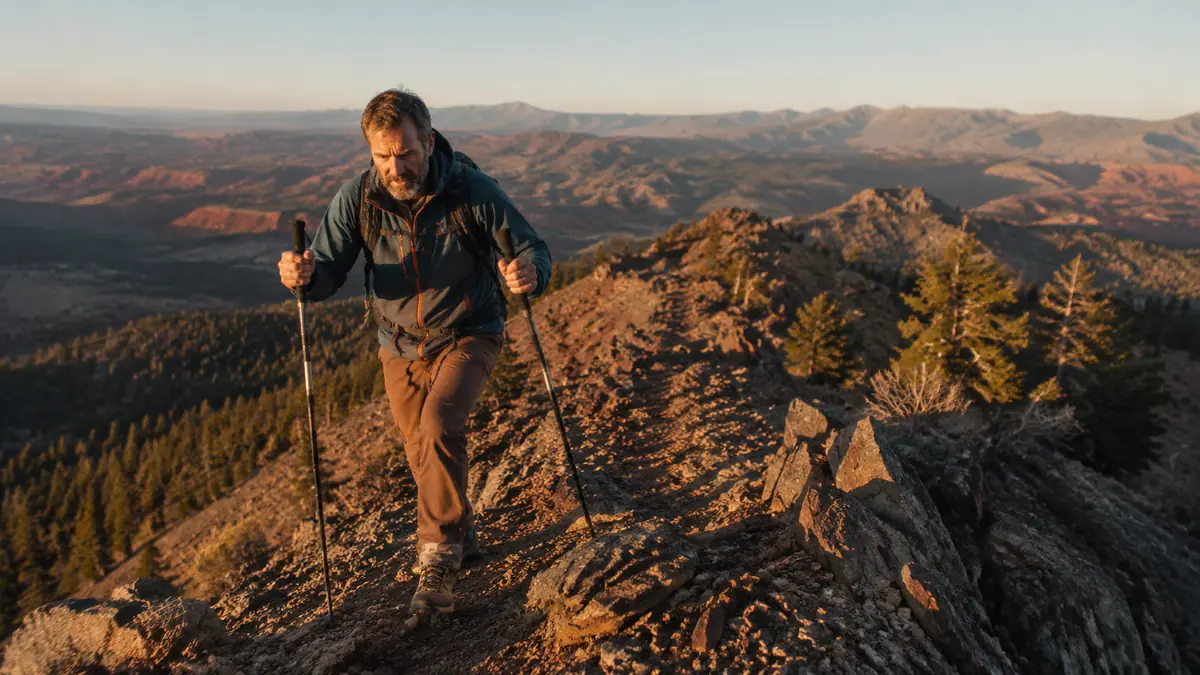
I bought my first pair of TrailBuddy trekking poles the same week I tore up my knee coming down a scree field wrong, favoring one leg the whole way to the truck. That trip taught me something I should've known already: going up a mountain is optional pain, coming down is where your knees actually pay the bill. I'd resisted poles for years, figured they were for folks who needed the help more than I did. I was wrong, and I found that out the expensive way.
This isn't a first-impressions review written after one weekend hike. I've had these poles in my truck and on my back for a full season now, from early spring mud to the start of fall when the trails get slick with wet leaves. They've been up ridgelines, across creek crossings, and through more scree fields than I care to count. Here's what held up and what wore.
The Quick Verdict
After a full season on steep, rocky trails, the TrailBuddy poles earn their keep on weight and grip comfort, though the flip locks need a firm hand and I wouldn't call them bombproof for someone who's hard on gear.
Amazon Check Today's Price →Tired of your knees filing a complaint every time you drive home from a hike?
The TrailBuddy trekking poles are the pair I reach for on every trail now, from a flat evening loop to a full-day ridgeline push. Check today's price and see why they've earned a permanent spot strapped to my pack.
Amazon Check Today's Price on Amazon →How I've Used Them
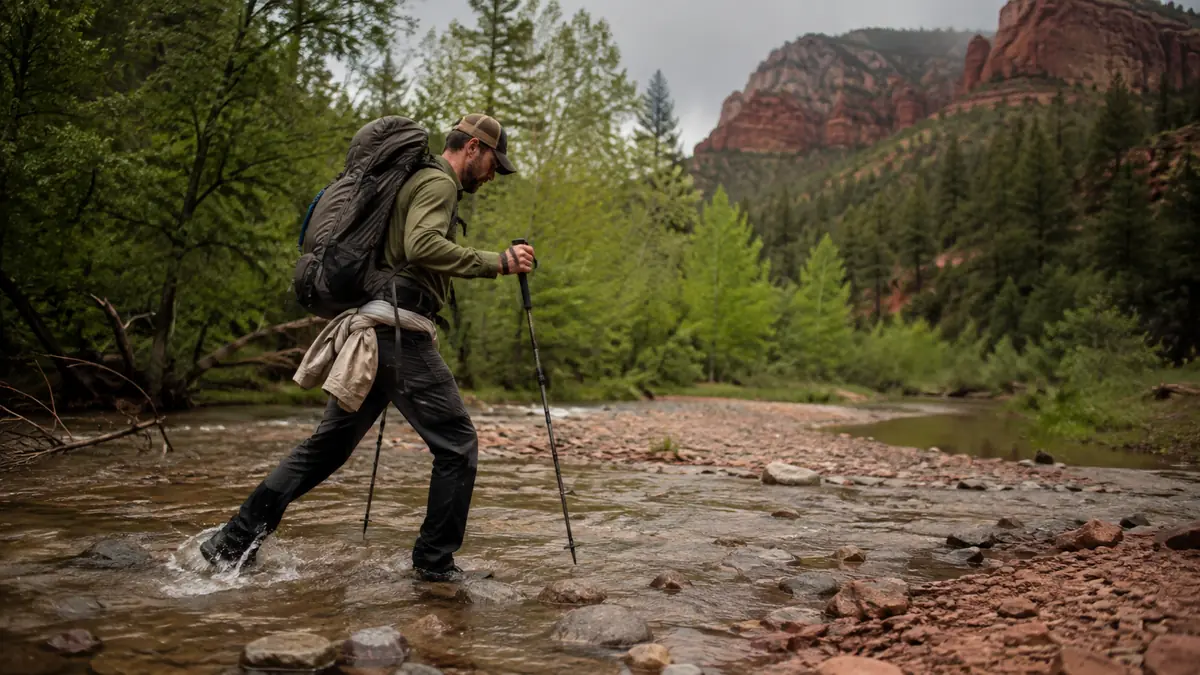
My trails aren't groomed park paths. Most of what I hike is red-dirt ranch country and rougher backcountry, loose rock, washed-out switchbacks, the kind of terrain where a bad step actually matters. I've used the TrailBuddy poles on maybe thirty outings this season, everything from a quick two-mile evening walk to a full-day ridgeline push where I was out from before sunrise to well after dark. I've also leaned on them hard during a couple of creek crossings where the current was moving faster than I liked and having a third and fourth point of contact kept me from taking an unplanned swim.
I didn't treat these poles gently either. They've been dropped on rock, jammed into mud up to the basket, and strapped to the outside of a pack getting knocked around on the drive out more times than I can count. That's the kind of handling that tells you something a store shelf never will.
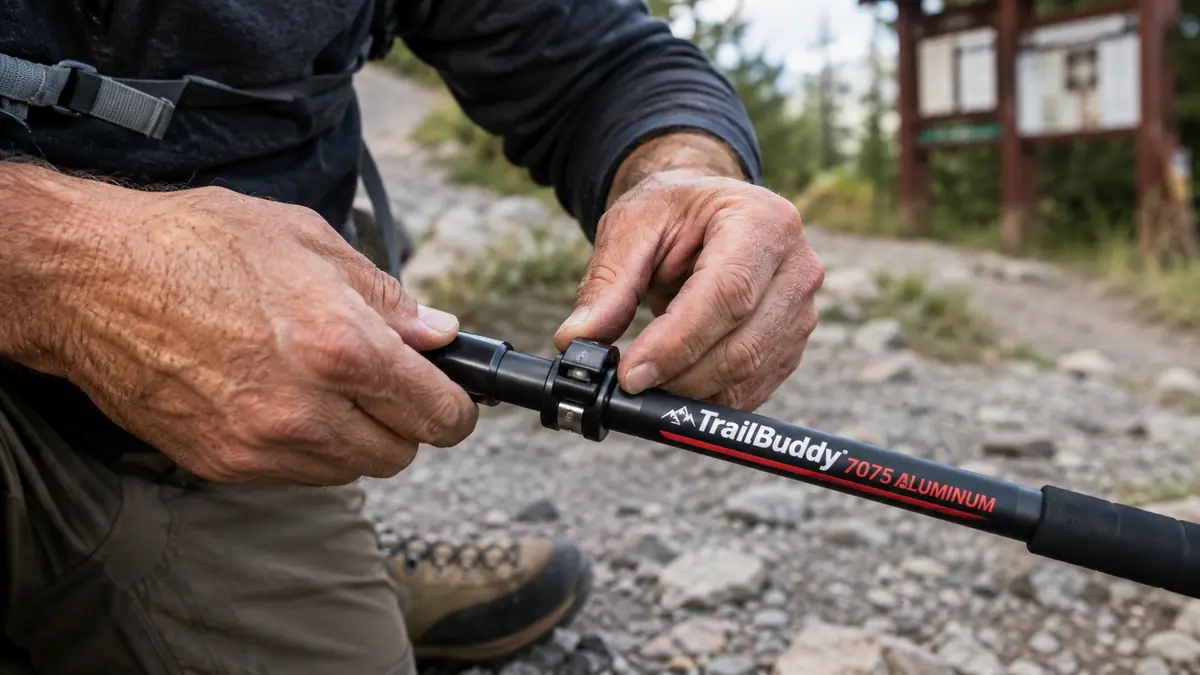
For anyone who hasn't handled a pair, the TrailBuddy poles are collapsible aluminum trekking poles built from 7075 aluminum, which is the same lightweight alloy you'll see in higher-end bike frames and climbing gear, not the softer stuff that dents if you look at it wrong. They telescope down for storage and lock at your chosen length with a flip-lever mechanism rather than a twist lock, which matters more than it sounds like once your hands are cold or wet.
Grip and Comfort Over Long Miles
The foam grip on these is where I noticed the biggest difference from a cheaper set of poles I'd borrowed from a buddy years back. On a long descent, your hand is gripping and re-gripping constantly, and a hard plastic handle will rub a hot spot into your palm by mile six. The TrailBuddy grip stayed comfortable through full-day outings, even on hikes where I was sweating through gloves in the heat. The extended lower grip section, the part just below the main handle, is something I use more than I expected. On steep sidehill traverses I'll choke down on the pole without breaking stride to adjust the length, which saves time and keeps my rhythm going on uneven ground.
The wrist straps are adjustable and padded enough that I can hang my full weight into them on a steep push without them cutting in. That matters more than people think. On a long climb, a lot of your forward drive should come from pushing through the strap, not just gripping the handle, and cheap straps will chafe raw well before you get that technique dialed in. Mine haven't.
Adjusting for the Terrain
One thing I didn't appreciate about adjustable poles until I'd hiked a full season with them is how often I actually change the length mid-hike. Shortening both poles a few notches on a steady climb keeps your arm angle right for pushing off, and lengthening them again on the way down gives you more reach out front to catch your weight before it lands on your knee. With the TrailBuddy flip locks, that adjustment takes seconds, no stopping to unscrew anything, just flip the lever, slide, and snap it shut. On a ridgeline with rolling terrain, uphill one stretch, a short flat, then a steep drop into a draw, I've adjusted length three or four times inside a single mile without ever really breaking stride.
The adjustable range is generous enough that I've used the same pair as my wife, who's a full foot shorter than I am. At six foot two, I run mine near full extension for steep descents where I want the extra reach. She collapses hers down near the shortest setting and gets a comfortable elbow angle on the flat. That kind of range matters if more than one person in the house is going to use the same set, and it means you're not locked into buying a second pair just because your hiking partner isn't your height.
Weight and Pack-Down Size
This is the category where the 7075 aluminum construction actually shows up on the trail and not just on a spec sheet. These poles are noticeably lighter in the hand than a set of steel poles I used years back, and over a long day that adds up. Swinging a lighter pole thousands of times over a ten-mile hike is a real difference in arm fatigue by the end of the day, even if it doesn't feel like much in the parking lot when you first pick them up.
Collapsed down, they strap flat against the side of my daypack without banging my legs on the downhill, which used to be a real annoyance with a bulkier set I owned before these. The daypack I carry them with has side compression straps that were built for exactly this, and the two together make for a setup I don't think twice about grabbing for anything from a short evening loop to a full backcountry day.
The Flip Locks: Where I've Had My Only Real Complaint
I'll be straight with you here because a review that pretends everything's perfect isn't worth reading. The flip-lock mechanism that sets your pole length works well when it's clean and dry. It's fast to adjust on the fly, faster than fumbling with a twist lock when you're trying to shorten your poles quickly for a steep uphill scramble. But after a muddy spring outing where I didn't rinse the poles off before packing them away, one of the locks started feeling a little loose under load a few weeks later, enough that the pole would slip an inch or so on a hard downhill plant. A quick look showed grit had worked into the lever mechanism. Once I cleaned it out with a stiff brush and a little water, it snapped back to full tension, but it told me these need real maintenance if you're hiking muddy or sandy trail regularly. I've made rinsing them off part of my post-hike routine ever since, same as I do with my boots.
I'd also flag that if you're genuinely rough on gear, the kind of hiker who leans a pole against a rock and lets it fall over without catching it, the flip locks are a wear point worth keeping an eye on over multiple seasons. Mine are holding up fine one season in, but I wouldn't call the mechanism bombproof.
Tips and Baskets: What's Held Up and What I'd Watch
The tips have handled everything from bare rock to packed dirt to that one creek crossing without any real complaint. I haven't needed to swap a tip yet, which is more than I can say for a cheaper set I ran a couple seasons back that wore a visible flat spot into the carbide tip inside two months of regular use. The removable rubber tip covers that come with the poles are handy for pavement or a groomed trail near the trailhead, though I'll admit I've lost one of mine somewhere along the way, which seems to be a common complaint I've heard from other hikers too. Small detachable parts have a way of walking off in a pack pocket.
The baskets, the small discs near the tip that keep the pole from sinking too deep into mud or snow, are removable and did their job in the muddiest stretches of spring trail without clogging up or spinning loose on me.
What I Liked
- Genuinely lightweight thanks to the 7075 aluminum build, noticeable over a long day
- Foam grip and padded wrist straps stay comfortable on full-day outings
- Flip-lock adjustment is fast when clean, quicker than fumbling with a twist lock mid-climb
- Adjustable range wide enough that two hikers of different heights can share the same pair
- Tips have held up well across rock, dirt, and one hard creek crossing
Where It Falls Short
- Flip locks need regular cleaning if you hike muddy or sandy trail, grit will loosen the tension over time
- Rubber tip covers are easy to lose and aren't something you'll notice missing until you need one
- Not something I'd trust to abuse indefinitely if you're genuinely hard on gear
- No dedicated carrying case included, just the strap-and-collapse method
- Length markings on the shaft are small enough that I've had to squint to match both poles evenly in low light
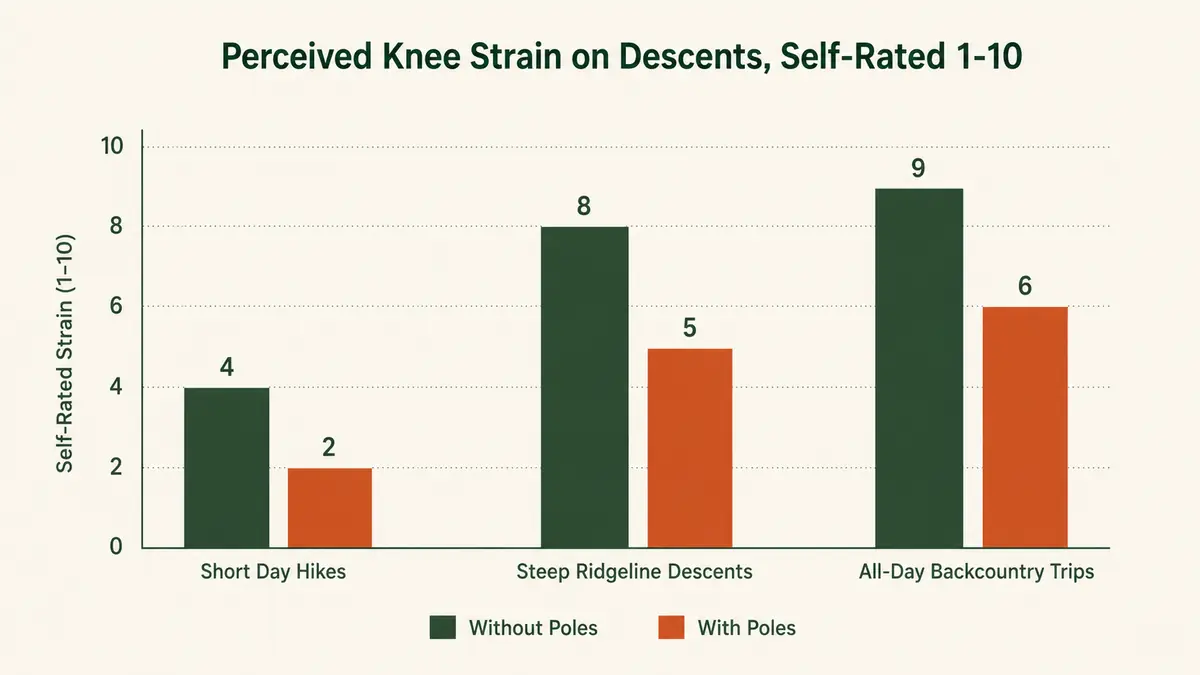
Going up a mountain is optional pain. Coming down is where your knees actually pay the bill, and that's exactly where these poles have earned their keep.
Alternatives I Considered Before Buying
Before I settled on TrailBuddy, I looked hard at Cascade Mountain Tech, since that's the other pair I see most often on the trail and in gear shops. I'll get into the full breakdown separately in how they compare to Cascade Mountain Tech, but the short version is that the two are closer in feel than I expected going in. Where TrailBuddy pulled ahead for me was grip comfort on long descents and how confidently the flip locks snap shut when they're clean, which for someone doing steep ridgeline miles regularly mattered more than a few dollars of price difference.
I also seriously considered a carbon fiber set, since carbon shaves real weight off aluminum and a lot of thru-hikers swear by it. Carbon poles are lighter in the hand, no argument there, but they're also more prone to a sudden snap if you jam one wrong into a rock crevice under load, where aluminum tends to bend before it fails outright. Given how much scree and loose rock I cross in a season, and given that I've already snapped a cheap carbon pole once on a bad plant years ago, I wanted the aluminum's forgiveness more than I wanted the last few ounces of weight savings.
I looked at a fixed-length wooden staff too, mostly out of nostalgia since that's what I hiked with as a kid, but the inability to collapse it down or adjust length for a steep uphill versus a flat stretch ruled it out fast. Once you've hiked with adjustable poles, going back to one fixed length feels like leaving a tool in the truck.
Who This Is For
If you're hiking ridgelines, scree fields, or anything with real elevation change, and you want to take some of the pounding off your knees on the way down, the TrailBuddy poles are a genuinely smart pick. They're also a solid choice for anyone doing longer backcountry days who wants a lighter pole they won't feel swinging by mile eight, and for hikers who cross creeks or unstable footing regularly and want the extra stability. My own knees notice the difference on every steep descent, which is why my knees thank me on the way down more often than not these days.
Who Should Skip It
If you're the type who leans hard on gear, drags poles behind you on rock, or never rinses mud off equipment before storing it, you'll probably see the flip locks wear faster than I have and you might be happier with a simpler twist-lock design that tolerates neglect a little better. Ounce-counting thru-hikers chasing the absolute lightest setup possible may still prefer carbon fiber despite the snap risk. And if most of your hiking is flat, groomed park trail, you may not need poles at all, they're most valuable on real elevation change and uneven ground, not a paved loop around the lake.
A season of ridgelines and scree fields later, these are still strapped to my pack.
If your knees are filing complaints on every descent, the TrailBuddy trekking poles are worth putting to the test yourself. Check today's price before your next steep trail.
Amazon Check Today's Price on Amazon →