
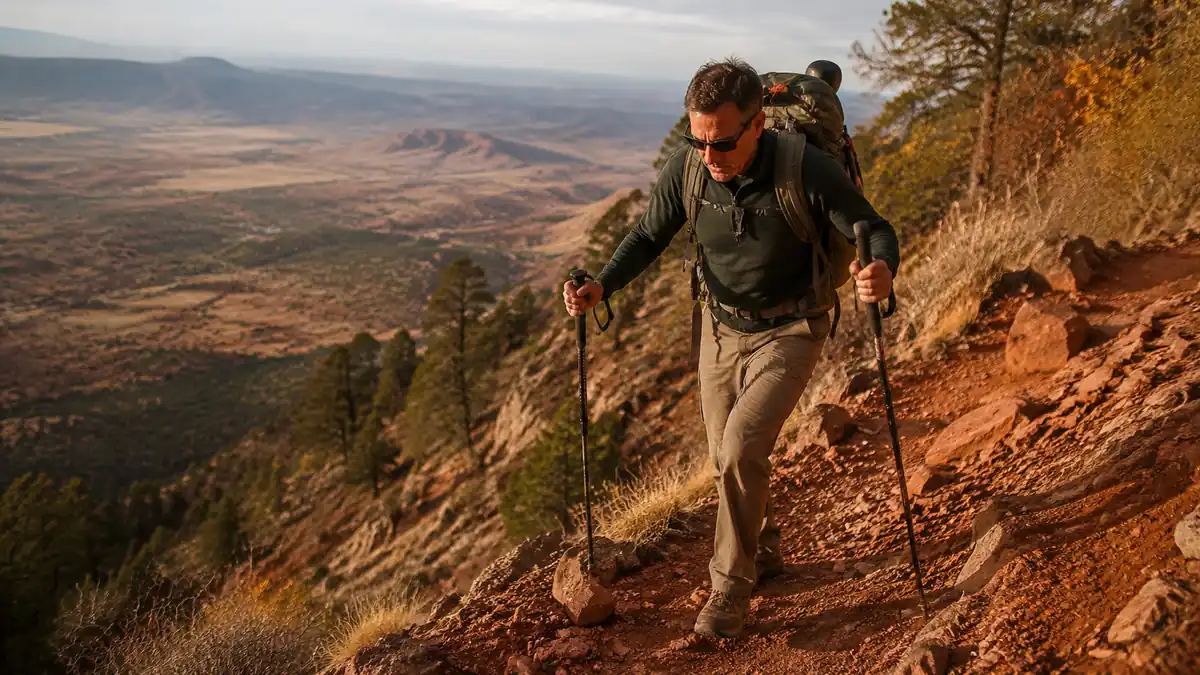
I swore for the better part of a decade that trekking poles were for people who needed the help more than I did. Then I came down off a nine-mile ridge hike in early spring, favoring my right knee the last two miles because the left one had started grinding on every step, and I sat in the truck bed longer than I want to admit before I trusted myself to drive home. That was the day I bought my first pair of TrailBuddy trekking poles, mostly out of stubbornness, figuring I'd prove to myself they weren't necessary. Six months and a couple hundred trail miles later, I don't hike without them, and it isn't close.
This isn't a list about ten different brands of poles. It's about the actual reasons a single good pair of trekking poles, the TrailBuddy pair I've had strapped to my pack all season, changes what a long descent does to your knees, your balance, and your confidence out on real terrain. Some of these reasons I expected going in. A few I only figured out the hard way.
Your knees shouldn't be the thing that decides how far you hike.
The TrailBuddy trekking poles are the pair I reach for on every trail now, from a short evening loop to a full day on a ridgeline. Check today's price before your next steep descent.
Amazon Check Today's Price on Amazon →They Take the Pounding Off Your Legs on the Way Down
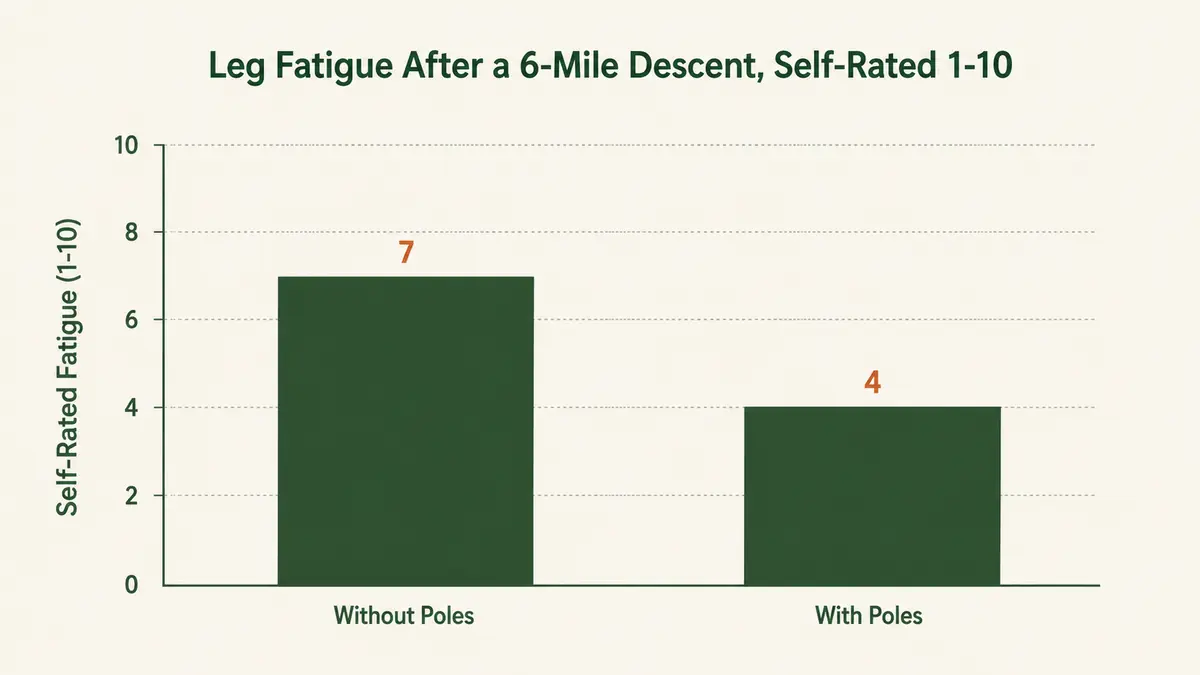
Going downhill is where trekking poles earn their keep, full stop. On a six-mile descent off a ridge near home, I used to sit down at the truck and rate my legs somewhere around a 7 out of 10 for that deep, burning ache that sets in behind the knee. With the TrailBuddy poles planted ahead of my lead foot on the way down, taking some of that impact through my arms instead of my legs, that same descent usually leaves me closer to a 4 out of 10 by the time I hit the truck. That's not a clinical number, it's just how sore I am, but the difference is real enough that I notice it every single time.
You Get Two More Points of Contact on Loose Rock and Scree
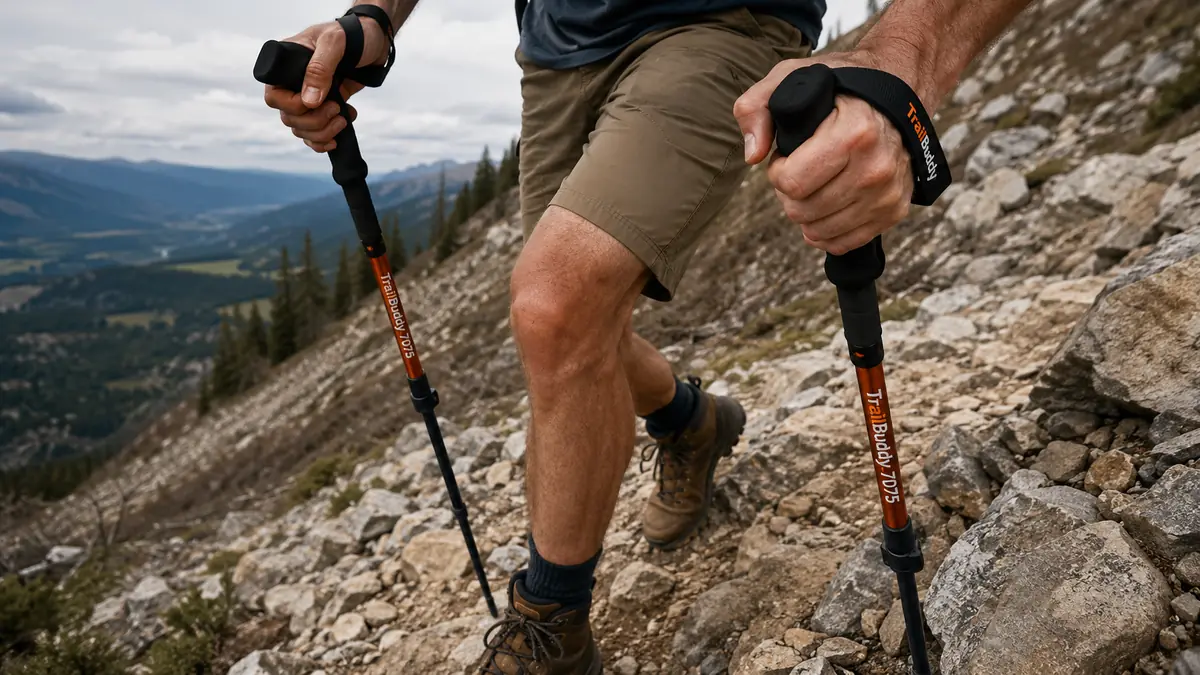
Scree fields are where a solo hiker's balance gets tested the hardest, one wrong step on shifting rock and you're either catching yourself or you're not. Two planted poles give you two more points of contact besides your boots, so when a rock rolls under my foot on a steep scree slope, I've got a pole already set to catch my weight instead of my knee twisting to do it. I've crossed enough loose rock with and without poles now to know which version ends with me upright.
Stream Crossings Stop Being a Coin Flip
Wet rocks under moving water are about as unpredictable as footing gets, and I've gone down in a creek exactly once without poles, camera and all. With a pole planted upstream on each step, testing depth and current before I fully commit my weight, a crossing that used to be a gamble turns into something I can actually control. The TrailBuddy poles have gone into more creek beds this season than I can count, and I trust the plant every time.
You Can Probe Soft Ground Before You Step In It
Mud and boggy ground hide how deep they actually are until your boot's already in past the ankle. A quick tap with a pole tip tells you what's solid and what isn't before you commit a full step, which has saved me from sinking a boot in wet meadow country more than once this year. It's a small habit, tap first, step second, but it's kept me from soaking a boot on trips where I didn't have a dry pair waiting in the truck.
A Loaded Pack Doesn't Push You Around as Much
Add thirty or forty pounds on your back and your center of gravity moves somewhere it wasn't before, especially on uneven ground. Poles give you a way to fight that sway instead of just absorbing it through your ankles and hips. On overnight trips where I'm carrying a full pack, the TrailBuddy poles are the difference between feeling top-heavy on a sidehill traverse and feeling planted, even with a pack that's working against me the whole way.
They Give You a Rhythm on Long Climbs
Somewhere around mile four of a steady uphill grind, I stop thinking about my legs and start thinking about the rhythm of planting a pole, pushing through it, and taking the next step. It's a small mechanical assist, but on a climb with a couple thousand feet of gain, a steady rhythm is what gets you to the top without stopping every few hundred yards to catch your breath. I hike faster and more evenly with poles in hand than I ever did swinging my arms empty.
A Pole Has Caught My Weight When My Ankle Didn't
I've rolled an ankle on the trail exactly the way everyone eventually does, stepping wrong on a hidden rock under leaf litter. The one time it happened with a pole in each hand, the pole took enough of my weight in that split second that I stumbled instead of going all the way down. Without poles, that same misstep would've put me flat on the ground, and a lot further from the truck than I'd have liked to walk out on a bad ankle.
They Clear Brush and Spider Webs Before You Walk Into Them
This one sounds small until you've hiked a trail nobody's cleared in a while. A pole swept out in front of you knocks down overgrown brush, catches loose branches, and takes down the spider web strung face-height across the trail before you walk face-first into it. It's not the reason I bought trekking poles, but it's become one of the reasons I'm glad I carry them on any trail that hasn't seen much recent traffic.
They Double as Tarp Poles When You Need Shelter Fast
On an overnight trip where I was running a lightweight tarp instead of a full tent, the TrailBuddy poles doubled as the front and rear supports, saving me the weight and space of carrying dedicated tarp poles I'd only use one night a year. Plenty of ultralight tarp setups are actually built around trekking pole height, and once I realized my hiking poles could pull double duty as shelter poles, packing for an overnight got noticeably lighter.
They Bring Back Confidence After a Layoff or an Injury
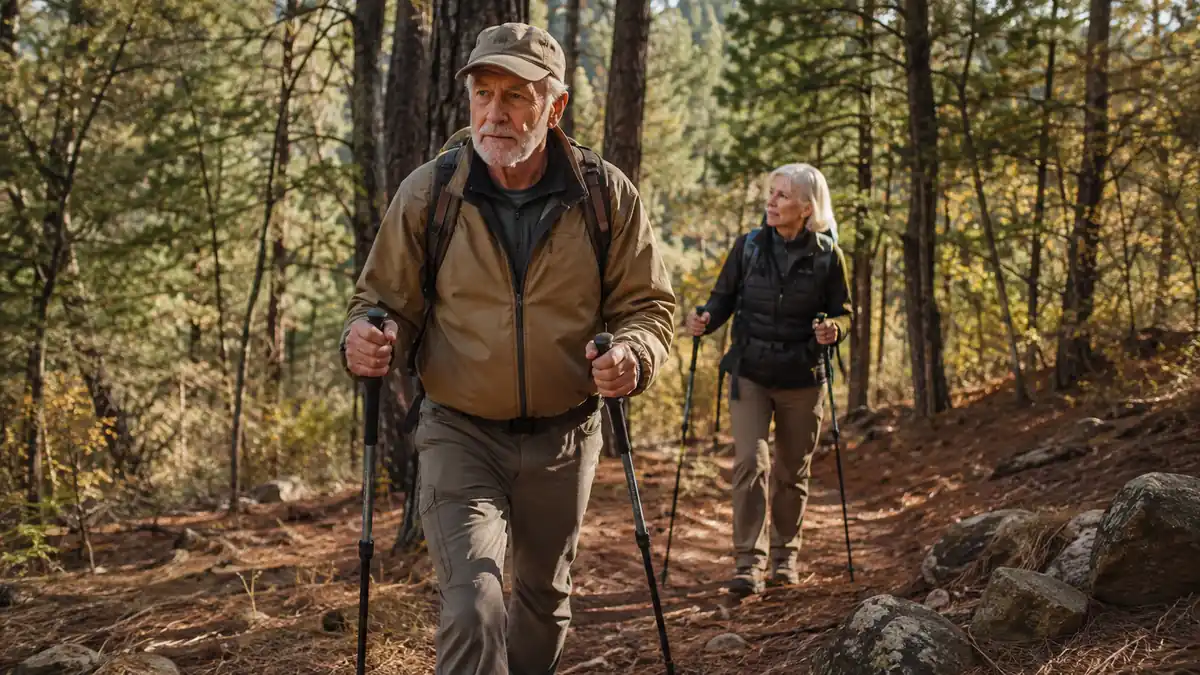
I hiked with my father-in-law last fall, his first real trail outing in about two years after a knee surgery, and watching him find his footing again with a pair of poles in hand was its own kind of proof. Poles don't just take load off tired joints, they hand back a sense of control to anyone who's lost some confidence in their footing, whether that's from age, an old injury, or just time away from real trail. He hiked the whole loop without once looking like he was bracing for a fall.
What I'd Skip
I'd skip a pair of poles with a twist-lock mechanism if you're hiking anywhere with real mud or grit, twist locks tend to slip once dirt works into the threads, where a flip-lock like the one on the TrailBuddy poles is easier to clean and reset in the field. I'd skip going with just one pole too, thinking half the gear means half the benefit, the balance and load-sharing really depend on having both hands doing the work. And I'd skip buying poles the week before a big trip and never adjusting them before you're actually on the mountain, you want to know how the locks feel and how the straps sit before you're relying on them on a steep descent.
If you want more than the quick take, I go deep on gear wear and comfort in the poles I use on every hike, and if you're still finding the right length for your own stride, I broke down how to get the height dialed in for steep ground step by step.
A pole planted right doesn't just catch your balance. It catches the fall you never actually took.
Ten reasons in, and my knees still vote for the same pair.
If your knees are filing complaints on every descent, the TrailBuddy trekking poles are worth putting to the test yourself. Check today's price before your next long hike.
Amazon Check Today's Price on Amazon →