
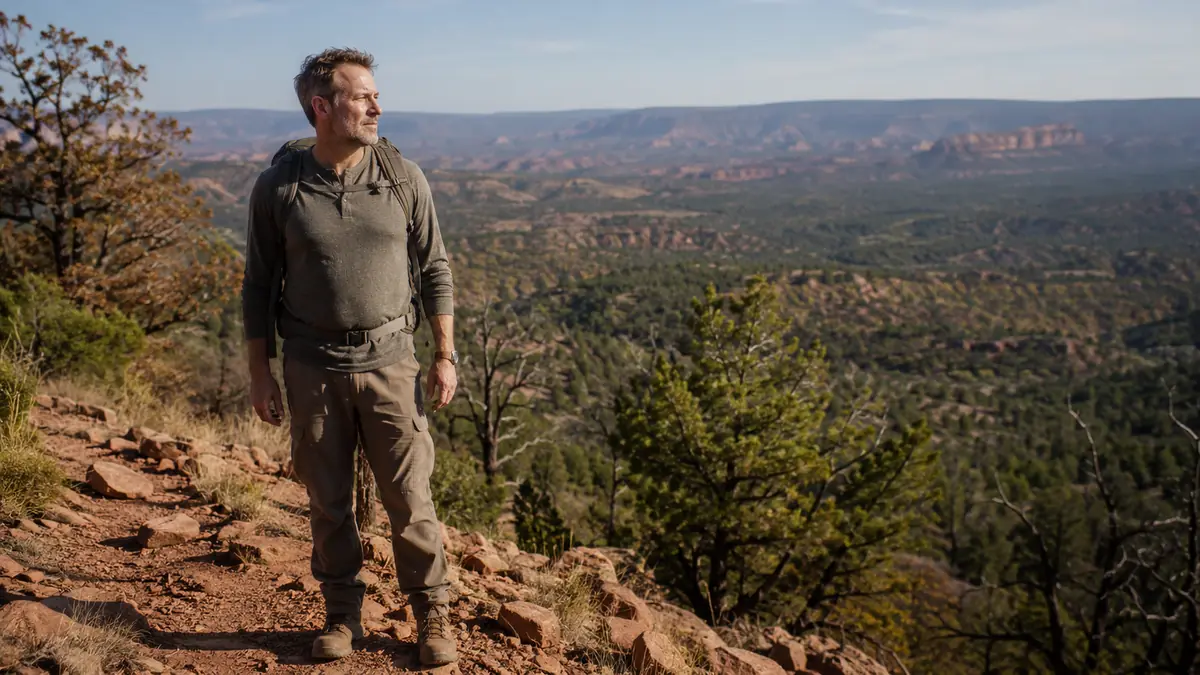
I bought the G4Free daypack the week before a scouting trip I figured would be a quick two miles in and two miles out to check a bench for elk sign. It turned into closer to nine miles by the time I'd followed a game trail further than I meant to, and the only bag I had on me was this one, the 15L version, stuffed with a rain shell, a sleeve of jerky, and a liter bottle. That trip is the reason I kept using it. I wasn't planning to make this my go-to daypack. It just kept being the bag already in the truck.
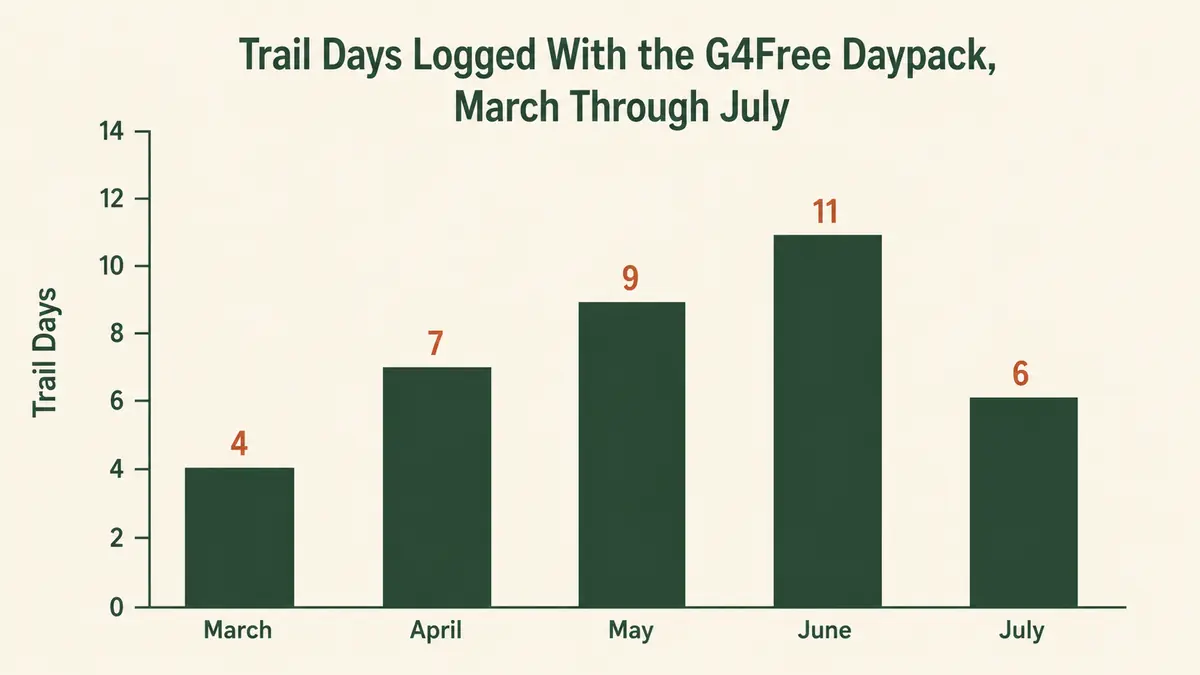
Since then it's ridden along on every day hike I've taken from March through the end of July, plus a handful of scouting trips and one afternoon fishing walk-in where I needed something smaller than my main pack but bigger than my pockets. By my own count that's thirty-seven trail days total, four in March, seven in April, nine in May, eleven in June, and six more in July before the heat pushed most of my hiking to early mornings. That's the stretch of use this review is built on, not a weekend with it and a quick verdict. The G4Free name is on plenty of gear at this point, and this particular daypack, the 10L and 15L packable version, is the one I've actually put miles on.
The Quick Verdict
For the price of a couple tanks of gas, this daypack earns its keep as a grab-and-go bag for shorter hikes and travel days, but the thin straps and lack of any real structure mean it's not the pack I'd trust with a heavy load on a long haul.
Amazon Check Today's Price →Tired of hauling your full-size pack for a two-hour hike?
The G4Free daypack folds down small enough to live in a jacket pocket or a glovebox, then unfolds into a real 10L or 15L bag when you need it. Check today's price and see why it's become the one I grab for anything under half a day.
Amazon Check Today's Price on Amazon →How I've Used It
My use case for this bag has settled into a pretty clear pattern. It's the pack I grab for anything under about six miles, day hikes on trails I already know, scouting walks where I want to move fast and quiet, and the occasional afternoon at the lake where I need a dry bag for my phone and keys more than I need real carrying capacity. I've also taken it on two separate trips as a carry-on personal item, since it folds down small enough to tuck into a duffel and unfolds into a real bag the second I land.
I didn't treat it gently either. It's been tossed in the truck bed more than once, sat on while I ate lunch on a rock, and dragged through some brush thick enough that I heard the fabric catch a couple times. That's the kind of handling that tells you more about a bag than a week of careful, controlled use ever would.
The zippers and stitching have held up better than I expected for what this bag costs. I went into that first month half-expecting a zipper pull to snap off or a seam to start fraying at the corners, since that's usually the first thing to go on inexpensive gear. Thirty-seven trail days in, the main zipper still runs smooth, and the seams at the bottom corners, which take the brunt of it when I set the bag down on rock or gravel, haven't started separating. I did notice one loose thread near the strap attachment point around month three, but it hasn't gotten worse and hasn't affected how the strap carries weight.
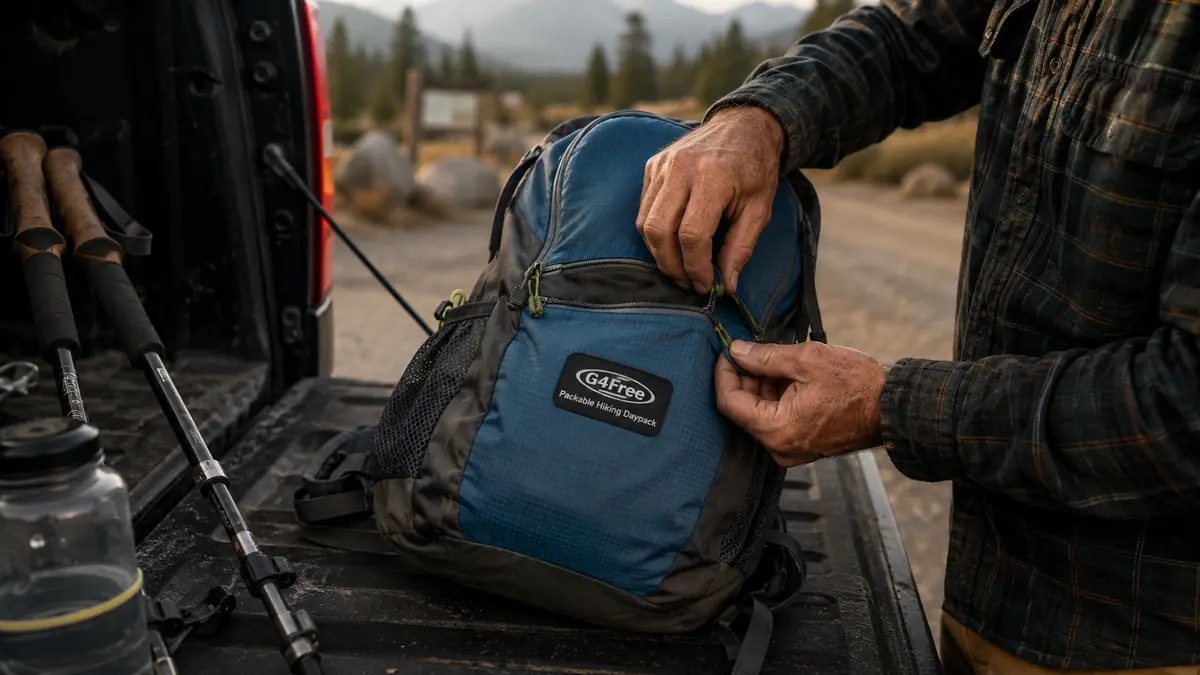
For anyone who hasn't handled the G4Free daypack, it's a lightweight, packable bag that comes in a 10L and a 15L size, with the whole thing folding down into its own front pocket when you're not using it. It's built to double as a travel or shoulder bag just as easily as a hiking daypack, which is honestly the feature that's kept it in rotation. I don't always know ahead of time whether I'm going to need a real trail bag or something to carry a change of clothes through an airport, and this one covers both without me having to pack two different bags.
Packability: Why This One Actually Lives in My Truck
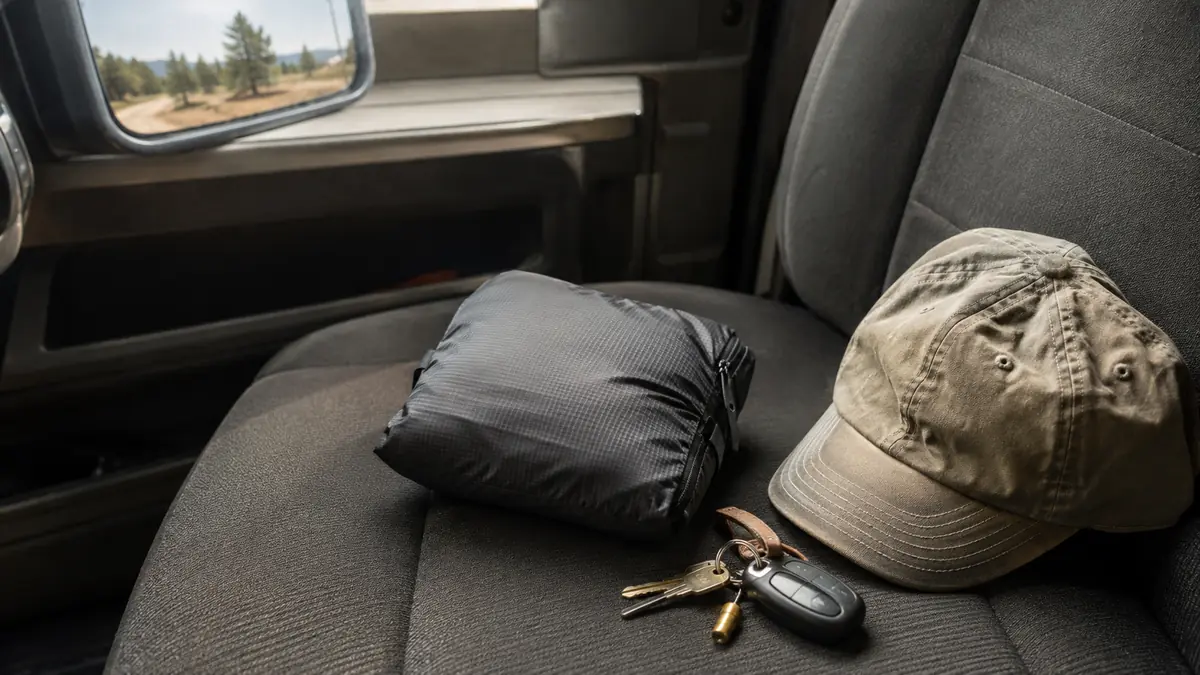
The packable design is the whole reason I still have this bag with me most days, and it's also why I keep one folded in my truck year round, tucked behind the seat next to a tow strap and a first aid kit. Folded down, it's about the size of a large fist. That's small enough that I genuinely forget it's back there until I need it, which is exactly the point of a pack like this. A hard-frame daypack doesn't get that kind of forgotten-until-needed treatment, because it takes up real space whether you're using it or not.
That packability does come with a tradeoff, and it's one worth being honest about up front. There's no internal frame here, no padded back panel with any real structure, just a soft-sided bag with straps. Empty or lightly loaded, that's not an issue at all. Loaded down with a full water bottle, a jacket, and lunch, the bag will sag against your back a little, and you'll feel the contents shift as you move rather than staying locked in place the way they would in a structured pack.
I've come to think of that as the honest cost of the fold-down design rather than a flaw exactly. You can't have a bag that packs into a fist-sized bundle and also has a rigid frame. G4Free made a clear choice here, portability over structure, and for the kind of shorter trips I use it for, that's the right call. It just means you need to go in knowing what you're not getting.
10L vs 15L, and What the Straps Feel Like Under a Real Load
G4Free sells this daypack in both a 10L and a 15L size, and I ended up with the 15L after going back and forth on it. The 10L is genuinely small, closer to what you'd want for a short walk or a minimalist day out where you're carrying water, a snack, and not much else. The 15L gives you enough room for a light rain shell, a bigger water bottle, and a few extra layers, which is what I actually need on most of my hikes here where the weather can turn inside an hour.
The shoulder straps are where this bag shows its limits the fastest. They're thin, padded just enough to keep from digging in on a short walk, but under a loaded 15L on that nine-mile scouting trip I mentioned earlier, I felt them by hour two. There's no hip belt to speak of, no sternum strap either, so the full weight of whatever you're carrying rides entirely on your shoulders the whole time. On a two or three mile hike that's a non-issue. Stretch it out to a longer day with real weight in the bag and you'll notice it, especially if you're already carrying a rifle or a rod case on top of the pack.
That's the tradeoff I keep coming back to with this bag. It's not built to be a load hauler, and G4Free never markets it as one. It's built to be light, packable, and cheap enough that losing or damaging it isn't a real financial hit. Judged against that goal, the straps do fine. Judged against a real backpacking pack, they come up short, and anyone expecting otherwise is going to be disappointed.
Pockets, Organization, and How It Handles Wet Weather
Organization is simple on this bag, which I've come to appreciate rather than fault. There's a main compartment for the bulk of what you're carrying, plus a front pocket that doubles as the pouch the whole bag folds into when it's empty. I keep the water filter that rides in the side pocket for exactly this kind of shorter trip, since I'm not always near a creek but want the option covered without adding real weight to the main compartment.
What you don't get is the kind of dedicated organization you'd find on a purpose-built hiking pack, no separate hydration sleeve, no daisy chain of small zippered pockets for a compass and a multitool and a headlamp all in their own spot. Everything mostly goes in the main compartment together. For my use, short hikes and travel days, that's not a real problem. If you're the kind of hiker who wants a specific pocket for every piece of gear, this bag is going to feel underbuilt for that habit.
As for weather, I got caught in a real downpour on a June hike, the kind that soaks you through in ten minutes, and the bag itself came through fine on the outside, no soaked-through fabric, though I'd already stuffed my phone and wallet into a ziplock inside out of habit. I wouldn't call this a waterproof bag and I don't treat it like one. A light rain shrugs off it well enough for a short walk back to the truck, but I'm not trusting it with anything I can't afford to get damp in a real storm, and I'd tell anyone else the same.
Alternatives I Considered Before Buying
Before I settled on the G4Free, I looked hard at how it compares to the Osprey Daylite, since that's the pack a lot of the guys I hike with already own. The Daylite is a genuinely well-built daypack with a padded back panel, a real hip belt, and the kind of stitching that's built to outlast a decade of regular use. It's also a bag you have to plan around carrying, since it doesn't fold down into nothing the way the G4Free does. It takes up real space in a truck or a duffel whether you're using it that day or not.
For someone who hikes several days a week and wants one daypack to handle it all, the Daylite is the better long-term investment, no argument from me there. But that's not my use case, and it's probably not most people's. I wanted a bag I could throw in the truck and forget about until I needed it, one that could just as easily carry a change of clothes on a work trip as it could water and a rain shell on a trail. For that kind of use, where portability matters more than structure, the G4Free earns its spot.
What I Liked
- Folds down small enough to disappear into a jacket pocket or a glovebox
- Works just as well as a travel or shoulder bag as it does a hiking daypack
- Lightweight enough that you barely notice it when it's not loaded
- Comes in a 10L and 15L size depending on how much you actually need to carry
- Held up to real trail and brush contact without tearing over a season of use
Where It Falls Short
- Shoulder straps are thin and start to dig in on longer hikes with a full load
- No hip belt or sternum strap, so all the weight rides on your shoulders
- No internal frame, contents shift and the bag sags when it's loaded heavy
- Organization is basic, mostly one main compartment plus a front pocket
- Not built for multi-day loads or anything approaching a real backpacking trip
It's not built to be a load hauler, and G4Free never markets it as one. Judged against that goal, the straps do fine. Judged against a real backpacking pack, they come up short.
Who This Is For
If you want a lightweight bag that can live folded in a truck, a glovebox, or a suitcase until you actually need it, the G4Free daypack is a smart, inexpensive pick. It's a good fit for shorter day hikes, scouting walks, fishing walk-ins, and travel days where you need a bag that can flex between hiking gear and a change of clothes without taking up real space when it's empty. Anyone who's tired of committing to a bulky pack for a two-hour walk will notice the difference the first time they fold this one into a pocket.
Who Should Skip It
If most of your hikes run long, or you're regularly carrying real weight, a rifle case, a big camera setup, a full day's worth of layers and food, the lack of a hip belt and any real frame is going to catch up with you well before the trail does. Same goes for anyone who wants dedicated pockets for every piece of gear rather than one main compartment. For those trips, a structured pack built for load carrying, like the Daylite I mentioned above, is going to serve you better than this one ever will.
Five months in, this is still the bag folded behind my truck seat.
If you want a daypack that disappears when you're not using it and shows up ready to carry water, a rain shell, and lunch the second you need it, the G4Free is worth putting to the test yourself. Check today's price before your next trip out.
Amazon Check Today's Price on Amazon →