
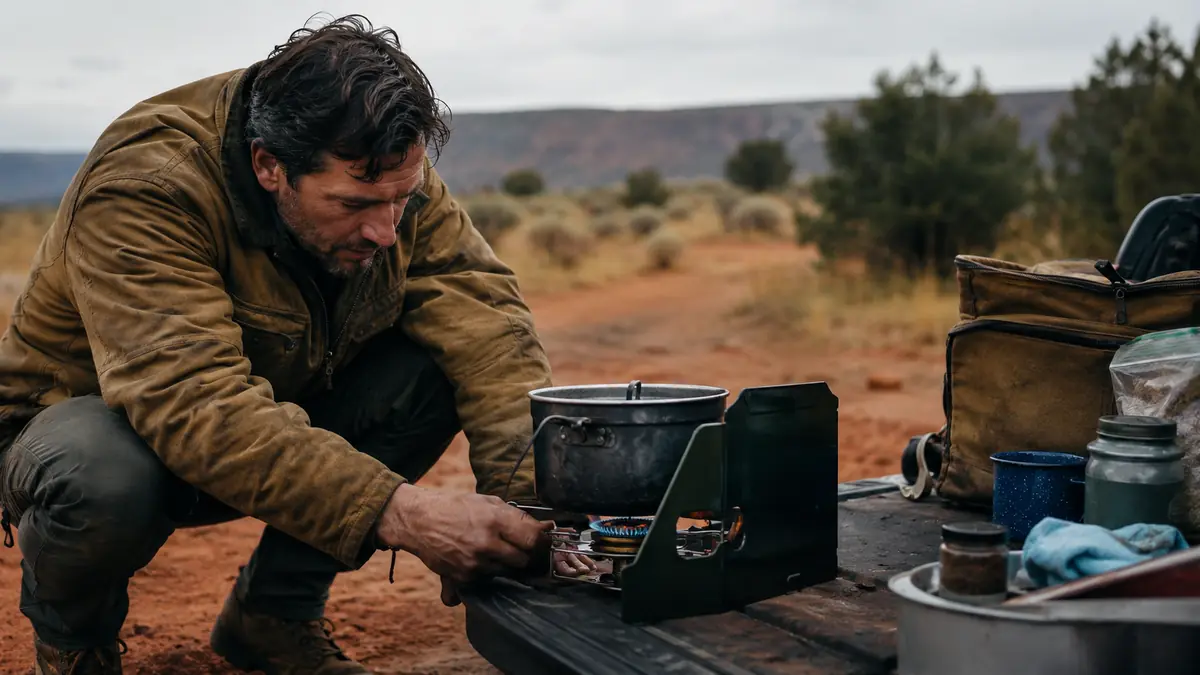
Every listing photo of the Gas One GS-3400P shows the same thing, a clean burner sitting on a picnic table under a blue sky, flame burning perfectly even. What none of those photos show is what this stove does when a front rolls through and the wind starts gusting sideways across a ridge, or what happens the first time you run out of propane mid-trip and have to switch it over to a butane canister you grabbed at the last minute. That's the part nobody puts in the listing, and it's the part that actually decides whether you're happy with this stove three months from now.
I've had a Gas One GS-3400P riding in the truck since early spring, mostly getting used at deer camp and on weekend trips out to land I lease south of here. I'm not writing this to talk you out of it. It's genuinely one of the better cheap dual-fuel stoves I've owned. I'm writing it because I want you to know exactly what you're getting into before you're standing at a tailgate in the wind trying to figure out why your eggs are taking twelve minutes instead of four.
The Quick Verdict
The GS-3400P cooks well on a calm morning and switches fuel types without a fight. Wind and cold weather are where the real story is, and that's the part worth reading before you buy one.
Amazon Check Today's Price →The listing shows it burning on a still day. I'll show you what happens in real wind.
The Gas One GS-3400P is still the stove I reach for first at camp. But knowing where it actually struggles saves you a frustrating first weekend. Check today's price and go in with the full picture.
Amazon Check Today's Price on Amazon →How I Actually Used This Thing
My use of the Gas One wasn't gentle and it wasn't a single controlled test. It's ridden in the bed of my truck under a tonneau cover, gotten rained on twice before I remembered to bring it inside, and cooked everything from scrambled eggs before a sunrise sit to a full pot of chili at deer camp for four grown men. I ran it on propane most weekends and switched over to butane canisters twice, once on purpose to see how the swap actually worked, and once because I genuinely ran out of propane with dinner half cooked.
Over about four months I put somewhere around thirty separate cook sessions through it, split roughly evenly between calm mornings at a fixed camp and windier setups on open ground where there's nothing to break the gusts. That range is where the honest picture of this stove shows up, not on a single still afternoon in a backyard.
The built-in piezo igniter clicked the flame to life on the first try for about the first two months, which spoiled me. Somewhere around month three it started needing two or three clicks instead of one, and by month four I was carrying a butane lighter as a backup every single trip because I couldn't count on that igniter working the first time anymore. Gas One doesn't mention anywhere that the igniter is a wear item, but four months of truck-bed vibration and the occasional splash of chili grease will do that to any piezo spark, cheap stove or expensive one. If you buy this stove, just plan on a backup lighter living in the case from day one instead of finding that out the hard way at camp.
A guy at deer camp runs an older Coleman two-burner that's heavier and takes up twice the room in his truck, and we ended up cooking side by side more than once out of curiosity. His held a steadier flame in wind without needing a windscreen, mine packed down smaller and lit faster. If you want the full breakdown of that comparison, I put together how it compares to the Coleman Triton after running both of them through the same weekend, and it's worth a read if you're deciding between a compact single burner and a bigger two-burner setup.
Wind Is the One Thing the Listing Photos Never Show
On a calm morning, this stove lights fast and holds a good flame with almost no fuss. That's the version everybody photographs and the version most quick reviews are based on, because that's the version you get if you only ever cook on it in your backyard or on a still lake morning. The moment real wind gets involved, the story changes.
The burner sits low and open, with no built-in windscreen worth mentioning, so a steady 15 to 20 mile-an-hour crosswind, which is a normal Tuesday out here, will push the flame sideways enough that half the heat misses the bottom of the pan entirely. I've had it flat-out blow out twice on open ground, both times during a gust that came up fast while I had my back turned tending something else. Neither time was catastrophic, it relit easily once I got a hand cupped around it, but it's not the set-it-and-forget-it experience the marketing implies.
My fix has been simple and it works, but it's a fix I had to figure out myself, not something Gas One tells you to do. I now keep a folded aluminum flashing panel in the truck specifically to block wind on one side of the stove, and I've started parking the tailgate itself between the stove and whatever direction the wind's coming from whenever I can. If your usual cook spot is an open ridge, a boat ramp, or anywhere without a tree line, plan on bringing your own windbreak, because the stove isn't going to handle that on its own.
I've also learned to actually think about which way I'm facing before I light it, instead of just setting the stove down wherever's flattest. Cooking with the wind blowing straight into your body pushes it right back into the burner, which is the setup that's blown the flame out on me both times. Turning the whole rig ninety degrees so the wind runs past the side of the stove instead of straight through it cuts the problem down by a lot, no windbreak required. It sounds obvious written out, but it's not something I thought about until I'd relit a cold burner twice in one weekend and finally paid attention to which direction I was facing.
Switching Between Propane and Butane Isn't Quite the Seamless Swap It Sounds Like
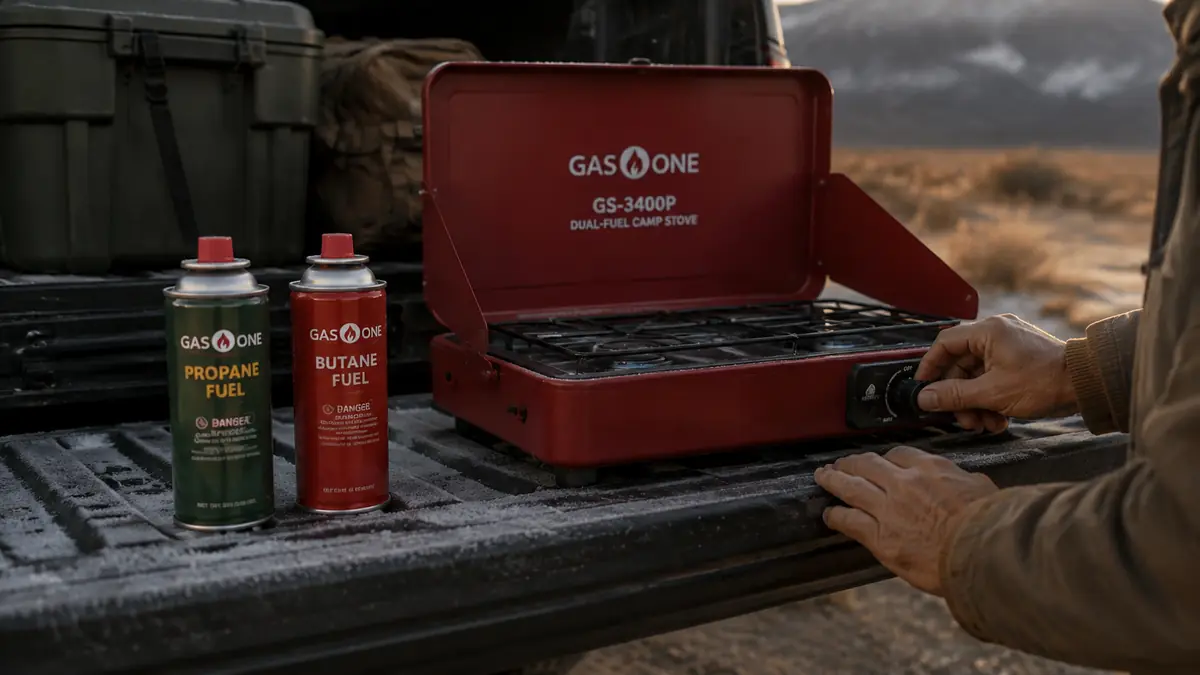
The dual-fuel setup is the whole reason people buy this stove, and to Gas One's credit, it does actually run on both propane and butane without needing a separate adapter kit. That part of the pitch is real. What the listing doesn't spell out is that the two fuels don't perform the same, and if you're expecting identical results no matter which canister you grab, you'll notice the difference the first cold morning you switch.
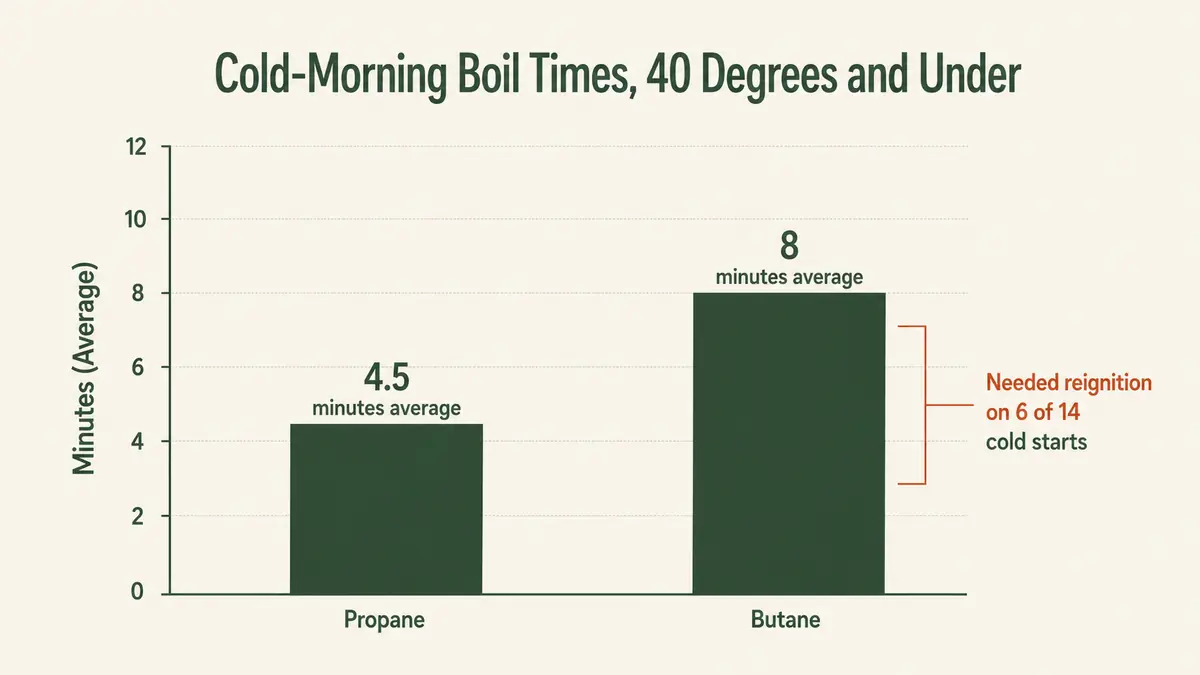
On propane, the stove lights fast and holds a strong flame even when the morning is genuinely cold. On butane, once temperatures drop, the pressure inside the canister drops with it, and the flame gets noticeably weaker, sometimes struggling to stay lit at all. I started timing this once I noticed the pattern, because I didn't want to just trust my memory of how it felt. Across fourteen cold-morning starts under 40 degrees, propane brought a pot of water to a rolling boil in about four and a half minutes on average. Butane took closer to eight minutes on average, and on six of those fourteen starts, the flame actually dropped to a weak sputter within the first two minutes and needed reignition before I could get a real cook going.
That's not a defect, it's just physics, butane canisters lose vapor pressure in the cold in a way propane doesn't. But it's exactly the kind of thing that never shows up in a five-star review written from someone's backyard in July. If your trips regularly involve cold mornings, keep propane as your primary fuel and treat butane as a warm-weather backup, not an interchangeable substitute.
The Regulator Knob Takes Getting Used To
This is a smaller gripe, but it's a real one and it caught me off guard the first few times I used the stove. The flame control knob has a dead zone right around low simmer, a spot where a tiny turn either does nothing or jumps the flame up more than you meant. I scorched a pan of eggs my second time out because I thought I'd dialed it down to a gentle simmer and the flame was actually still running closer to medium.
It's not hard to learn, it just takes a few cook sessions before your hand knows exactly where that sweet spot sits. I'd tell anyone buying this stove to expect a short adjustment period, and maybe practice dialing the flame up and down a few times at home before you're trying to simmer a sauce for the first time at camp with people waiting on dinner. It's a minor thing once you know it's there, but it's the kind of detail that only shows up after real use, not in a spec sheet.
The Pot Support Arms Wobble With Anything Bigger Than a Small Pan
The three fold-out support arms are fine for what they're clearly sized for, a small skillet or a single-serving pot for coffee and oatmeal. Once you step up to a full 10-inch cast iron skillet or the kind of stock pot you'd actually use to feed a camp full of people, the arms don't quite reach far enough out to give it solid, even support. The edge of a big skillet hangs off past the arms on one side, and it doesn't take much of a bump to rock the whole thing.
I found this out the hard way with that pot of chili at deer camp. It sat slightly off-center the whole time it cooked, and I ended up babysitting it more than I wanted to, nudging it back to level every few minutes instead of walking away to do something else. Nobody got burned and nothing spilled, but it was close enough a couple of times that I don't leave a full pot unattended on this stove anymore, not the way I would on a wider two-burner setup. If cast iron and family-sized pots are your normal camp cooking, know that going in and keep a hand nearby.
The Carrying Case Protects It, But It's Snug
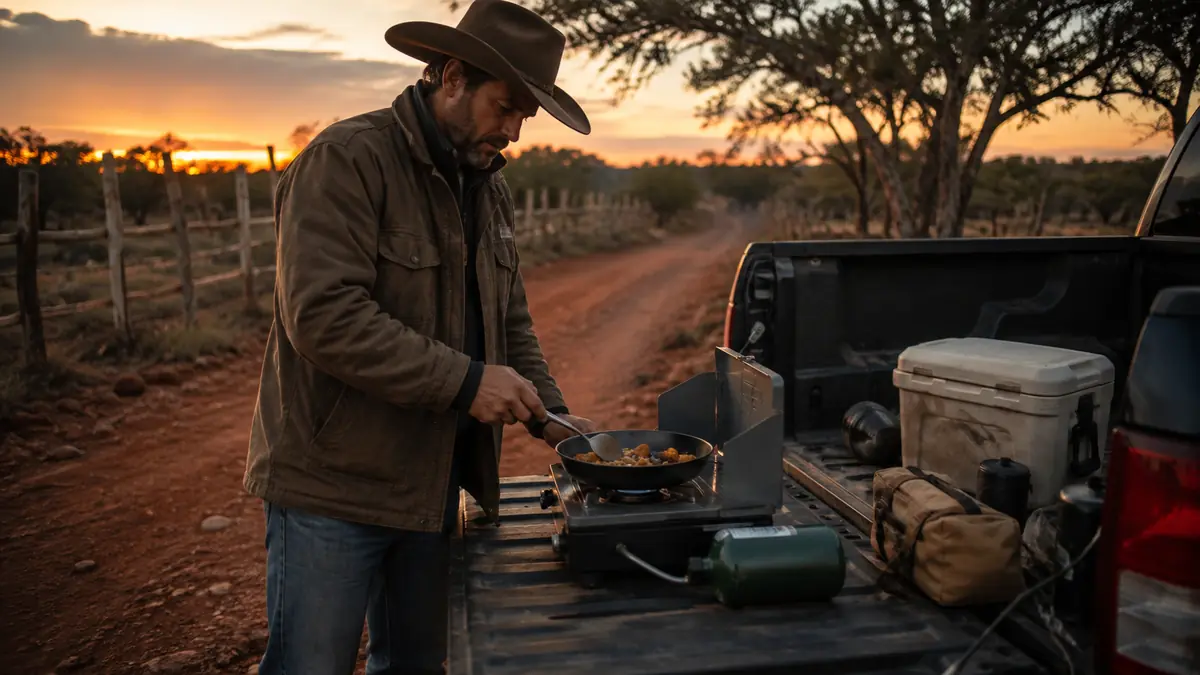
The included carrying case is a genuine plus, most stoves in this price range make you buy your own bag or wrap the thing in a towel to keep it from banging around. Gas One includes one standard, and it's held up fine to riding in my truck bed for four months without tearing or the zipper failing.
Where it falls short is fit. The case is sized tight to the stove itself, with basically no room for a spare fuel canister, a lighter, or the little wind panel I mentioned earlier. Everything else I bring along has to ride loose in a separate bag or a milk crate in the truck bed, which means I've got two things to grab instead of one when I'm loading up in the dark before a hunt. It's a small inconvenience, but if you were hoping to keep your whole cook setup in one bag, this case won't quite get you there.
What I Liked
- Genuinely runs on both propane and butane with no adapter needed
- Fast, strong flame on calm mornings and in mild weather
- Packs down small compared to any two-burner stove I've owned
- Included carrying case holds up fine to real truck bed abuse
- Simple, no-fuss lighting most of the time
Where It Falls Short
- No real windscreen, and it will blow out in a steady crosswind
- Butane performance drops hard in cold weather compared to propane
- Flame control knob has an awkward dead zone right around simmer
- Carrying case is too snug to fit a spare canister or accessories
- Best cooked meals happen when you've got something blocking the wind
On propane and calm air, this stove earns every bit of its reputation. Fourteen cold-morning starts on butane told me a different, honest story.
Who This Is For
If you're cooking at a fixed camp with a tree line, a truck bed, or anything else to break the wind, and you're willing to run propane as your default fuel with butane as a backup rather than an equal swap, the GS-3400P is a solid, affordable stove that earns its spot in the truck. Hunters and weekend campers who want something small enough to keep loaded year-round will get real use out of it. Want the season-long version of this story, cold snaps, wind, and all? I laid it all out in my long-term field notes after running this stove through a full camping season.
It's also a good pick if you already carry a windscreen or don't mind rigging your own, since that one fix solves most of the wind complaint on its own.
Who Should Skip It
If you regularly cook on open ridgelines, boat ramps, or anywhere without natural wind cover, and you don't want to carry a separate windbreak, you're going to fight this stove more than you'll enjoy it. Same goes for anyone doing serious cold-weather trips who plans to lean on butane as their main fuel, or anyone who needs their whole cook kit, spare canister included, to fit in one bag without extra loose gear rattling around the truck bed.
Now you know the real conditions this stove is built for. Here's the honest verdict.
The Gas One GS-3400P still rides in my truck every trip, wind, cold mornings, and all. Just go in knowing the real routine instead of the picnic-table photos. Check today's price before your next camp trip.
Amazon Check Today's Price on Amazon →