
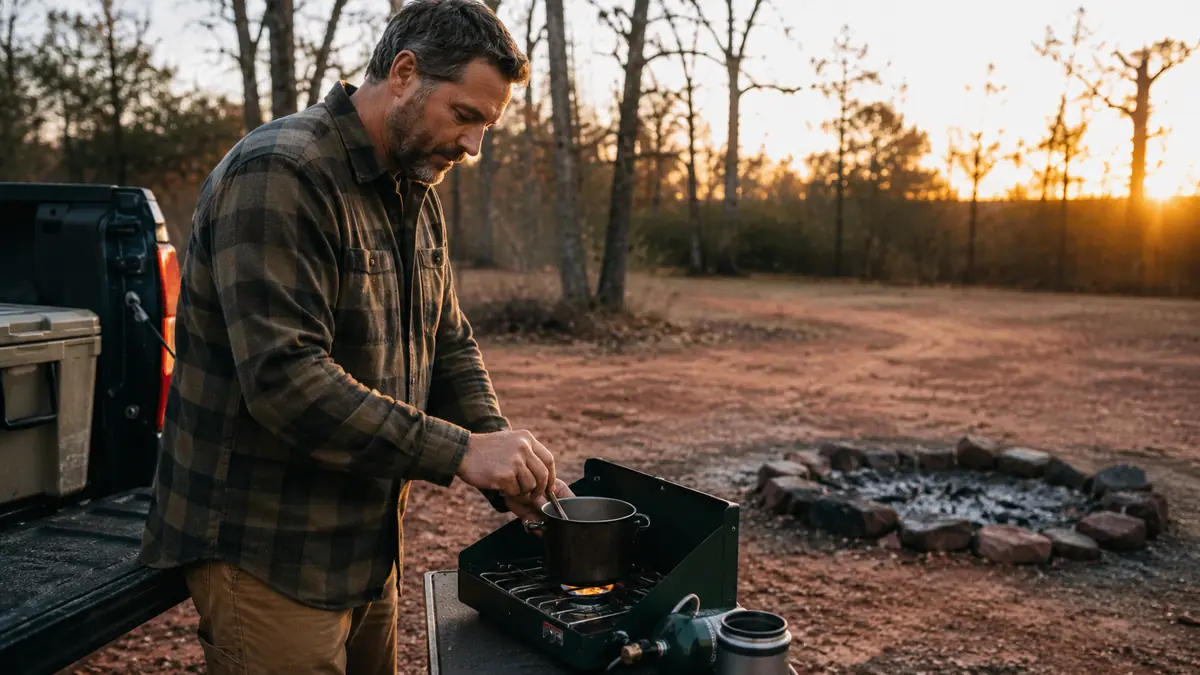
I spent enough mornings at deer camp trying to coax a fire out of wet wood before daylight that I finally gave up and started keeping a portable stove in the truck instead. The last straw was a hunt two Novembers back, temps in the upper thirties, everything I could find to burn had soaked through overnight, and by the time I got a real flame going the sun was already up and my best hunt window was gone. I ate a granola bar standing over a dead fire pit that morning and decided campfire cooking, as much as I love it, wasn't something I could count on when the clock actually mattered.
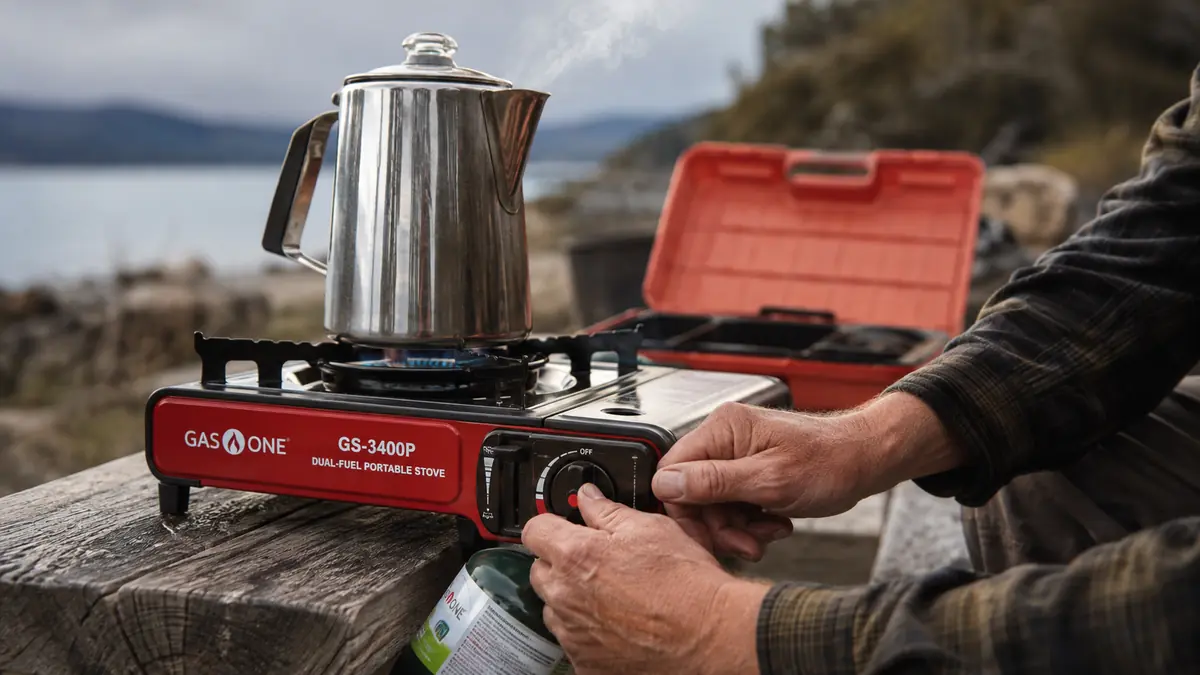
These days the stove that rides with me is the Gas One GS-3400P, a dual fuel single burner that runs on propane or butane depending on what I've got on hand. I haven't sworn off cooking over a fire, there's still a place for that, but for the mornings and evenings where I need heat now and can't afford to gamble on wet wood or wind, a portable stove wins almost every time. Here are ten reasons why, learned the hard way across a full season of trips.
Tired of gambling on wet wood and a burnt-out lighter?
The Gas One GS-3400P has ridden in my truck every trip since that dead-fire morning at deer camp. Propane or butane, it lights when I need it to.
Amazon Check Today's Price on Amazon →Fire Bans Don't Take Your Dinner Off the Table
Every dry summer, half the counties I hunt and fish end up under a burn ban, and that means campfire cooking is flat out illegal, not just discouraged. A portable stove with a contained flame is generally allowed even when open burning isn't, though the rule varies by county and it's always worth a quick check before you head out. I've shown up to a lease during a burn ban with nothing but a bag of charcoal and had to drive forty-five minutes back to town for propane. That doesn't happen anymore with a stove already in the truck.
You're Cooking in a Fraction of the Time
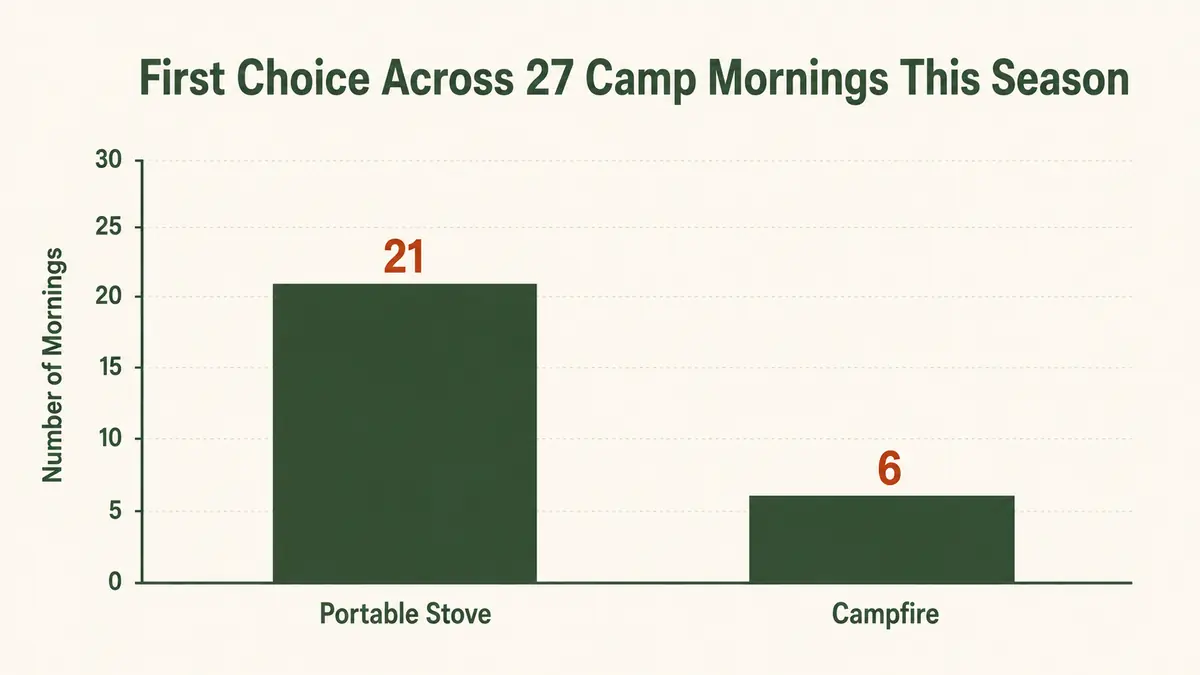
Building a real cooking fire, gathering wood, splitting kindling, getting a bed of coals hot enough to actually cook on, eats twenty to thirty minutes before you've heated a single thing. A portable stove lights in under a minute and holds a steady flame right away. Across 27 camp mornings this past season, I reached for the stove first 21 times and only built a full cooking fire 6 times, almost always when I had the extra time to enjoy the process rather than needing food fast.
You Actually Control the Heat
A campfire gives you exactly one temperature setting most of the time, whatever the coals happen to be doing, and that's usually too hot in the middle and barely warm on the edges. I've scorched eggs on one side of a skillet and left the other side raw more times than I want to admit, all from an uneven bed of coals. A stove with a real control knob lets me drop to a true simmer for beans or crank it up to sear, the same way I would on the stove at home.
Rain and Wind Don't Shut You Down
A soaking rain can smother even a well-built fire, and I've watched grown men fight a lighter and a pile of damp tinder for twenty minutes with nothing to show for it. A portable stove doesn't care much either way, thread on the fuel, hit the igniter or a lighter as backup, and you're cooking, rain or shine. One thing worth saying plainly, a gas stove still needs open air to burn safely, never run one inside a sealed tent or a closed-up vehicle, the carbon monoxide risk is real and it's not worth it just to stay dry.
No Wood Gathering, No Wasted Daylight
Popular campgrounds get picked clean of dry deadfall fast, and I've spent whole afternoons at busy public sites hunting for burnable wood instead of fishing or setting up camp. A portable stove takes that entire chore off the list. Whatever daylight I've got goes toward the reason I drove out there in the first place, not scavenging the treeline for something dry enough to burn.
You Leave the Site the Way You Found It
A campfire ring scars the ground for years, blackened rocks, a bare patch of dirt where the grass never comes back the same. On public land especially, I try to leave a site looking like I was never there. A portable stove leaves nothing behind but footprints, no fire ring to dig out or hide, no charred stones to explain to the next camper who pulls in after you.
It Rides Anywhere Without Eating Truck Bed Space
Firewood takes up real room, and hauling enough for a whole weekend means less space for coolers, tackle, and everything else. The Gas One packs into its own carrying case about the size of a lunchbox, along with a spare fuel canister or two. That's the whole cooking setup, tucked into a corner of the truck bed instead of sprawled across half of it.
Coffee Before First Light Without Tipping Off the Deer
A campfire throws light and smoke that carries a long way in the still dark air before sunrise, and I've had deer bust out of a bottom because they smelled woodsmoke well before I ever reached my stand. A low-profile stove tucked behind the tailgate gets the coffee going quiet and close to the ground, with a lot less light and scent drifting downwind. Small thing, but it's cost me a morning hunt before and I don't take the chance anymore.
Cleanup Takes Two Minutes, Not Twenty
Doing a campfire right means drowning it, stirring the ash, drowning it again, and checking it's dead cold before you ever walk away, and skipping that step is how wildfires start. A stove just needs the fuel disconnected and the case zipped shut. No ash to bury, no coals to babysit for another half hour while everyone else is already packed up and waiting.
A Contained Flame Is a Safer Flame
Dry grass, a gust of wind, and an unattended campfire is a bad combination I've seen turn into a real scare more than once, and it's how a lot of wildfires actually start. A portable stove keeps the flame in one small, controlled spot instead of an open bed of coals that can throw sparks. That same rule about ventilation applies here too, keep it outdoors and away from anything that closes you in, and a contained burner is about as safe as open-flame cooking gets.
What I'd Skip
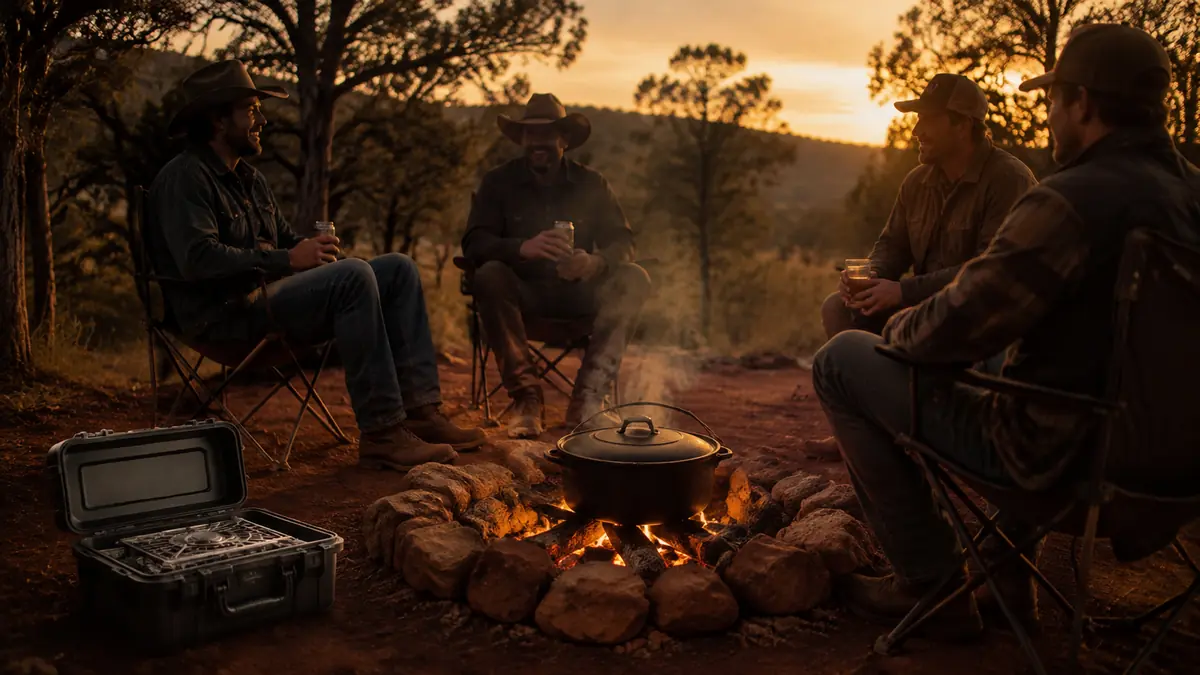
I wouldn't tell anyone to give up on campfires entirely. A dutch oven stew that's simmered over real coals for two hours tastes like nothing a burner can replicate, and there's a reason everybody still gathers around a fire at night instead of a stove. Campfire cooking earns its place on trips where you've got the time and the legal green light to build one. What I would skip is depending on a campfire when time, weather, or a burn ban is working against you, and skipping the fire safety basics just because a burn ban isn't in effect that week.
I'd also skip buying any old single-fuel stove without checking the fuel type against how you actually camp. The Gas One GS-3400P has become the stove I've relied on all season precisely because it runs on propane or butane, whatever I've already got in the truck. And if you're new to cooking on one, I put together a full walkthrough on how to actually cook a real meal with one, from cast iron basics to timing more than one dish off a single burner.
A campfire is for the nights you've got time to enjoy. A portable stove is for the mornings you don't.
Twenty-one mornings out of twenty-seven, this is what I reached for first.
If wet wood, wind, or a burn ban has ever cost you a meal at camp, the Gas One GS-3400P is worth having in the truck before your next trip.
Amazon Check Today's Price on Amazon →