
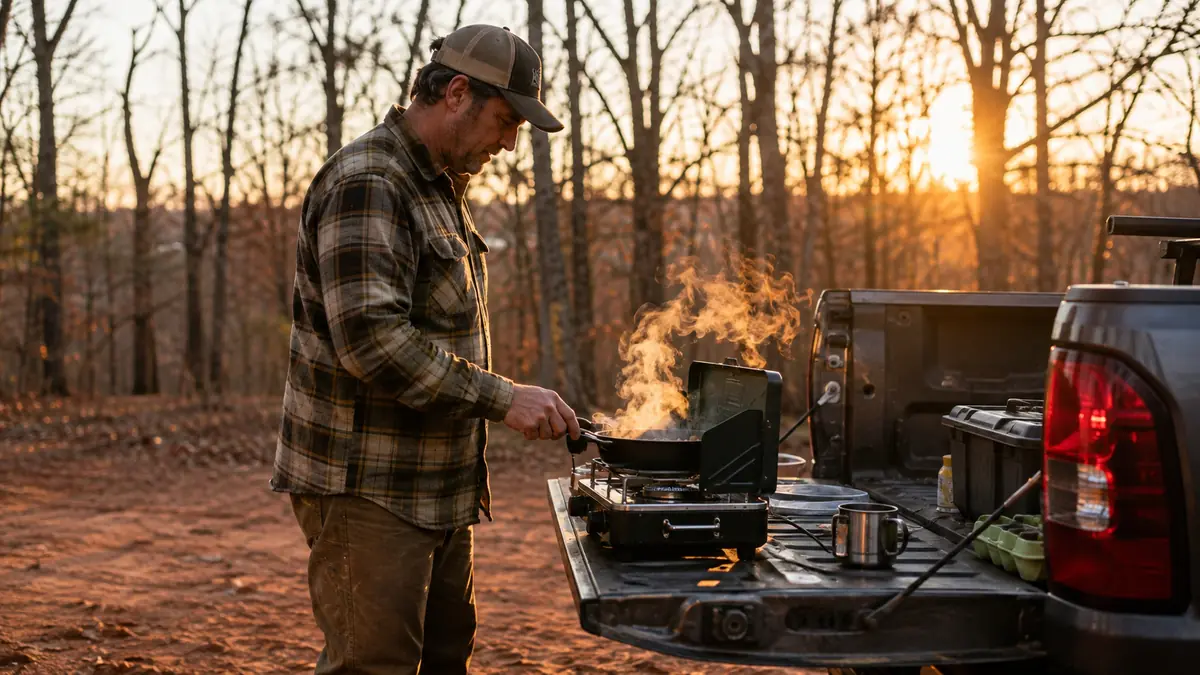
I bought the Gas One GS-3400P last spring after my old two-burner stove finally quit on me halfway through a turkey hunt, right as the coffee water was starting to bubble. I was standing in front of a wall of camp stoves at the time, most of them locked into one kind of fuel canister, and the dual fuel setup on the Gas One caught my eye because I already had a mix of propane bottles and butane canisters sitting in my garage from other trips. Propane or butane, whatever's on hand, that's the pitch, and I wanted to find out if it actually worked that way in the field or if it was just something printed on the box.
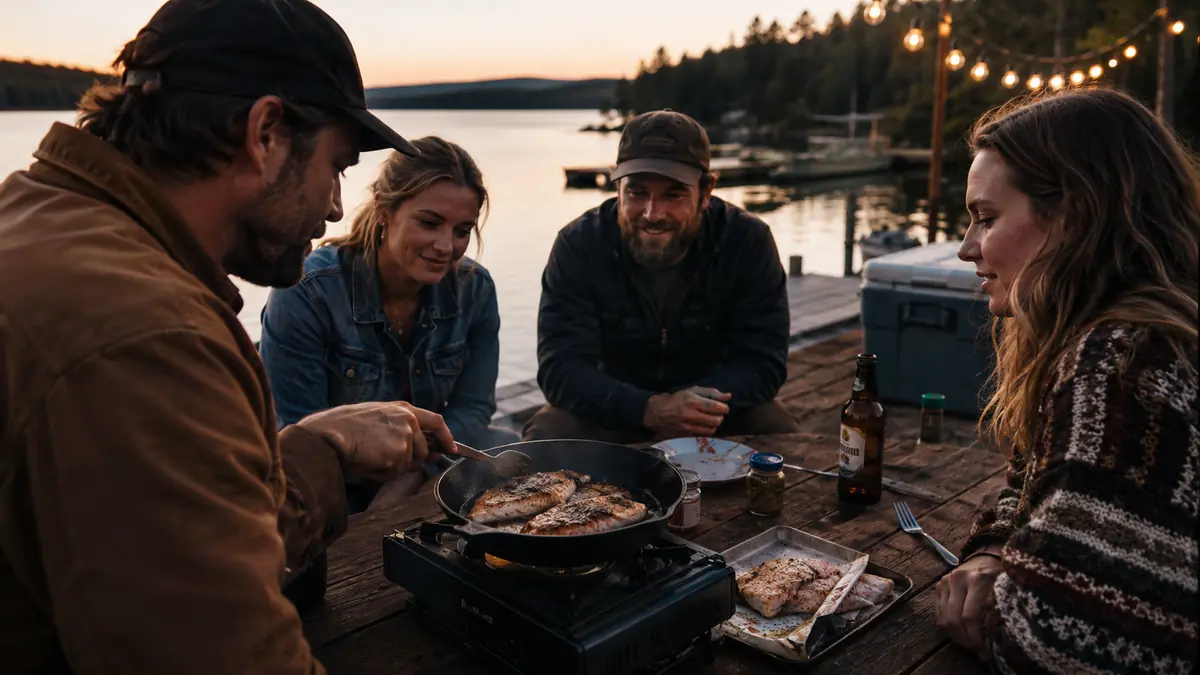
This isn't a rundown of specs I pulled off the packaging. I'm not going to hand you a burn-time number and call it done. What I can tell you is what happened when I actually cooked on this thing, trip after trip, from a cold March morning at deer camp to a lake house weekend in July where three of us were frying fish off one burner while the light went down over the water.
The Quick Verdict
After a full season of real use, the Gas One GS-3400P earns its keep on fuel flexibility and simple, honest performance, though the igniter and the carrying case both show their limits once you've beat on them a while.
Amazon Check Today's Price →Tired of a camp stove that only runs on one kind of fuel you have to remember to buy?
The Gas One GS-3400P has been the stove riding in my truck since spring, propane at deer camp, butane when I'm packing lighter. Check today's price and see why it earned a permanent spot in my gear tote.
Amazon Check Today's Price on Amazon →How I've Used It
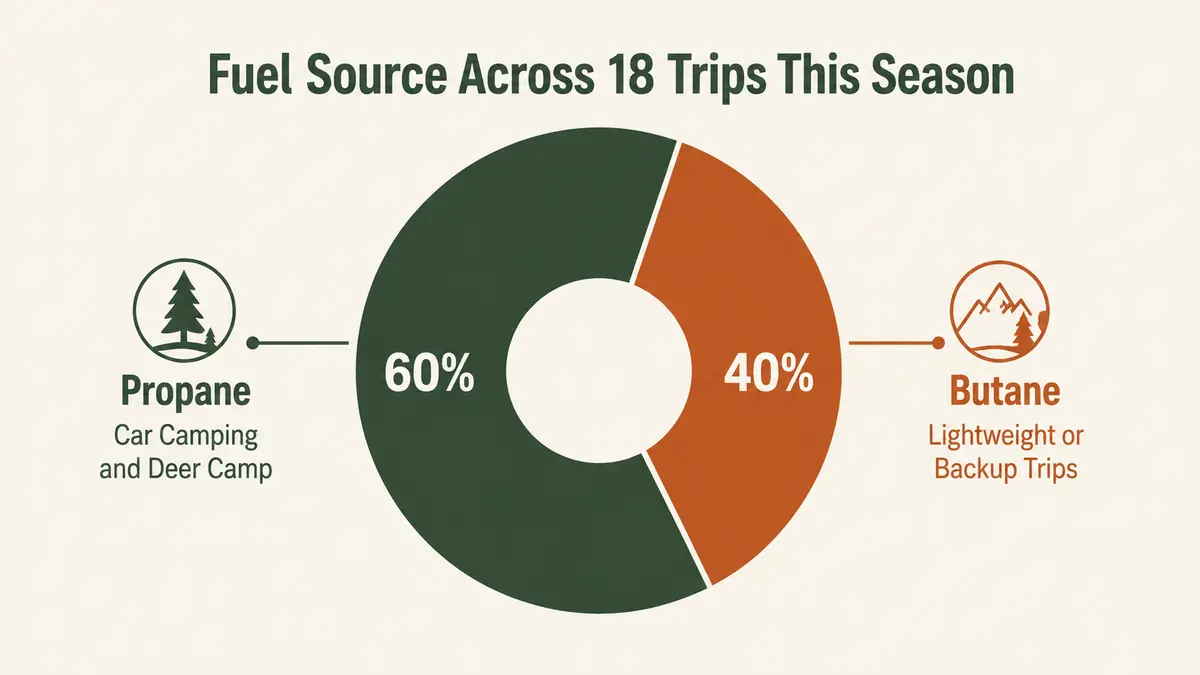
I've put this stove through eighteen trips since the spring, by my own count scratched on the inside lid of the tote it lives in. That includes car camping weekends with my kids, three separate deer camp mornings where the temperature was down near freezing, a lake house trip where we fried crappie fillets off the dock, and a handful of afternoons where I set it up in the truck bed just to boil water and make coffee before a hike. Roughly six of every ten of those trips I ran it on a propane bottle, the other four on a butane canister, mostly on shorter outings where I didn't want to haul the bigger propane tank. That split held up about the way I expected going in, which is exactly the kind of flexibility that sold me on the Gas One in the first place.
Between meals I'm usually working on something else at camp, filtering creek water for the coffee pot with the water filter I pack on every trip, breaking down a deer, or just sitting with a cup of coffee waiting on the sun. The stove needs to work without me babysitting it, and for the most part it has. I set it on a flat rock or the tailgate, thread on whichever fuel I brought, and it lights and holds a flame while I go do something else. That's really all I ask of a piece of gear like this.
I didn't treat it gently either. It's ridden loose in the bed of my truck more times than I can count, gotten rained on twice while still connected to a canister, and spent a night outside once when I forgot to bring it in after a late dinner. That's the kind of handling that tells you more about a stove than a clean demo in a parking lot ever will, and it's why I stopped relying on campfire cooking on trips where the weather turns and I need something that lights in under a minute regardless of wind or wet wood.
My kids have gotten used to it too, which says something on its own. My youngest knows the drill now, hold the canister steady while dad threads it on, stand back while it lights. It's simple enough that I've let him do the actual lighting with me standing right there, something I never would have trusted him with on the old stove where the burner sat closer to the fuel line and the flame came up unevenly.
Dual Fuel in Practice: Propane and Butane Really Are Interchangeable
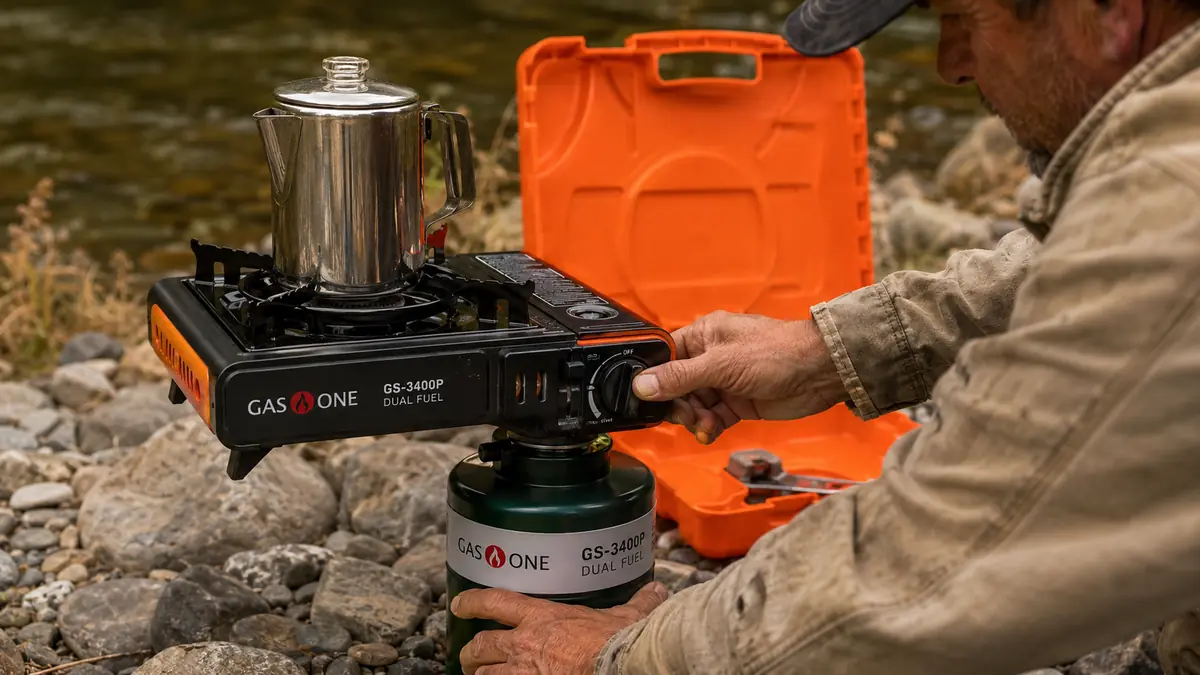
The dual fuel claim is the whole reason I picked the Gas One over a handful of cheaper single-fuel stoves, and after a season of switching back and forth, I'd call it the real deal. Threading on a propane bottle is a straightforward twist, same as any other propane camp stove I've used. Switching to a butane canister means popping open a small compartment on the side and clipping the canister in, and Gas One built the valve so it self-seals when you disconnect it, which matters because I've had butane stoves in the past leave a faint hiss of gas in the air after a canister swap. I haven't had that problem here, not once across a full season of swapping fuel types depending on what I had on hand.
Where I noticed a real difference between the two fuels was cold weather. On that March deer camp morning, temps were sitting right around freezing, and the butane canister I'd brought along struggled. Flame was weak, and it took longer than usual to get water to a boil for coffee. Propane didn't have that problem at all, same cold morning, strong flame from the first light. That's not a knock on Gas One specifically, butane canisters in general lose pressure and perform worse in the cold, but it's worth knowing before you rely on butane alone for a late fall or winter trip. I've since made propane my default any time frost is a real possibility and saved butane for warmer weekends.
Cooking Performance: Coffee, Cast Iron, and a Fish Fry
For everyday camp cooking, this stove has done exactly what I needed. A percolator full of water gets going at a fast clip, cast iron heats evenly enough that I haven't scorched eggs or burned bacon on one side while the other stayed cold, which happened regularly on my old stove with a hot spot dead center. At the lake house fish fry, I had a full skillet of oil going for close to forty minutes straight, refilling and reheating between batches, and the flame held steady the whole time without me touching the control knob more than to adjust for wind.
Wind is where I'd flag a real limitation. The stove has a small folding windscreen built into the burner housing, and it helps some, but it's nowhere near enough on an open ridgeline or a gusty lake shore. Twice this season I had the flame get knocked down low enough that I had to reposition the whole stove behind a truck door or a cooler to block the worst of it. That's a common issue with compact single-burner stoves in general, not something unique to the Gas One, but if you camp in genuinely open, windy country the way I sometimes hunt, plan on bringing your own extra windbreak.
The built-in piezo igniter worked fine roughly nine times out of ten, a satisfying click and the burner catches. That tenth time, usually in damp or windy conditions, I've had to reach for a lighter instead. I always keep one in the same pocket of the carrying case now, and I'd tell anyone buying this stove to do the same rather than count on the igniter alone every single time.
Durability After a Season in the Truck Bed
The burner and the base of the Gas One have held up well. No rust, no warping, the control valve still turns smoothly, and I've never had a fuel connection fail on me mid-cook. That's the part that matters most for something you're trusting to work every single trip, and it hasn't let me down there. What has shown wear is the carrying case. It's a padded soft case with a zipper, and by trip twelve or so the zipper pull had started to fray, and by trip eighteen it's stiff enough that I have to work it carefully to get it fully closed. It still does its job, it just doesn't feel like it'll last as many seasons as the stove itself will.
I'd also flag the exterior finish. There's some scuffing and a couple of small scratches on the housing from riding around loose in the truck bed, purely cosmetic, nothing that's affected how it runs, but if you're the type who likes gear to look new after a season, this one will show its miles the way most affordable camp stoves do. I've started wrapping it in an old towel before it goes in the truck bed now, more to protect the finish than anything, since the mechanical parts underneath don't seem to care much either way.
Alternatives I Considered
Before settling on the Gas One, I looked hard at a couple other options, including how it stacks up against the Coleman Triton, which is the stove a lot of guys I hunt with already own. The Triton is a solid, reliable performer and it's been around long enough that most camp stores stock parts for it, but it's propane-only, no butane option, which meant I'd still be hauling two different fuel types for different trips if I'd gone that route. For my truck and my mix of car camping and lighter overnight trips, that flexibility mattered more than brand familiarity.
I also priced out a couple of no-name single-fuel stoves online that ran noticeably cheaper, cheap enough that I figured they'd cost less than a tank of gas either way, but reviews on a few of them mentioned valve failures and flimsy control knobs after a season, which is exactly the kind of thing you don't want to find out about while you're standing at a cold camp with no working stove. Between the two, the Gas One's dual fuel setup and the fact that it's held together through eighteen trips of real abuse made it the easy call in hindsight.
What I Liked
- Genuinely interchangeable between propane and butane, no separate adapter needed
- Valve self-seals on disconnect, no lingering gas smell after a fuel swap
- Heats evenly enough for cast iron cooking, no dead center hot spot
- Held a steady flame through a forty-minute fish fry without adjustment
- Burner and base have shown zero rust or warping after a full season
Where It Falls Short
- Piezo igniter misses roughly one time in ten, especially in damp or windy conditions
- Built-in windscreen isn't enough for genuinely open or gusty country
- Butane performance drops noticeably in cold temperatures near freezing
- Carrying case zipper started fraying by trip twelve
- Exterior picks up cosmetic scuffs quickly if it rides loose in a truck bed
Propane or butane, whatever's on hand, that's the pitch. After eighteen trips switching back and forth, I'd call it the real deal, not just something printed on the box.
Who This Is For
If you split your time between car camping, deer camp, and shorter lightweight trips, the way I do, the dual fuel setup on the Gas One genuinely simplifies your gear closet. Instead of stocking two different fuel types for two different stoves, you carry whatever canister you've got and know it'll run. It's also a smart pick for anyone who's tired of a stove that only performs well in a calm parking lot demo and wants something that's actually been proven on cold mornings and windy lake shores.
Who Should Skip It
If you camp regularly in genuinely exposed, windy terrain and don't want to bring your own extra windbreak, or if you're planning serious cold weather trips and want to run exclusively on butane, this stove will show its limits. Anyone who wants a two-burner setup for cooking multiple dishes at once should also look elsewhere, this is a single-burner stove built for portability, not a full camp kitchen replacement.
Eighteen trips in and this is still the stove riding shotgun in my truck.
If you're tired of hauling two different fuel types for two different stoves, the Gas One GS-3400P is worth putting to the test on your next trip. Check today's price before you head out.
Amazon Check Today's Price on Amazon →