
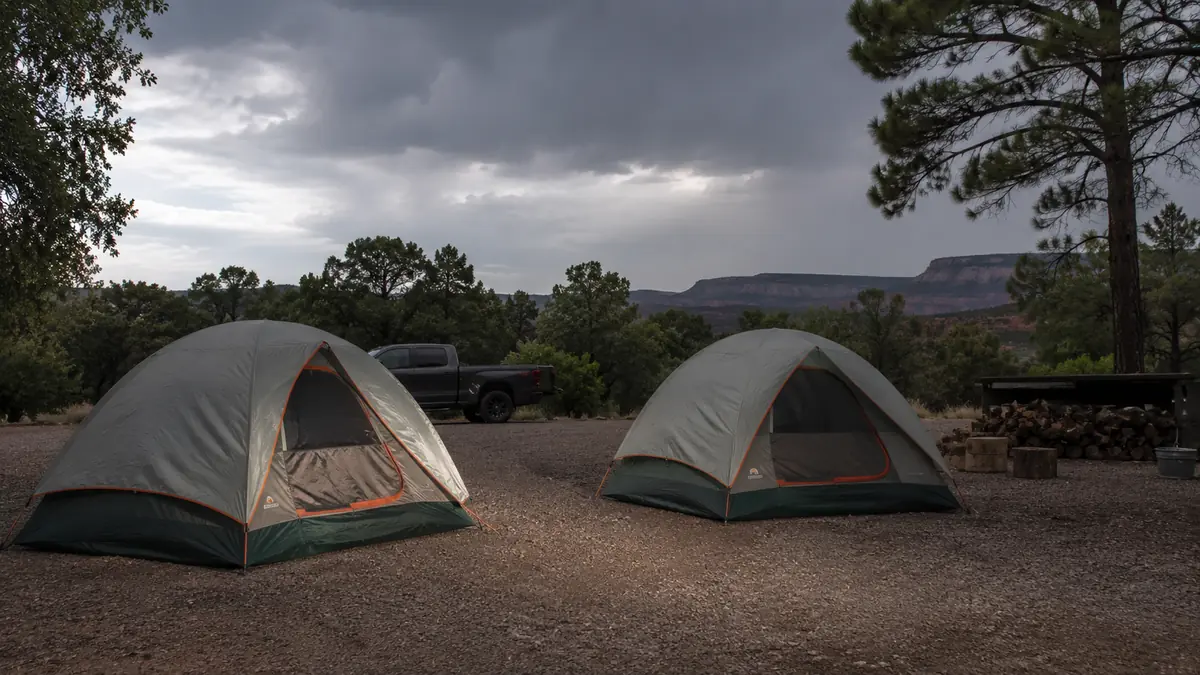
If you want the short answer before I walk you through why, I'd pack the Amazon Basics tent for a weekend trip and I wouldn't feel bad recommending the Coleman Sundome to anybody who wants the name they already trust. I pitched both of these on the same gravel pad two weekends apart this spring, same stretch of ground behind a friend's place outside town, and I ran them through the same weather both times, a warm Saturday that turned into a steady overnight rain by Sunday morning. Neither tent let water in. Neither one fought me on the poles. But they don't earn their keep in exactly the same spots, and if you're standing in the aisle trying to decide between two tents that look almost identical on a shelf, you need to know where each one actually pulls ahead.
Both of these are three-season dome tents built around the same basic idea, two poles crossing at the roof, a rainfly that clips over the top, a bathtub floor that keeps ground moisture out. On paper they read like the same tent with two different logos stitched on. I wanted to know if that was true once you actually pitch them, sleep in them, and pack them back up wet, so I did exactly that. I've written up my full review of the Amazon Basics tent covering a whole season of trips with it, and this piece is the head to head version, the Sundome sitting right next to it on the same patch of gravel so I could see the differences instead of guessing at them from a spec sheet.
Budget dome tents get a bad name from people who've only ever pitched one bad one and assumed the whole category was junk. That hasn't been my experience with either of these. Both are the kind of tent a family can pull out of a garage box every summer for years without babying it, and both are cheap enough that losing a stake or tearing a stuff sack doesn't feel like a disaster. The real differences show up in the small stuff, the two or three minutes it takes to get poles seated, how much water sneaks past the fly in a hard rain, and how the tent feels to live in once the sun's down and you're stuck inside it waiting out weather.
| Amazon Basics Camping Tent | Coleman Sundome | |
|---|---|---|
| Pitch Time & Pole Layout | Two shock corded fiberglass poles cross at the roof and snap into color coded clips instead of grommets, so it's hard to miss a pole sleeve even in low light. | Same two-pole crisscross design Coleman has used for years, grommets instead of clips, a shade slower getting the last pin seated but nothing that trips up a first-timer. |
| Rainfly Coverage | Fly comes down close to the seams and covers most of the door zipper, though a hard sideways gust can still push a little mist under the vestibule edge. | Deeper fly that runs lower on the sides and over the door, the better of the two if you're pitching somewhere the rain tends to come in sideways. |
| Floor & Weather Sealing | Factory taped seams held dry through every trip I pitched it on, though the floor picks up ground moisture fast if you skip a footprint underneath. | Same taped seam approach, welded floor corners that feel a touch more durable after a full season of setting up on gravel pads. |
| Ventilation & Condensation | Two mesh windows plus a mesh door panel give a decent cross breeze, though the inside still fogs up on a cold morning after a still night. | Similar mesh window count with slightly larger vents up near the peak, noticeably less condensation dripping down the walls on a cold morning. |
| Wind Handling | Handles a steady breeze fine once it's staked square and the guylines are out, though the dome flexes a bit more than the Sundome in a sustained gust. | Lower profile and slightly stiffer pole tension held tighter on the one gusty night I pitched it on an open ridge west of camp. |
| Packed Size | Packs into a duffel style bag about the size of a rolled sleeping bag, light enough it doesn't feel like dead weight thrown in the truck bed. | A little bulkier in the stuff sack, still truck bed friendly, just a tighter squeeze if you're packing a car trunk instead. |
| Best Use | Weekend car camping, a first tent for a family, backyard trial runs, budget-minded buyers who still want a rainfly that actually does its job. | The same crowd, really, leaning a little toward buyers who want the established name behind the tent and don't mind paying a bit more for it. |
Where the Amazon Basics Tent Wins
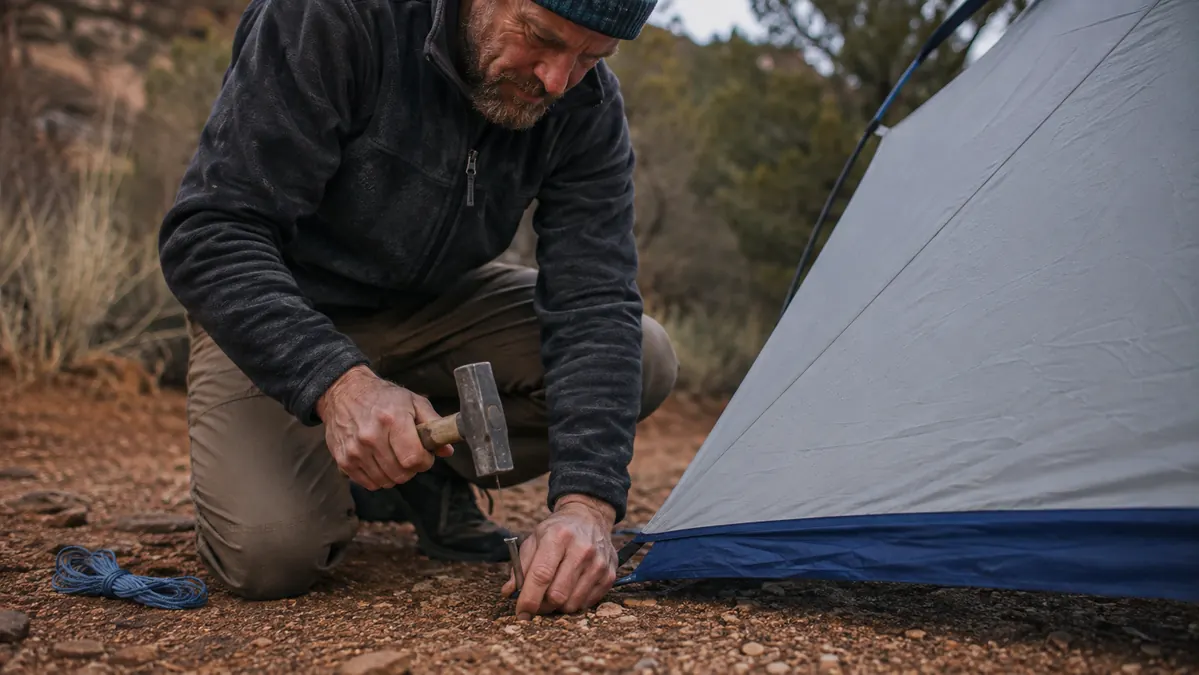
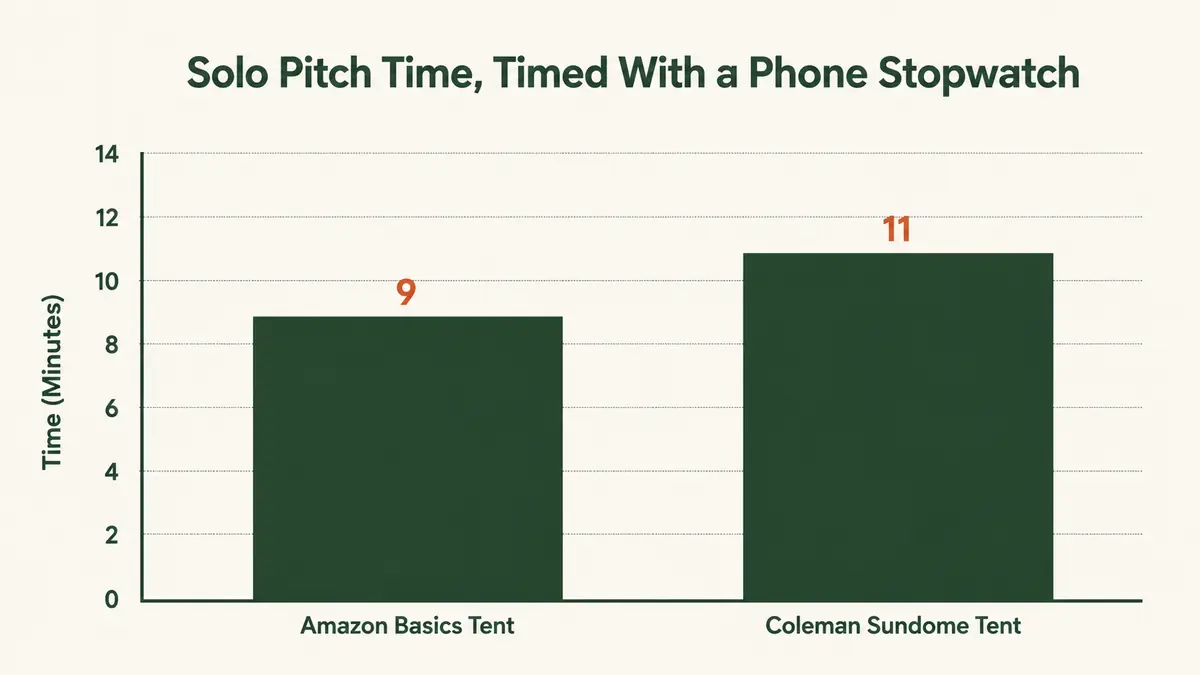
The first thing that stood out pitching these two back to back was how much faster I got the Amazon Basics tent up once I'd done it once. The clips instead of grommets sound like a small thing until you're doing it solo in fading light, and I timed both pitches with a stopwatch on my phone just to have real numbers instead of a gut feeling. Nine minutes for the Amazon Basics tent, eleven for the Sundome, both of them solo pitches with no help and no rushing. That two minute gap isn't huge, but when you've got a truck bed to unload and a fire to get going before dark, it adds up over a weekend.
It's also the cheaper of the two most of the time, and for a tent that's going to spend most of its life at a weekend campground instead of getting hammered on a thru-hike, that matters. I'm not going to pretend price doesn't factor into a buying decision, I just won't tell you a number here since it shifts around, but it's worth checking today's price on both before you decide. For a family buying their first tent, or somebody who wants a solid backup tent for guests without spending Sundome money twice over, the Amazon Basics tent gets you nearly the same performance for less.
The packed size is the other place it edges ahead. It rolls down smaller and rides lighter in the truck bed, which doesn't sound like much until you're trying to fit a cooler, camp chairs, firewood, and two tents into the same bed on a family trip. If you're the one packing the truck, that difference is real, even if it never shows up on a spec sheet anywhere. The color coded clips also make it the easier tent to hand off to somebody who's never pitched a dome tent before, since there's really only one way the poles can go.
Where the Coleman Sundome Wins
The Sundome earns its reputation on rainfly coverage and how dry it kept the vestibule area during that same Sunday morning rain. The fly runs lower on the sides and covers more of the door zipper, and I noticed less water working its way toward the entrance than I did with the Amazon Basics tent's fly in the same storm. If you camp somewhere that rain tends to come in sideways off open ground, that extra coverage is worth something real, not just a marketing line.
It also breathes a little better on a cold morning. I've woken up in both tents after a still, chilly night, and the Sundome had noticeably less condensation running down the inside walls, likely down to those slightly bigger vents up near the peak. Nobody wants to wake up and find their sleeping bag damp from the tent sweating on itself overnight, and the Sundome handles that a shade better than the Amazon Basics tent does.
There's also the name behind it. Coleman's been building dome tents for longer than most of us have been camping, and that history buys some peace of mind if you're the type who wants a brand you already trust before you hand over your money. It held tighter in the one gusty night I pitched it on an open ridge, and the stiffer pole tension is part of why. If you're camping somewhere exposed more often than not, that's a real point in its favor, and it's the kind of edge that shows up more on a mountain ridge than it ever will in a shaded state park loop.
Want the Tent That Goes Up in Under Ten Minutes?
Fumbling with poles in fading light is a bad way to start a weekend. The Amazon Basics tent clipped together in nine minutes flat on my stopwatch, and it's the tent I keep loading first for a family weekend at the lake.
Amazon Check Today's Price on Amazon →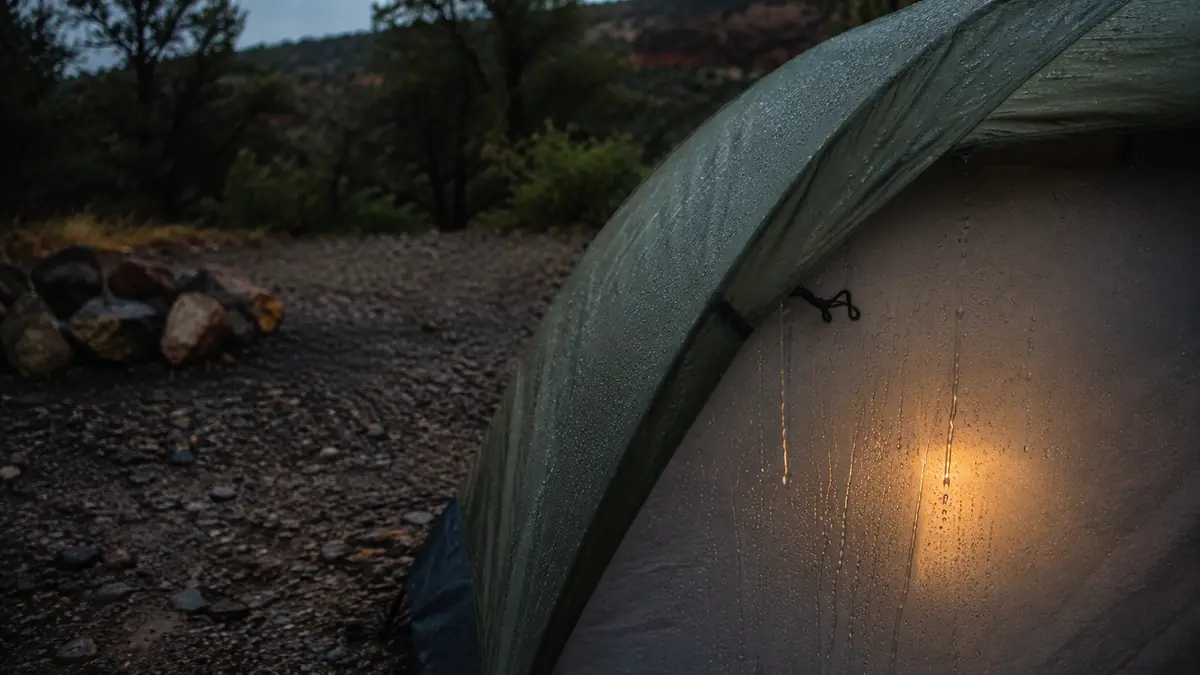
Who Should Buy Which
If you're outfitting a family for weekend trips, buying a first tent, or you just want a solid rainfly that goes up fast without paying for a name on the tag, the Amazon Basics tent is the one I'd point you toward. It's lighter in the truck bed, quicker to pitch, and it kept us dry through the same storm the Sundome faced. If you're camping somewhere exposed more often, chasing that last bit of rainfly coverage in a sideways rain, or you'd simply rather hand your money to the brand you grew up seeing at every campground, the Sundome earns that choice honestly.
I wrote up the honest verdict after a full season with the Amazon Basics tent once I'd put more than a handful of weekends on it, past the point where a first impression can hide a real problem, and it held up the way that first rainy weekend suggested it would. Nothing about it fell apart under regular use, and the fly kept doing its job trip after trip, through gravel pads, backyard trial runs, and one genuinely miserable Sunday morning downpour.
Neither of these tents is a bad choice, and I want to be straight about that before you close this tab. They're closer in real performance than the price gap between them suggests, and either one will get a family through a normal camping season without letting you down. I just know which one is going back in my truck the next time I'm loading up for a weekend, and it's the one that went up two minutes faster in the same rain.
Don't Let Setup Eat Into Your Weekend
The Amazon Basics tent went up faster, packed down smaller, and kept us dry through the same storm the Sundome faced. It's the tent I'd load first for the next family trip.
Amazon Check Today's Price on Amazon →