
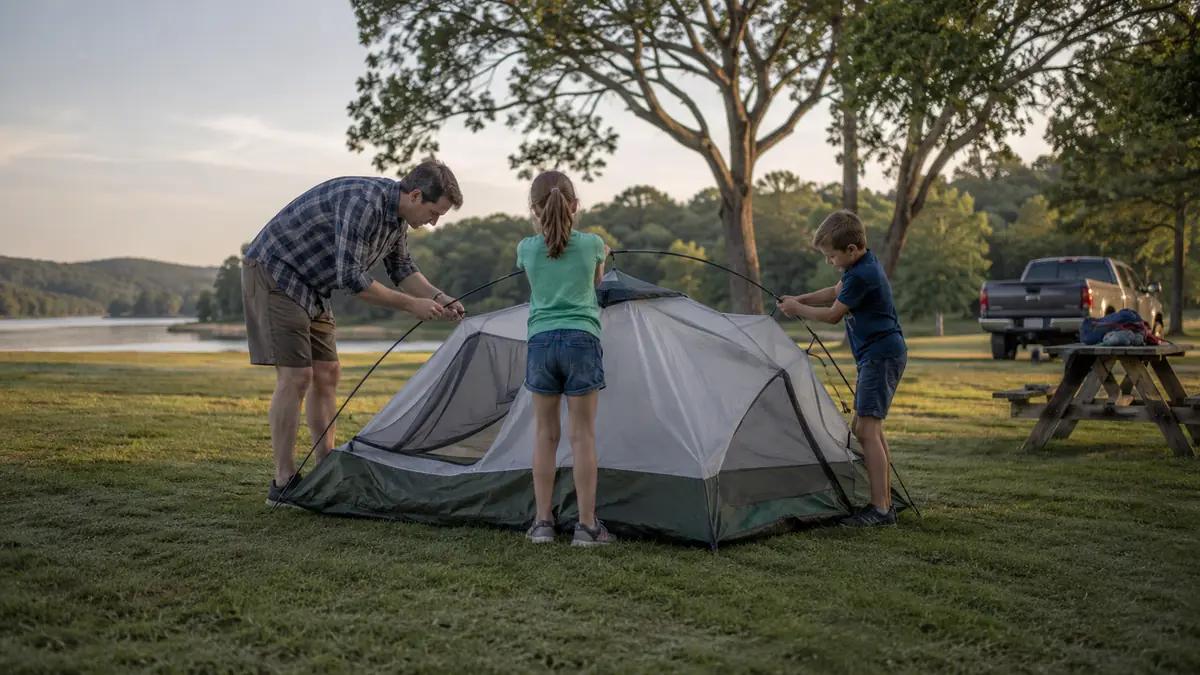
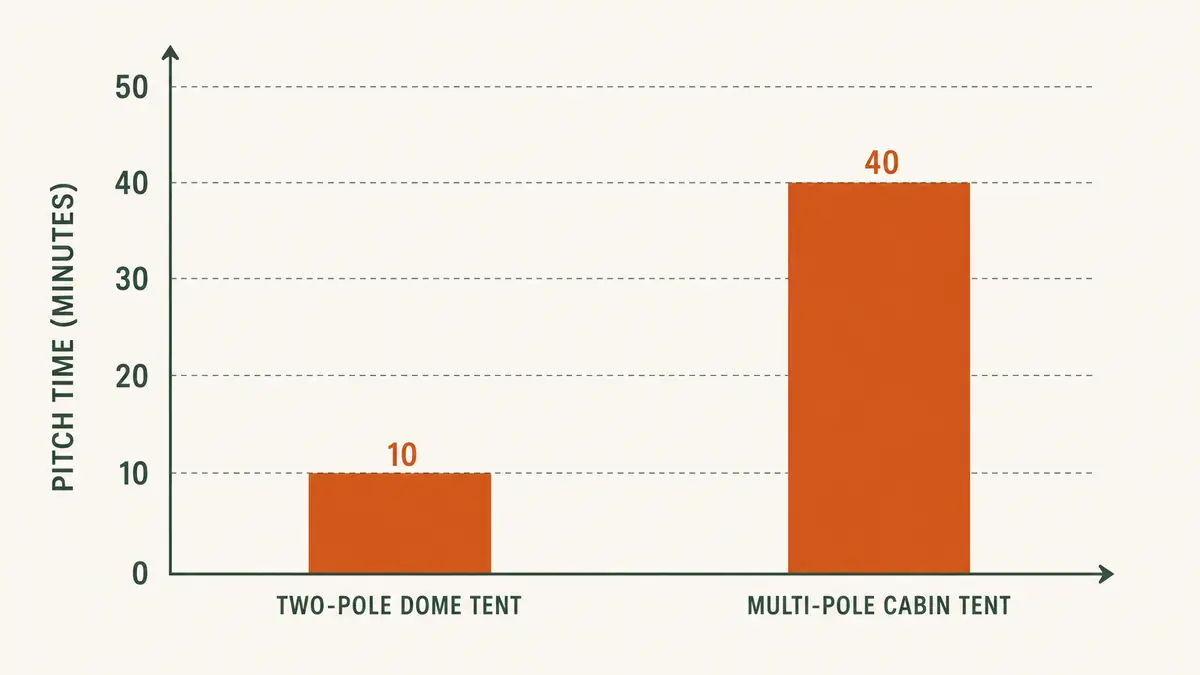
The first weekend we took the kids camping at Beavers Bend, I fought a borrowed cabin-style tent with nine poles and two kids underfoot for 40 minutes before I got a single wall standing straight. My wife held the flashlight, my daughter Callie cried because she was hungry, and by the time we finally staked the last corner down it was full dark and everybody's mood had gone with the sun. That was the trip that convinced me a family camping tent needed to work with tired hands and small helpers, not against them, and a dome tent turned out to be exactly what we needed.
The tent in our garage now is the Amazon Basics dome tent with the rainfly, and it's the tent we've used all season, from spring weekends at Beavers Bend to a Fourth of July trip up near Broken Bow. It isn't fancy. It's a simple two-pole dome with a rain fly that clips over the top, and that simplicity is the whole point when you're setting up camp with kids pulling at your sleeves. Here are ten specific reasons the dome shape keeps winning over every other tent style we've tried for family camping.
Stop fighting a nine-pole tent with kids underfoot
The Amazon Basics dome tent is the one that's been in our garage for two full seasons now, and it goes up before anyone gets hungry or cranky.
Amazon Check Today's Price on Amazon →A Two-Pole Pitch Means One Tired Parent Can Still Get It Up
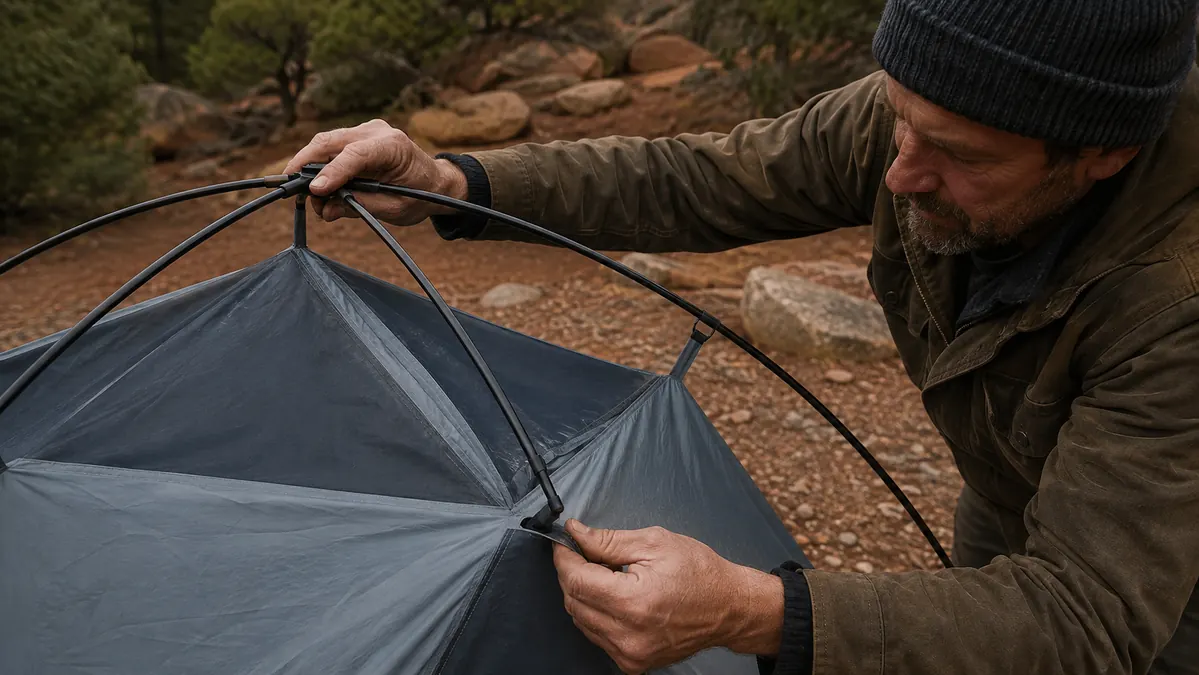
Cabin tents with six or nine poles ask you to thread fiberglass through sleeves while holding a flashlight in your teeth. Our Amazon Basics dome tent uses two long poles that cross at the center and click into ferrules at each corner. I can have ours standing in under 10 minutes by myself, and that's after a full day of hiking with two kids who wanted snacks every twenty minutes. When you're the only adult still functioning at six in the evening, fewer poles is the difference between a tent going up tonight and a tent staying in the trunk.
Freestanding Means You Can Move It After You Already Staked It Out
The first site we picked at Beavers Bend looked flat until we laid the tent down and found a root running right under where Wyatt's sleeping bag would go. Because the dome tent is freestanding, held up by its own poles instead of stakes, we picked the whole thing up, walked it ten feet, and set it back down over better ground. Try that with a tunnel tent needing guy lines pulled tight in every direction and you're re-staking from scratch.
There's Enough Headroom in the Center to Change a Kid Out of Wet Clothes
The curved dome shape peaks highest right in the middle, which sounds like a small thing until you're trying to peel a soaked seven-year-old out of creek clothes without either of you crouching. Our dome tent gives us just enough clearance dead center to kneel comfortably and get Callie into dry pajamas without her head bumping canvas. Low-profile tents don't give you that same headroom right where you actually need it.
The Curved Wall Sheds Rain Instead of Pooling It
A dome has no flat horizontal surfaces for rain to sit on. Water hits the curved rainfly and runs straight off the sides instead of collecting in a sag the way it can on a flatter-roofed tent. We got caught in a real downpour our second trip out, the kind that dumps for twenty minutes and quits, and the inside stayed dry while the rainfly did its job. That's part of why I keep the article on how to get it pitched fast when the sky opens up bookmarked on my phone, because you still want that fly on before the first drop hits.
It Packs Down Small Enough to Actually Fit in a Car Trunk
Between two kids' bikes, a cooler, camp chairs and a dog crate, cargo space on a family trip disappears fast. The Amazon Basics dome tent compresses into a duffel-style bag about the size of a rolled sleeping bag, so it tucks into whatever gap is left after everything else is loaded. A cabin tent with a rigid frame bag eats a whole corner of the trunk by itself, and on a loaded-down trip that space matters more than people expect.
It's Cheap Enough That a Kid Tearing It Isn't a Disaster
Kids climb tent walls, drag toys across the floor, and unzip doors a hundred times a weekend. A dome tent at this price point means a torn mesh panel or a bent pole tip is an annoyance, not a gut punch. I've watched friends wince every time their kid leaned on an expensive expedition tent, and that's not a feeling you want hanging over a family trip.
Two Poles Are Simple Enough to Teach a Kid to Help Pitch It
Wyatt is eight now and he can feed a pole through its sleeve and help me lift the frame into shape. That wouldn't happen with a tent that needs a diagram and forty-five minutes of pole-sorting. Handing a kid a real job at camp, even a small one like holding a pole steady while dad clips the corner, is part of why we keep coming back to camping as a family thing instead of a chore I do alone while everyone else unloads the cooler.
Mesh Panels Keep Air Moving Without Opening the Door to Bugs
Warm summer nights don't cool off much, and a sealed tent with two adults and two kids inside gets stuffy fast. The dome design leaves room for generous mesh panels in the upper walls and door, so air moves through even with the rainfly cinched down against dew. We've slept through plenty of warm nights with just the mesh doors zipped, no bugs and no one soaked in sweat.
Takedown on a Wet Sunday Morning Actually Goes Fast
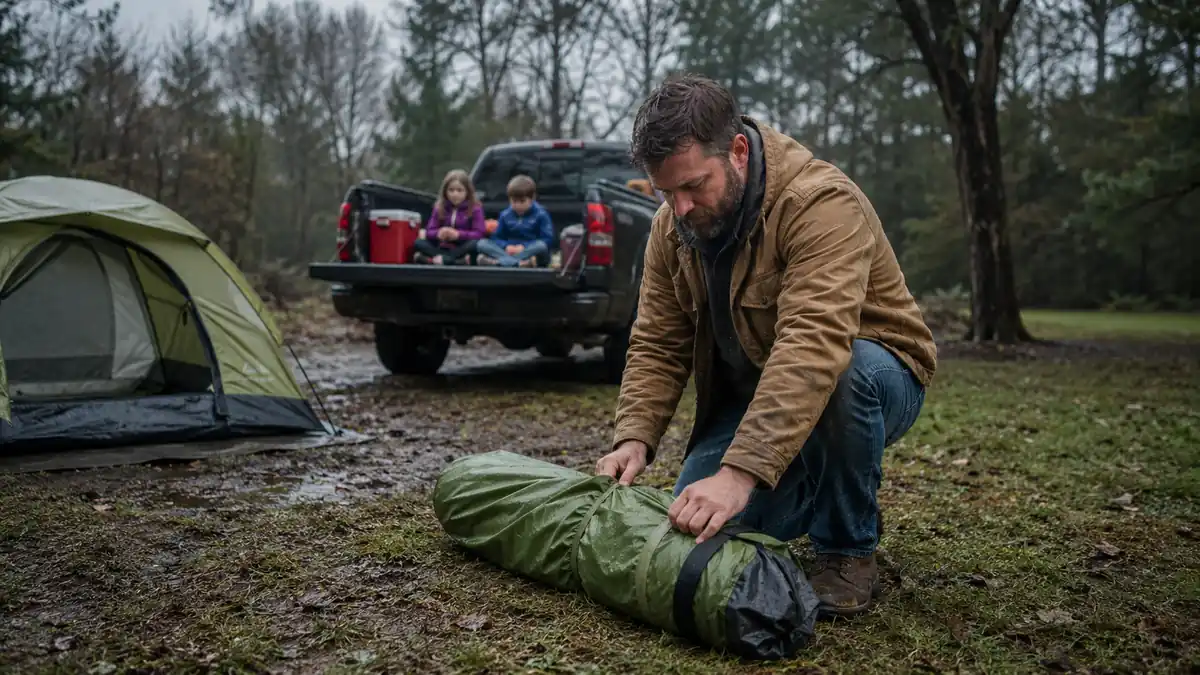
Every camping trip ends with packing up a tent still damp from morning dew while kids are already asking about breakfast. Two poles come apart in seconds, and since the whole structure isn't relying on a dozen stakes to hold its shape, I can have ours down, bagged, and rolled into its sack in about the same time it takes to load the cooler. That matters more on the drive home than it ever does on the drive out.
It's Built for Campgrounds, Not for Proving Something on a Ridge
This isn't a mountaineering tent and I'd never pretend it was. It's built for the kind of family camping we actually do, established campgrounds with mowed sites, picnic tables, and a bathhouse within walking distance. For that use case, a three-season dome tent with a rainfly is the right tool. It's not trying to be something it isn't, and neither are we out there.
What I'd Skip
I wouldn't take this tent backpacking into real backcountry, and I wouldn't trust it on an exposed ridge in a real windstorm. This Amazon Basics dome tent is built for fair-weather campground use, not for winter conditions or sustained high wind, and the curved walls that shed rain so well can still flex and buck when gusts get serious. I'd also skip pitching it for the first time in the dark at a campsite, since even a simple two-pole setup goes faster the second time you've done it. And I'd skip camping without a footprint or ground tarp underneath, because a thin tent floor and a rocky site are a bad combination no matter how good the dome shape is everywhere else.
A tent doesn't have to be the toughest one on the shelf. It just has to go up fast, keep the rain out, and still be standing when two kids are done jumping on the floor of it.
This is the dome tent living in our garage between trips
If you're tired of fighting a tent with kids underfoot, the Amazon Basics dome tent is what I tell every family at the campground to look at before their next trip.
Amazon Check Today's Price on Amazon →