
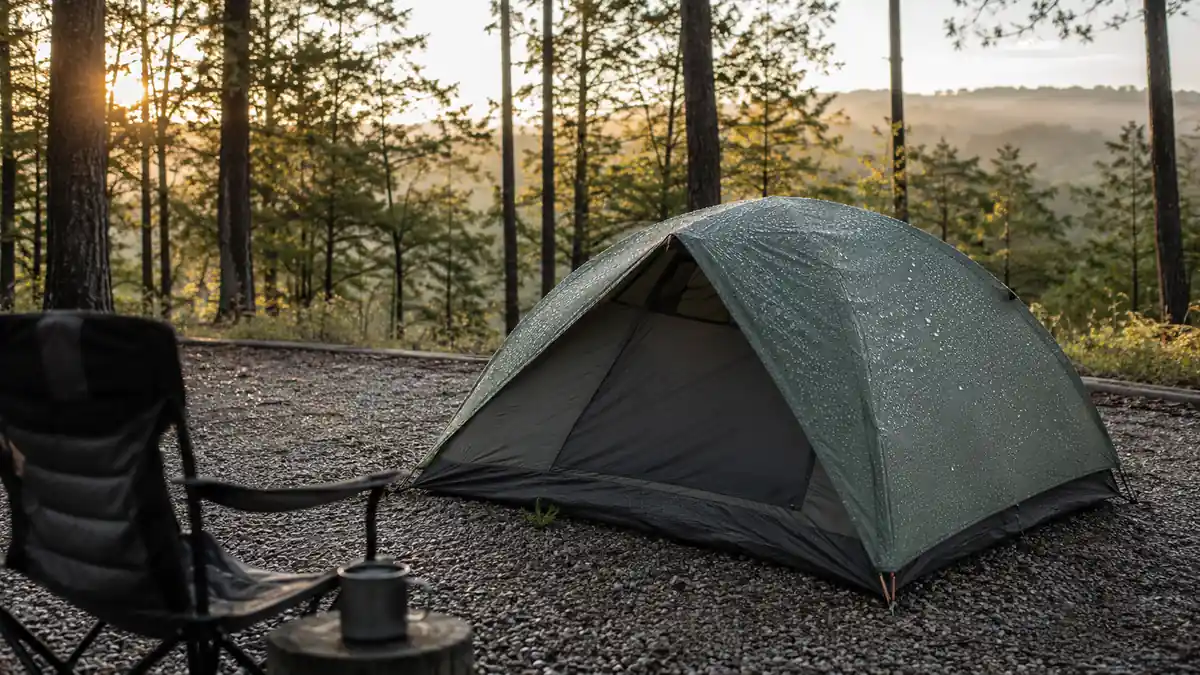
Every glowing review of the Amazon Basics Camping Tent I read before I bought one made it sound like the smartest sixty-some dollars a family could spend on gear. Easy setup, decent room, keeps the rain out, buy it and stop thinking about it. All of that is true on a calm, dry weekend. None of those reviews mention what a third straight rainy morning does to the inside of this tent, what a cold front rolling through does to the pole flex, or why you'll want a footprint under it whether the box says you need one or not.
I'm Cole Merrick, and I've pitched this tent at three different campgrounds around here in Oklahoma over the last several months, from a calm spring weekend at Broken Bow Lake to a genuinely miserable stretch at Beavers Bend when a cold front dropped through overnight. If you want the season-long play-by-play, I wrote that up separately in my long-term field notes. This piece is different. This is the stuff nobody puts in a five-star review because it doesn't fit the narrative of a perfect budget tent, and it's the stuff you actually need before you click buy.
The Quick Verdict
A genuinely solid fair-weather family and campground tent for the money. Ask it to handle real wind, cold, or a wet weekend and its budget bones start to show.
Amazon Check Today's Price →The listing photos show it dry and calm. I'll show you what a cold, wet morning actually looks like inside.
This tent still earned a spot in my truck bed for family campground trips. Just know what you're buying before that first rainy weekend. Check today's price and read the real limits below.
Amazon Check Today's Price on Amazon →What The Listing Photos Don't Show You
Amazon Basics photographs this tent the way every tent gets photographed, sunny afternoon, dry ground, rainfly folded back so you can see the mesh. That's a fair way to show a product, but it's also the exact set of conditions where almost any dome tent looks good. The real test of a budget tent isn't a dry afternoon, it's a wet morning, a windy night, or a weekend where the ground is already soft from rain the week before. That's where the sixty-dollar price tag and the four-hundred-dollar price tag start to separate, and it's where I spent most of my time with this one.
The four and a half stars and roughly four thousand ratings on this tent are real, and I don't think they're wrong. Most people who buy a budget dome tent use it a handful of nights a year for backyard camping with the kids or a mellow weekend at a state park campground, and for that use case, this tent does the job. What the star rating can't tell you is how it holds up once you push it past that easy scenario, because most reviewers never do.
That's the honest gap I want to close here. Not whether this is a bad tent, it isn't, but where the line sits between the trips it's built for and the trips where you'll end up frustrated with gear that cost a fraction of what a backcountry shelter runs.
Condensation Is The Real Story, Not The Rainfly
The rainfly does what a rainfly is supposed to do. Rain hits it, rain runs off, the inside of the tent stays dry from precipitation. That part of the marketing checks out. What the marketing doesn't cover is condensation, which is a completely different problem and, in my experience, the bigger one with this tent on a cool weekend.
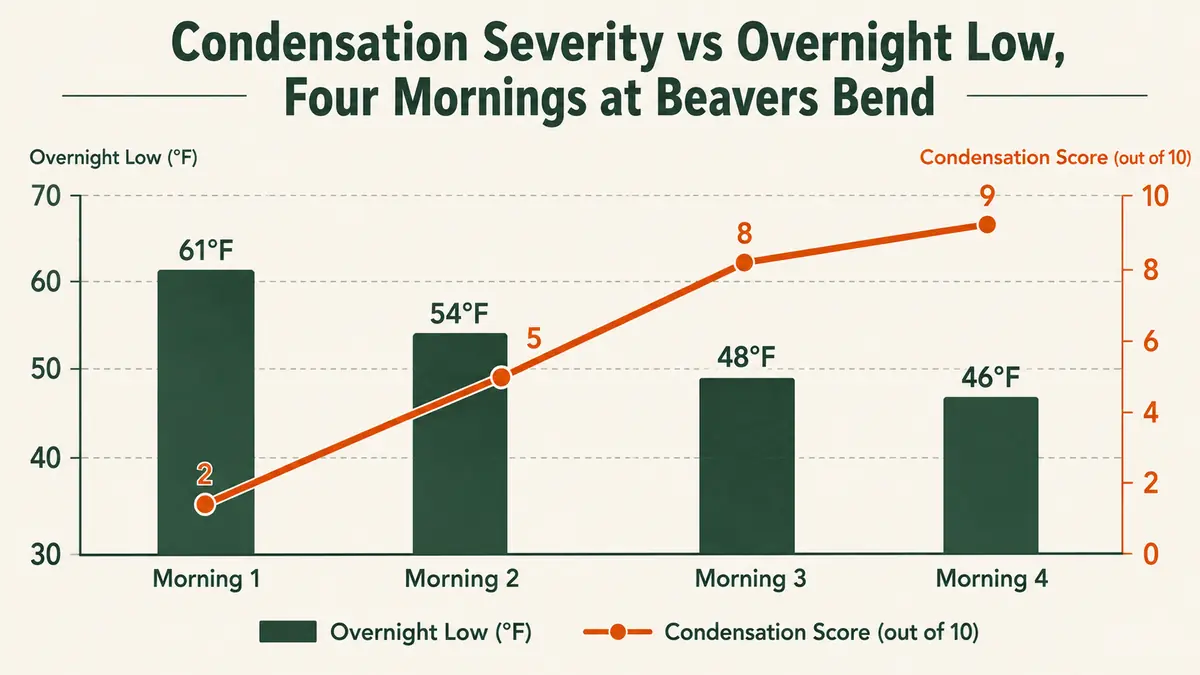
I tracked it across four mornings at Beavers Bend because I wanted numbers instead of just a gut feeling. On the first morning, with an overnight low around sixty-one degrees, condensation on the inside of the fly and the foot of my sleeping bag was minor, I'd put it at a two out of ten. By the second morning, the low had dropped to fifty-four and the condensation score climbed to a five, enough that I had to towel down the mesh ceiling before I could pack it away dry. The third morning, at a forty-eight degree low, it hit an eight, real moisture beaded across the whole ceiling and dripping in a couple of spots where the fly touched the mesh. The fourth morning, forty-six degrees, it topped out at a nine, and my sleeping bag's foot box was damp when I woke up.
That's not a defect, it's basic physics, warm bodies breathing inside a mostly-sealed dome with a cooling night outside. But the budget vent design on this tent doesn't manage it as well as a pricier tent with more mesh panels and better fly clearance would. If you're camping in genuinely warm weather where the low never drops much below the mid-sixties, you may never see this problem. Camp into the shoulder seasons, spring or fall, and plan on drying gear out most mornings.
Wind Is Where This Tent Meets Its Limit
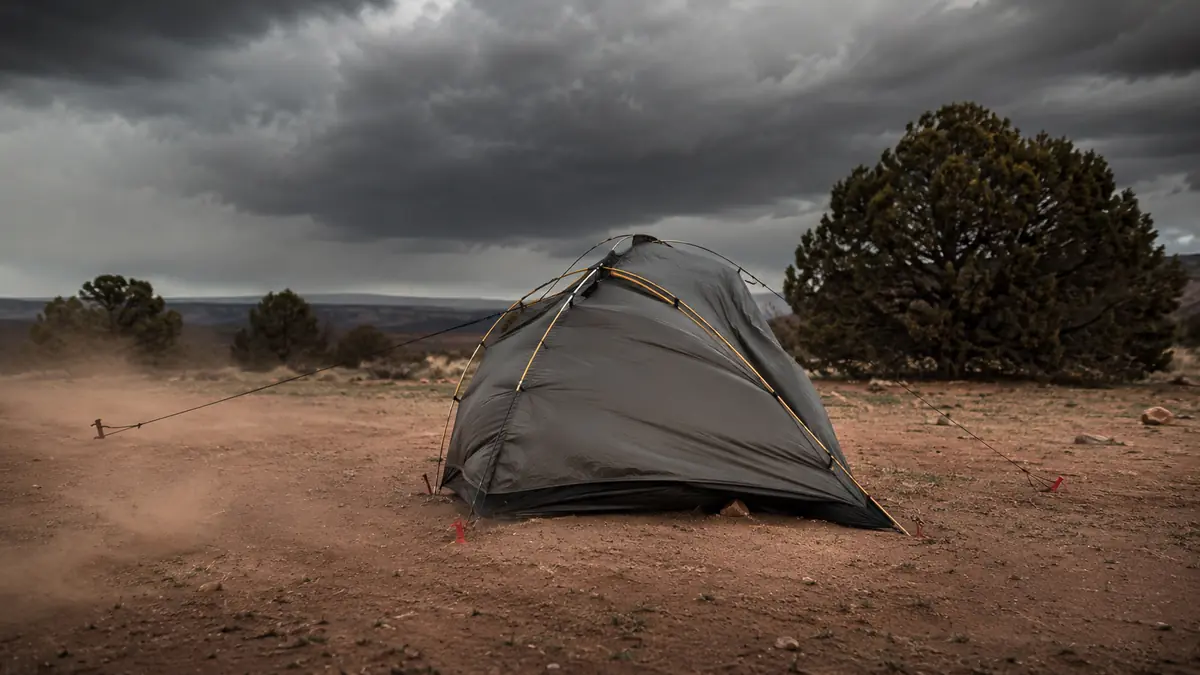
That same cold front that tanked the overnight lows at Beavers Bend also brought wind, gusting hard enough to rattle the picnic table at our site. This is where I'd steer a buddy away from this tent if he told me he was headed somewhere exposed. The pole structure is light, which is great for setup and packing it down, but it also means the whole dome flexes noticeably in a real gust instead of holding its shape.
On an open, mostly treeless site, I watched the fly billow and the near wall press in almost to where my gear was stacked against it during the stronger gusts. The included stakes and guylines held, I'll give it credit there, nothing tore loose and nothing came unstaked overnight. But it was a loud, flexing night, and I wouldn't want to be in this tent on an exposed ridge or an open lakeshore campsite during anything stronger than what we saw. A tree line or a bit of natural windbreak makes a real difference with a tent this light.
This is the same tradeoff I get into when people ask me how it compares to the Coleman Sundome, which runs a slightly heavier pole set and a bit more structure for a similar price. Neither one is a storm tent, but the Sundome felt marginally steadier the one time I pitched it next to this one on a breezy afternoon. If your camping is mostly sheltered campgrounds with trees around the pads, this distinction won't matter much. If you camp exposed sites regularly, it's worth knowing before you buy either one.
Wind-Driven Rain Finds The Seams
Straight-down rain is one thing. Rain coming in sideways on that same windy night at Beavers Bend was another. I noticed a faint damp line creeping in along the bottom edge of the door zipper where the fly doesn't fully cover the seam, nothing that soaked through to my gear, but enough that I mopped it up with a towel before it spread. The factory seam tape held everywhere else, which is more than I expected at this price, but the door zipper area is clearly the weak point when wind pushes rain at an angle instead of letting it fall straight down onto the fly.
If I'd known that ahead of time, I would have packed a small tube of seam sealer for that door zipper the way I do with a lot of budget gear before a trip. It's a five-minute fix and it's cheap insurance. Nobody mentions it because most people pitch this tent on a still night and never find out the door zipper is the tent's soft spot. A stiff, angled rain is where you'll find out, and it's worth knowing before you're the one mopping up a puddle at eleven at night.
The Floor Is Thinner Than It Looks, Budget For A Footprint
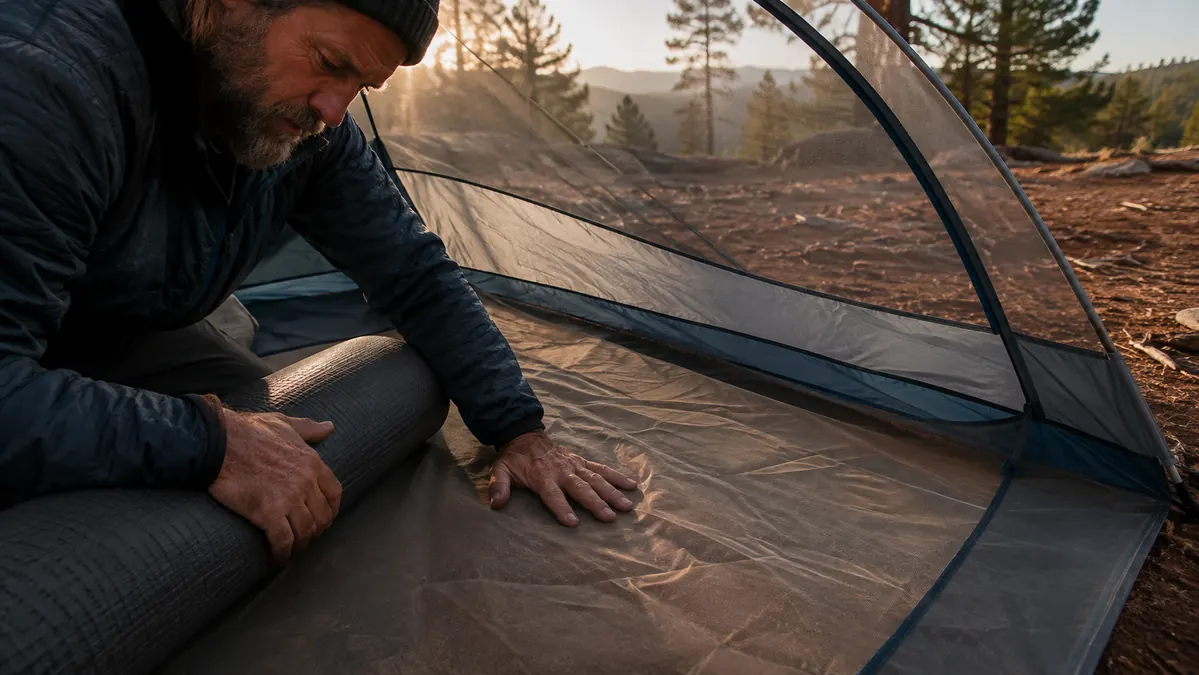
I could feel gravel and small twigs through the floor on more than one night, even on a pad I'd swept clear beforehand. Press a palm flat against the material with a sleeping pad underneath and you can tell it's built to a price, not to shrug off rough ground the way a heavier-denier floor would. Nothing punctured on me over the season, but I was careful about it, clearing debris before I pitched and never dragging the tent across gravel to reposition it.
A footprint or even a cheap tarp cut to size under the floor is not optional in my book with this tent, it's part of the real cost of owning it. Amazon Basics doesn't include one, and the listing doesn't make a point of telling you that you'll want one. Budget maybe fifteen to twenty extra dollars and five minutes of setup for a footprint, and you'll extend the life of that floor considerably, especially if you're pitching on gravel campground pads like most of ours around here.
Setup Is Genuinely Easy, That Part's Not Exaggerated
I want to give credit where it's due, because an honest review isn't just a list of gripes. The color-coded poles and clip system on this tent are not marketing fluff. My son and I had it standing in well under ten minutes the first time we ever pitched it, no instructions needed after that first run, and the fly clips on fast once you know which corner is which. For a family that wants to get camp set up and get to the fire, this is a real strength, not a footnote.
Packing it back down is just as easy, and it compresses into a bag that's small enough not to eat your whole truck bed. If ease of setup is high on your list, and for most family campground trips it should be, this tent earns its price on that alone. It's the conditions past a calm evening where the rest of this review matters.
Space Feels Smaller Than The Photos Suggest
Once we had two sleeping pads, a couple of duffel bags, and a lantern hanging from the ceiling loop inside, the tent felt noticeably tighter than the wide-angle listing photos make it look. That's a common trick with tent photography, a lens that pulls the walls back and makes a modest footprint read as roomy, and this listing isn't unusual there. It's livable, my family fit fine for sleeping, but nobody was sitting up playing cards inside it comfortably once the gear was stowed for the night.
The single door also means somebody's stepping over somebody else if you're not the one closest to the zipper, which matters more than it sounds like at two in the morning. None of this is a dealbreaker for a tent at this price, but go in expecting a functional sleeping space rather than a hangout tent, and pack your gear duffels to leave outside under the vestibule instead of piling them inside if you can help it.
What I Liked
- Genuinely fast, foolproof setup even for a first-timer
- Rainfly sheds direct rain well in normal conditions
- Packs down small and light for the price
- Held guylines and stakes through real wind without failure
- Fair price for a campground and backyard family tent
Where It Falls Short
- Condensation builds fast on cool mornings, scored up to a nine of ten by our fourth morning
- Noticeable wall and pole flex in sustained wind on exposed sites
- Door zipper seam let a little wind-driven rain creep through
- Floor material is thin, a footprint is essentially mandatory
- Interior feels tighter than the listing photos suggest once gear is stowed
- Not built for winter, high-altitude, or backcountry use despite the 3-season label
The rainfly handled the rain just fine. It was the condensation on a cold morning and the flex in a stiff wind that told me what this tent actually is, and what it isn't.
Who This Is For
If you're camping established, sheltered campgrounds most of the year, taking the kids out for a weekend at a state park, or want a reliable backyard tent for warm-weather nights, this is a genuinely good buy at its price. It sets up fast, it's light enough that nobody dreads carrying it from the truck to the pad, and in calm, mild conditions it does exactly what you'd expect. That's most camping trips most families take, and this tent covers that ground well.
It's also a fine call if you're testing whether your family even likes camping before spending real money on a heavier, more storm-worthy setup. Nobody needs to start with the expensive tent, and this one, paired with a cheap footprint, is a low-risk way to find out.
Who Should Skip It
If you regularly camp exposed sites, chase shoulder-season trips where cold, damp mornings are the norm rather than the exception, or need something that can shrug off a real wind event without flexing and rattling all night, look elsewhere. This is a fair-weather family and campground tent, not a backcountry or winter shelter, and the 3-season label describes the design intent more than it guarantees performance in rough conditions. Anyone who's been burned by a tent failing them in weather before will want more structure and a heavier floor than this one offers.
Now you know where it earns its price and where it doesn't. Here's the honest bottom line.
For calm campground weekends and backyard nights with the family, this tent still gets my nod. Just plan on a footprint and don't take it somewhere exposed. Check today's price before your next trip.
Amazon Check Today's Price on Amazon →