
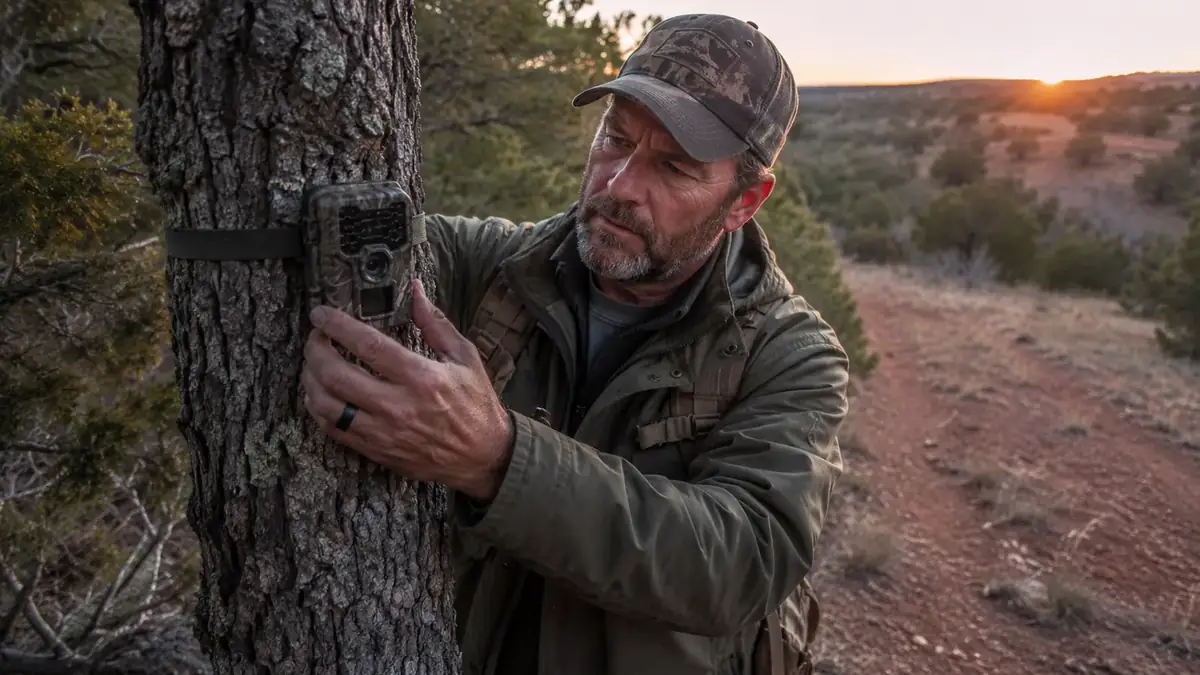
Short answer up front, since I know some of you just want to know where to put your money before deer season sneaks up on you again. I run the GardePro E6 on my own forty acres of post oak and cedar, and it's the camera I trust to actually be working when I walk out there to pull the card. A buddy of mine on a lease two counties over runs a Moultrie, and I've sat next to him plenty of evenings comparing photos off both units. Neither one is junk. But they don't win in the same places, and if you're trying to pick between them before you start hanging cameras for the season, you need to know exactly where each one earns its keep.
I've had both cameras strapped to trees close enough together that they were catching the same deer walking the same trail, which is about as fair a test as you can run without a lab. What I found is that the differences aren't huge on paper, but they show up in the moments that actually matter, like whether you get a clean photo of a buck's rack before he clears the frame, or whether you're still fighting with a phone app three weeks after you bought the thing.
I've been running trail cameras on this property for going on twelve years now, everything from the cheap department store units that died after one wet spring to the higher-dollar setups my hunting buddies swear by, and I've learned not to trust a spec sheet until I've seen it hold up through a real Oklahoma summer. That's the lens I'm looking at both of these through, not a showroom, not a week of testing, but actual seasons on actual ground.
| GardePro E6 | Moultrie | |
|---|---|---|
| Resolution | 64MP stills, 1296P HD video | 20MP stills, 1080P video |
| Trigger Speed | Under 0.3 seconds | Around 0.6 to 0.7 seconds |
| Detection Range | About 100 feet | Roughly 80 feet |
| Night Illumination | No-glow 940nm infrared, minimal spook risk | Low-glow infrared, faint red flicker visible up close |
| Connectivity | Built-in WiFi with external antenna, view photos on your phone at the camera, no monthly fee | Requires a Moultrie Mobile cellular plan for remote photo delivery |
| Battery Life | 8 AA batteries, several months on a moderate-traffic trail | 8 AA batteries, shorter life when cellular is active |
| Waterproofing | IP66 rated housing | Weather-resistant housing, rated similarly on paper |
| Best Use | Property you can walk regularly, no cell service, want free instant viewing at the camera | Remote lease you can't visit often and don't mind paying a monthly fee for photos |
Photo Quality and Night Vision Side by Side
The gap that jumped out at me first was the photo itself. The GardePro E6 pulls 64 megapixel stills, and even though most of that gets compressed down before you're looking at it on a phone screen, the extra detail matters when you're trying to count points on a buck that's quartering away at 60 yards in low light. The Moultrie's 20 megapixel photos are perfectly usable for identifying that a deer walked through, but I've had a handful of shots off my buddy's camera where the antlers are just a gray blur and you can't tell if you're looking at a six-point or an eight-point. That's a real problem when you're trying to decide whether a buck is worth passing another year or not.
Night vision is where the GardePro pulls further ahead. It uses no-glow infrared, so there's no visible flash at all, which matters on ground that gets any hunting pressure or foot traffic. The Moultrie's low-glow setup throws off a faint red flicker if you're standing close to it in the dark, and I've had deer hang up and stare right at the camera housing on a couple of my buddy's cards. It's not a dealbreaker, but on cautious, older bucks, that little bit of visible light is exactly the kind of thing that turns a nocturnal deer fully nocturnal, and that's the last thing you want on a piece of ground you're trying to hunt during legal shooting hours.
Trigger Speed and Detection in the Field
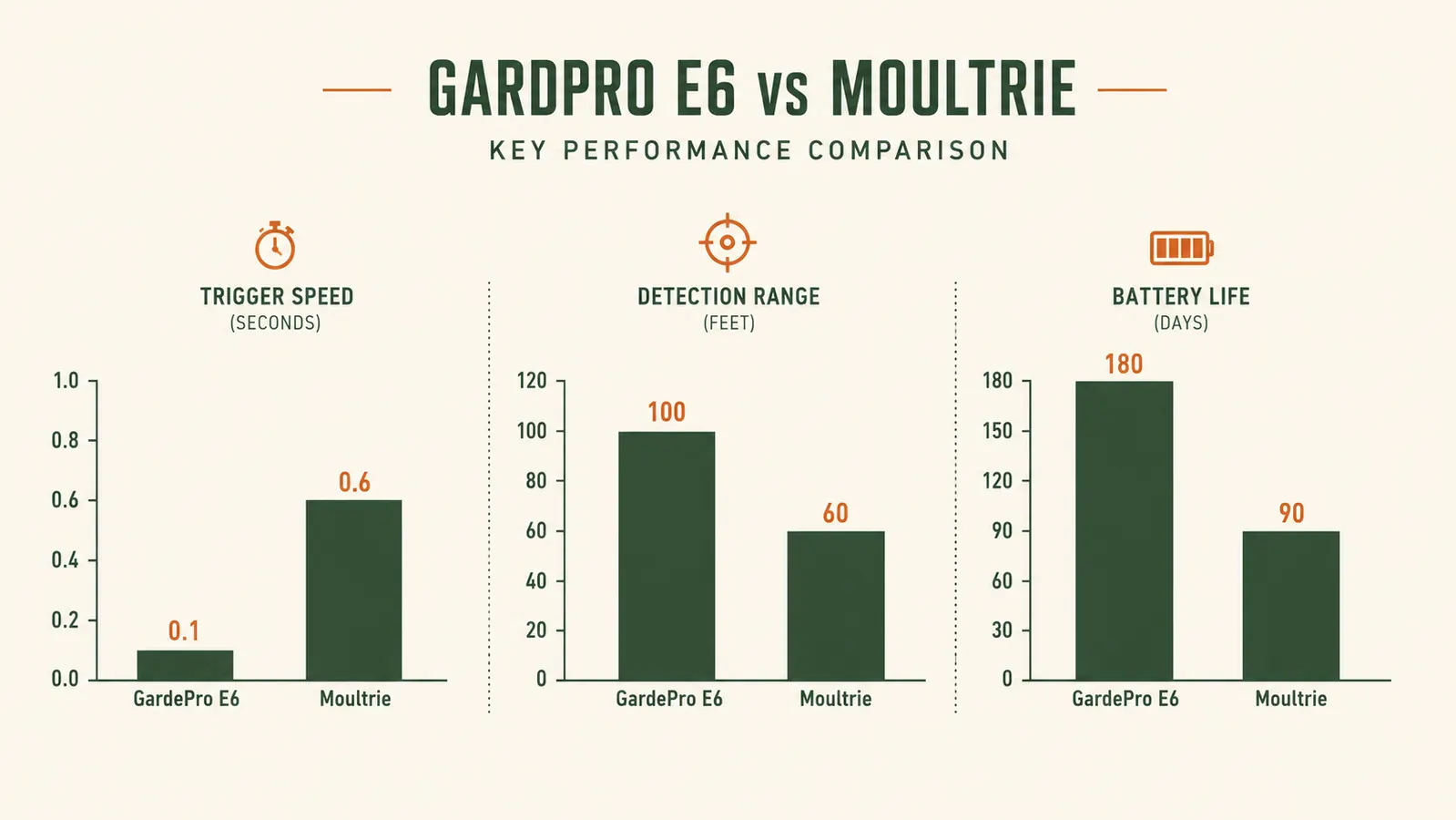
Trigger speed is the number that actually decides whether you get a photo worth anything. The GardePro E6 fires in under three tenths of a second, and on a trail where deer are moving at a trot, that's the difference between a clean broadside shot and an empty frame with a tail disappearing off the edge. The Moultrie runs closer to six or seven tenths of a second, which sounds small until you watch it miss a deer that was moving with any purpose at all.
Detection range tells a similar story. GardePro's spec sheet claims around 100 feet, and in practice I've had it pick up movement well out into an open field edge before a deer even commits to the trail. The Moultrie's detection cone is a bit tighter and shorter, closer to 80 feet in my experience, which means it's catching deer later in their approach. On a tight funnel between two cedar thickets that difference barely matters. On an open pasture edge, it's the difference between catching a deer at all and missing it entirely, especially with hogs and coyotes that tend to cut across open ground at an angle instead of walking a straight trail.
WiFi App vs Cellular Subscription
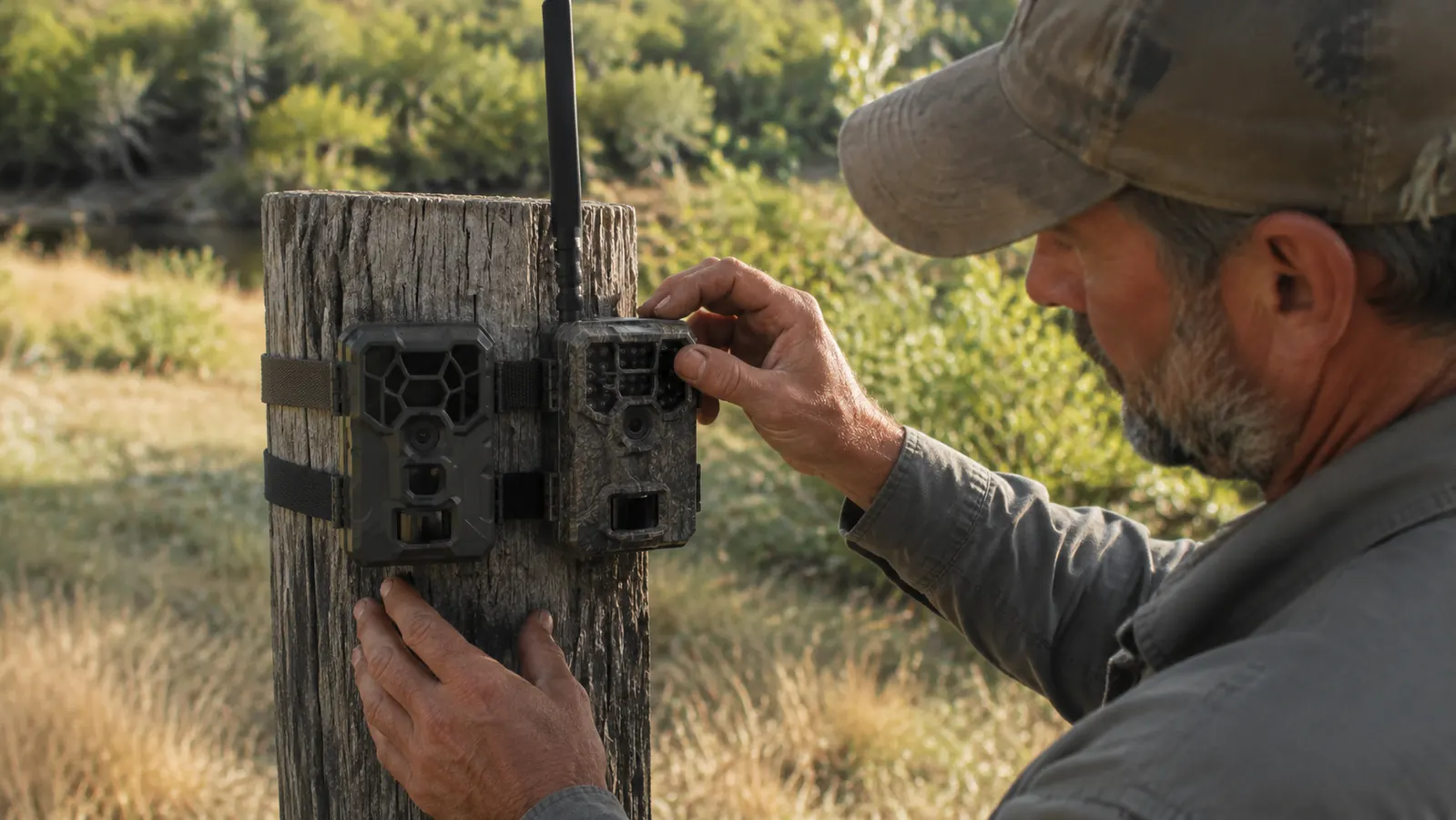
This is the part that actually changes how you use the camera day to day. The GardePro E6 has its own built-in WiFi with an external antenna, and you view photos straight off the camera on your phone through its app when you're standing within range. No monthly fee, no cell signal required, and no subscription to remember to cancel. On my place, where I can walk out and check the camera whenever I want, that's exactly the setup I need. I'm not paying anybody a monthly bill to see a photo of a doe walking past a feeder.
The Moultrie my buddy runs works differently. To get photos sent to his phone without physically walking to the camera, he has to run a Moultrie Mobile cellular plan, and that's a real recurring cost stacked on top of what he already paid for the camera itself. If you're hunting a remote lease you can only get to a few times a season, that cellular delivery is worth it, because you're getting eyes on the property without driving three hours to pull a card. But if your ground is close enough to check regularly, you're paying for a feature you don't need, month after month, whether you ever look at the photos or not.
Setup and Everyday Handling on the Ground
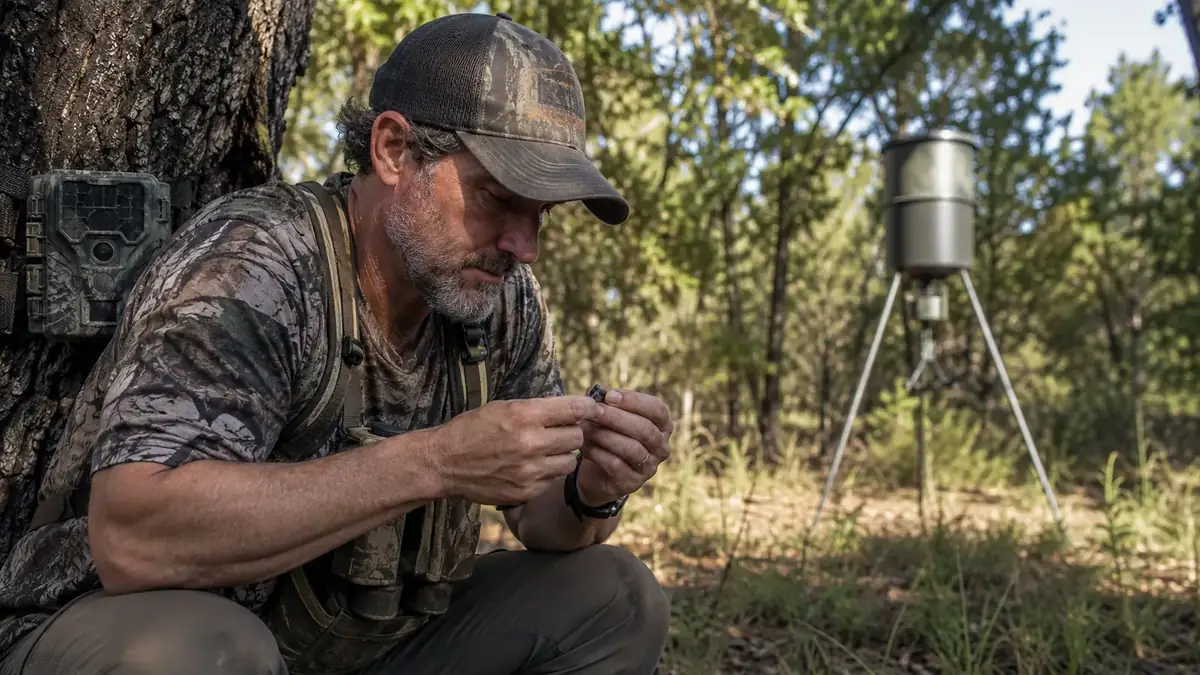
Getting the GardePro E6 up and running took me about fifteen minutes the first time, mostly because I was fumbling with the strap while my dog wanted to smell every squirrel hole within thirty yards. The menu is straightforward, the WiFi pairs with the app without much fuss, and once it's mounted, checking it is as simple as walking within range, opening the app, and scrolling through whatever it caught since my last visit. I don't have to touch the camera itself or pull the SD card unless I'm swapping batteries.
My buddy's Moultrie setup is a little more involved, mostly because getting the cellular side connected right took him a couple of tries and a call to their support line to sort out a signal issue on his particular ridge. Once it was dialed in, it's run fine, but that initial setup isn't quite as plug-and-play, especially in country with spotty cell coverage. If you're not confident on cell signal strength where you're hanging the camera, that's worth checking before you buy, because a cellular camera with no bars is just an expensive brick strapped to a tree.
What This Costs You Over a Full Season
Here's where the math actually separates these two. The GardePro E6 is a buy-it-once camera. Whatever you pay for it at checkout is the whole bill, aside from batteries and an SD card, for as many seasons as it holds up. There's no ongoing charge sitting behind it, and that matters if you're running more than one camera like I do. I've got three GardePro units spread across my ground right now, and I'm not carrying a stack of monthly subscriptions on top of that just to see photos.
The Moultrie changes that math the moment you want remote delivery. That monthly cellular plan adds up fast if you're running two or three cameras on scattered leases, and it's an ongoing bill you'll be paying whether the season's slow or the trail's hot. For a single camera on a distant lease, it's a fair trade for the convenience. For a guy trying to blanket several hundred acres with eyes on every trail, those monthly charges across multiple units start to look a lot bigger than what you paid for the cameras themselves.
Where the GardePro E6 Wins
The GardePro wins on image detail, trigger speed, and no-glow night photos, which together mean you actually get usable pictures of the deer worth watching. It also wins on cost of ownership over time, since there's no subscription tacked on after you've already paid for the camera. For anybody scouting ground they can walk regularly, the WiFi-to-phone setup means you get your photos the same day without spending another dime.
Battery life leans GardePro's way too, mostly because it isn't burning power on a constant cellular connection. I've gotten a solid three to four months out of a set of eight AA batteries on a trail with steady but not constant deer traffic, which is enough to cover most of scouting season without a trip out just to swap batteries.
Where the Moultrie Wins
The honest advantage of the Moultrie setup is remote coverage. If you've got a lease, a piece of family ground three counties away, or land you genuinely can't visit more than once a month, the cellular option gets photos to your phone without you ever driving out there. That's real value, and it's the whole reason cellular cameras exist. My buddy checks his lease maybe four times a season, and for him, paying the monthly fee beats making a four hour round trip just to see if anything's moving.
It's also worth saying the Moultrie brand has been in this business a long time, and the housing on my buddy's unit has held up fine through two full seasons of Oklahoma weather, rain and ice included. If cellular coverage on your ground is solid and you don't mind the ongoing bill, it's a legitimate way to run a scouting camera.
Tired of walking out to a card full of blurry tails and half-lit does?
A slow trigger and a washed-out night photo mean you never actually see the buck that walked your trail. The GardePro E6 is the camera I trust to catch him clean, and there's no monthly bill sitting on top of it.
Amazon Check Today's Price on Amazon →Who Should Buy Which
If you can get to your camera every week or two, want sharper photos, a faster trigger, and don't want a subscription eating into what you spent on deer corn, get the GardePro E6. It's the camera I'd hang on any property I can walk myself. If your ground is genuinely remote, you can't get out there often, and cell coverage is solid on that piece, a Moultrie with a cellular plan earns its monthly cost by putting photos in your hand without the drive. For most guys hunting ground close enough to check on their own, the GardePro is the one that ends up strapped to my trees, and it's the one I keep coming back to when I'm setting cameras before a new season.
Don't let a slow trigger cost you the only daylight photo of the season.
The GardePro E6 gave me sharper photos, a faster trigger, and no-glow night shots without a single monthly bill. It's the camera going back up on my fence line before opening day.
Amazon Check Today's Price on Amazon →