
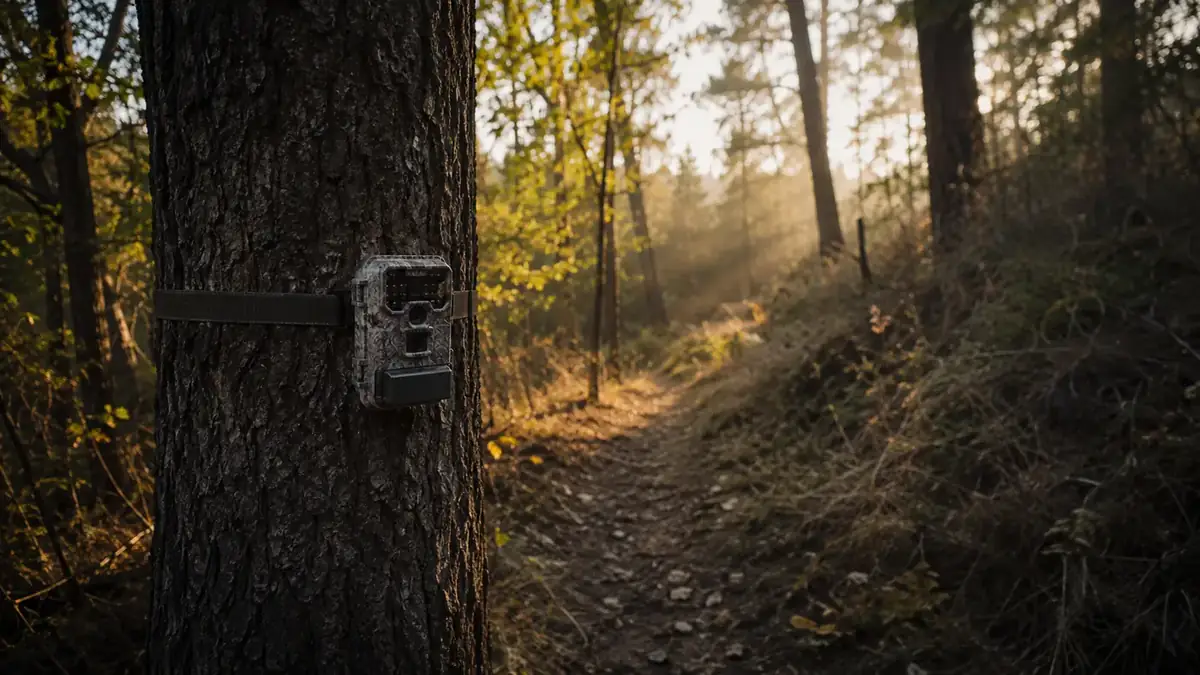
Last October I hung a camera on a trail I'd been hunting blind for six years. Same stand, same rub line, same general guessing about when the deer were actually moving through. Within the first two weeks, I had a time-stamped photo of a heavy ten-point walking that trail at 4:40 in the afternoon, broad daylight, three days before I ever climbed into that stand. I'd been hunting that spot at the wrong hours for six seasons and never knew it, and no amount of squinting at rub lines and scrapes would have told me that on its own.
That camera is a GardePro E6, and I've had one or two of them running on our family land outside of Okmulgee for right at a full year now, moved across three different trails as the deer patterns shifted through spring green-up, summer, the rut, and into this year's late season. This isn't a two-week test run. This is what a full year of real scouting, real weather, and real dead SD cards taught me about the thing.
The Quick Verdict
A genuinely useful WiFi scouting camera for the money, held back by battery life that doesn't match the marketing and a trigger speed that will miss a deer moving with any real purpose.
Amazon Check Today's Price →Tired of guessing when the deer are actually moving through your property?
The GardePro E6 sends photos straight to your phone over its own WiFi, no cell plan, no walking in to pull a card and spook the trail. Check today's price and availability on Amazon.
Amazon Check Today's Price on Amazon →How I've Used It
I run cameras for one reason. I want to know what's actually walking my ground before I ever put a stand up or waste a morning sitting in the wrong spot. This past year I moved the E6 across three trails on the same 80 acres: a funnel between two cedar breaks where deer bottleneck coming off a bean field, a well-used crossing on a dry creek bed about 200 yards off the house, and a mock scrape I built out near the property line where I get more hog and coyote traffic than deer, honestly.
The camera has been strapped to hardwood in July heat that hit triple digits more than once, iced over during an ugly cold snap in January, and soaked through two solid weeks of spring rain that turned the creek bottom to soup. I check the WiFi app most days when I'm close enough, and I still pull the card physically every four to six weeks to back up photos and give the batteries a real inspection.
I'll say upfront that my previous camera was an older Moultrie that needed a cell plan to send photos anywhere, which got expensive fast running three or four cameras at once. Part of why I bought the GardePro was the promise of a no-subscription WiFi setup, and that part has genuinely delivered. No monthly bill, no waiting on a carrier signal out in the timber.
I also swapped strap positions a few times over the year, moving from waist height to closer to chest height on the cedar-break trail after I kept clipping the tops of deer heads out of the frame. That's not a camera flaw, that's just me learning the mounting angle for that particular pinch point, but it took two full cards of trimmed-off antlers before I figured it out. Anybody setting one of these up for the first time should plan on a similar trial-and-error stretch before the framing gets consistent.
The WiFi App, Where It Actually Earns Its Keep
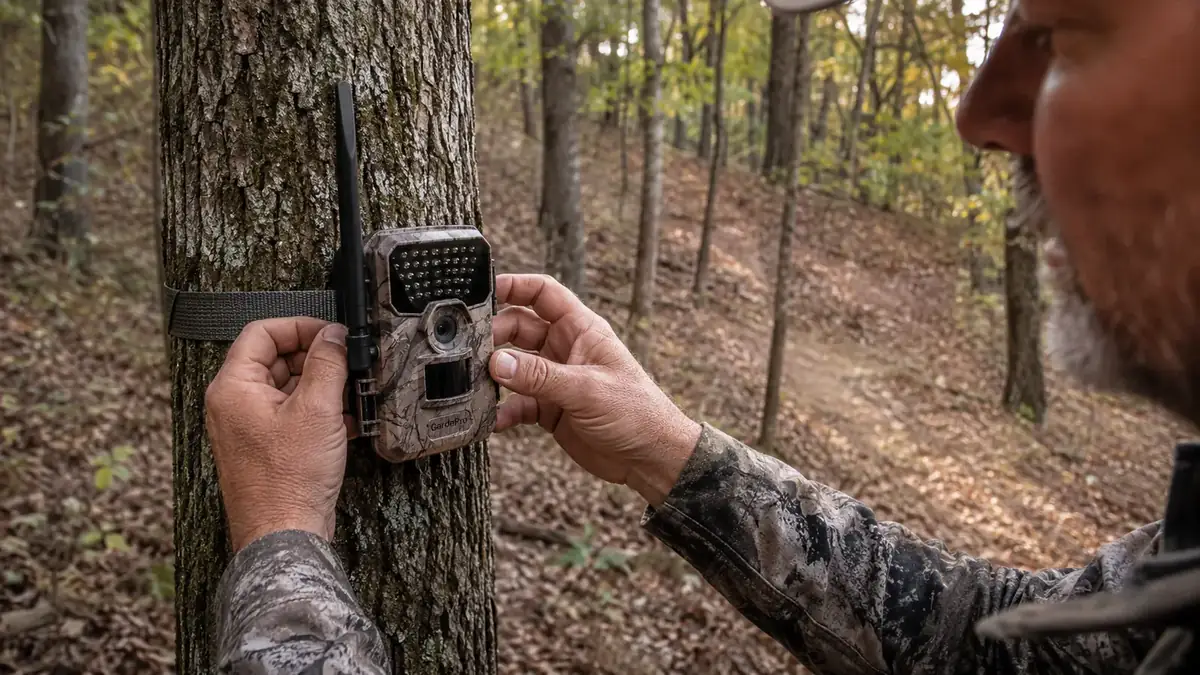
The whole reason I picked this camera over a straight SD-card model is the on-site WiFi viewing. You don't get cellular upload like a Spartan or a Moultrie Mobile plan, but you don't need one either. When I walk within roughly 60 to 80 yards of the camera on open ground, my phone connects to its local network and I can pull down the latest photos without ever touching the unit or spooking the trail by getting close.
That range drops fast in thick timber. On the cedar-break camera, which sits in dense cover, I've had to get inside 40 yards some days before the connection holds steady enough to load images. The external antenna GardePro built onto this model does help over their older cameras, I've read enough forum complaints about previous versions to know that, but it's not magic. If you've got real brush and terrain between you and the camera, expect the range to shrink.
Once connected, the app itself is straightforward. It's not fancy, no AI species tagging or automatic deer counting like some pricier subscription systems offer, but it does what I need. I can flip through recent photos, check battery percentage, and adjust settings like trigger delay or photo burst count without ever pulling the camera down. For a guy who just wants to know what walked by and when, that's plenty.
One thing I didn't expect is how much the app has changed my routine at the creek crossing. That trail sits close enough to the house that I can walk down after supper, connect, check the day's photos on the porch step, and be back inside before the mosquitoes find me. I've probably checked that camera forty or fifty times this year without ever laying a hand on it, which is exactly the point of buying a WiFi model in the first place instead of a bare SD card camera.
Battery Life and Trigger Speed, the Honest Numbers
GardePro's packaging talks about long standby battery life on a set of lithium AAs, and in cold weather that's held up reasonably well. My creek-bottom camera ran almost four months through winter on one set of lithiums before the low-battery alert showed up in the app. But that camera also sits in a low-traffic spot with maybe five or six triggers a day.
The cedar-break camera is a different story. It sits on a genuine funnel with heavy deer and hog traffic, sometimes 40 or 50 triggers a day during the rut, plus wind-triggered false shots from cedar branches swaying in front of the lens. That camera burned through a set of batteries in closer to six weeks. If you're putting this on high-traffic ground, budget for battery changes more often than the box implies, and consider a solar panel attachment if GardePro sells one compatible with your model, because I'm looking into that myself for next season.
Trigger speed is my honest complaint. GardePro lists a sub-half-second trigger time, and on a deer walking steady through the frame, it captures clean, well-framed photos most of the time. But on deer that are moving with any urgency, spooked does trotting through during the rut chase phase, or a coyote loping past at a decent clip, I've gotten a fair number of empty frames or just a tail disappearing off the edge of the shot. It's not a slow camera by any means, but it's not instant either, and fast-moving game will test it.
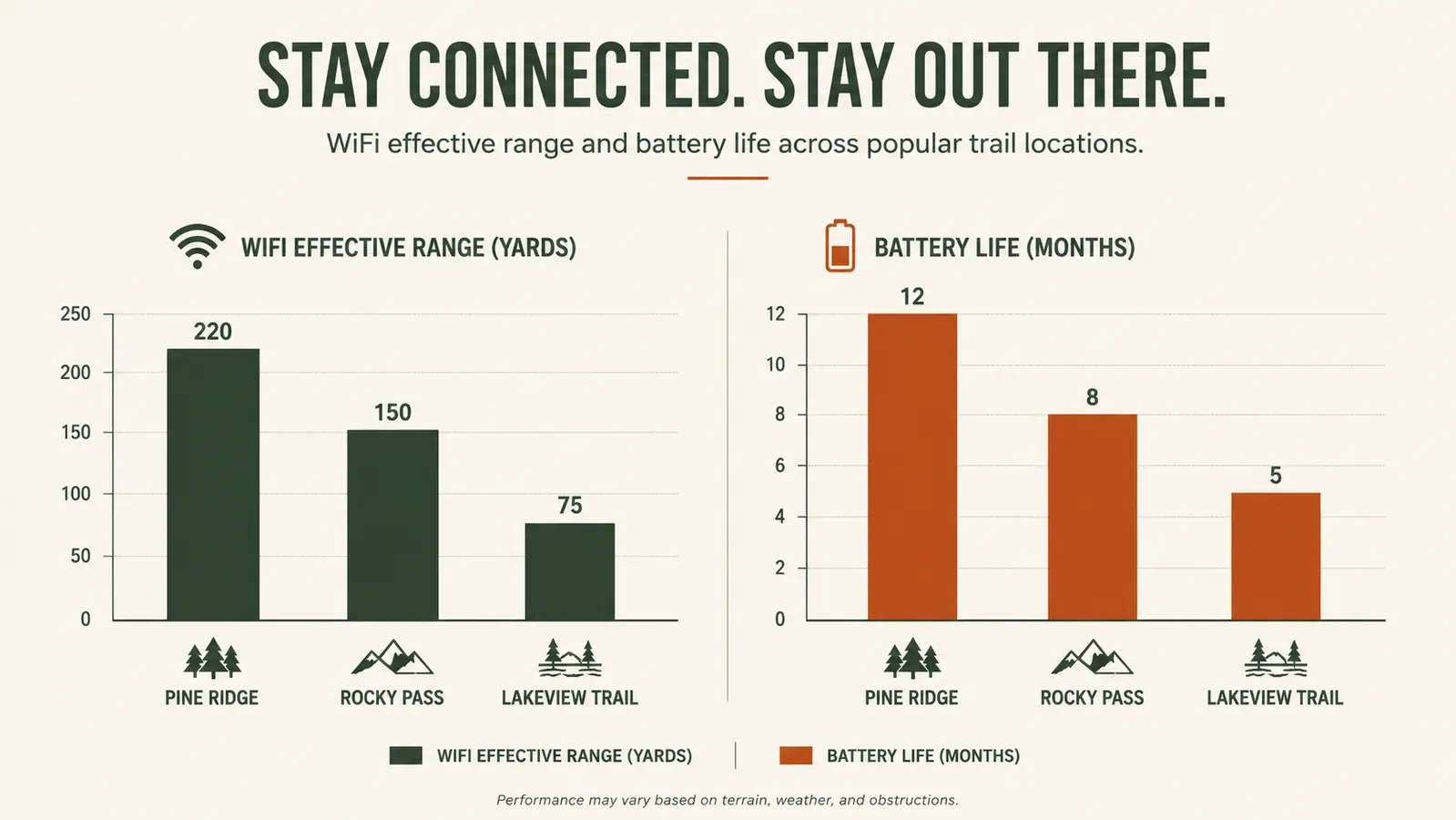
Photo and Video Quality, Day and Night
Daytime photos have been genuinely good. The 64MP stills interpolate up from a smaller native sensor, which is normal for cameras at this price, but the daylight detail is sharp enough that I can count points on a buck from 30 yards out without much trouble. Color reproduction is accurate, not oversaturated or washed out the way some budget cameras run.
Night photos are where the no-glow infrared shows its limits. Close-range shots, inside 30 feet or so, come out usable and reasonably clear. Push a deer out past 50 feet in full dark and the image gets grainy fast, with detail on antlers or body condition getting hard to judge with any confidence. I've had plenty of nights where I know something big walked through because the silhouette is unmistakable, but I couldn't tell you if it was a mature buck or a big-bodied doe from the photo alone. For pure scouting purposes that's still useful information. For trophy judging at long range in the dark, it's not going to replace glassing the animal in person.
The no-glow infrared does its job of staying invisible, which matters. I've never had a deer blow out of a frame looking startled at the camera the way you sometimes see with older red-glow units. Whatever light it's throwing, the deer aren't noticing it.
Video mode is a feature I use less than I thought I would going in. The clips run a set length and I like having them for the occasional buck fight or a doe working a scrape, but they eat through card space and battery faster than stills. Once I understood the tradeoff, I switched the funnel camera back to photo-only and reserved video for the low-traffic scrape camera, where battery drain matters less.
Where the SD Card Situation Gets Frustrating
This is the complaint I didn't expect going in. Twice this year, once in July heat and once after that spring soaking I mentioned, I've pulled the card to back up photos and found file corruption on a chunk of images, usually the last few days' worth. I'm running a name-brand card rated for trail cameras, not some off-brand deal from a gas station, so I don't think it's purely a card quality issue. My best guess is heat or moisture getting into the card slot seal over time, though the housing has otherwise kept water out fine during storms.
It hasn't cost me anything I truly needed, since the WiFi app already pulled most of those photos before the corruption happened, but it's made me distrust the card as a sole backup. I now treat the WiFi sync as my primary record and the card as a backup to the backup, which is really the opposite of how I'd rather rely on it.
For what it's worth, I've since started reformatting the card in the camera itself every time I pull it, rather than just deleting files off it on my laptop, and I haven't had a repeat corruption since I started doing that back in early summer. Whether that's the actual fix or just good luck, I can't say for certain after one clean stretch, but it's cheap insurance and I'd recommend anyone running this camera do the same.
What I Liked
- No monthly cell plan, WiFi photo pulls work well within 60 to 80 yards in open ground
- Daytime photo quality is sharp enough to count points at 30 yards
- No-glow infrared doesn't spook deer that walk right past the lens
- Battery life is solid, near four months, on low-traffic sets
- External antenna genuinely helps connection range over older GardePro models
Where It Falls Short
- Trigger speed misses fast-moving deer and coyotes some percentage of the time
- Battery life drops to six weeks or less on high-traffic funnels
- Night photos past 50 feet get grainy and hard to judge
- SD card corruption twice in a year, likely heat or moisture related
- WiFi range shrinks fast in dense cedar or thick brush
It's not going to catch every deer that walks by fast, and it's not going to make you a trophy judge in pitch dark. What it will do is tell you when your ground actually gets used, and that's the whole game.
Who This Is For
If you're scouting your own ground and want to build a real pattern on deer movement without paying a monthly cell fee, this camera does that job well. It's a smart pick for guys running two or three cameras across a property, where a cellular plan on each one would add up fast. Anyone new to trail cameras will find the WiFi app easier to live with than pulling cards constantly, and the price point makes it reasonable to run several without a huge investment, which matters if you're trying to cover multiple trails on a family lease rather than just one honey hole.
Who Should Skip It
If your property is big enough that you can't get within 60 or 80 yards of the camera regularly, or your ground is so thick you'll never get a WiFi handshake through the brush, you'll be pulling the card anyway and losing the main advantage of this model. In that case a cellular camera with a real data plan might serve you better despite the monthly cost. And if you need reliable long-range night photos for judging antler size in the dark, this camera's infrared reach isn't going to satisfy you. Look at a pricier model with a stronger IR array instead.
Ready to find out what's actually walking your ground?
A year, three trails, and one buck I never knew existed later, this camera earned its spot back on the tree for another season. See current pricing and availability on Amazon before you hang your next set.
Amazon Check Today's Price on Amazon →