
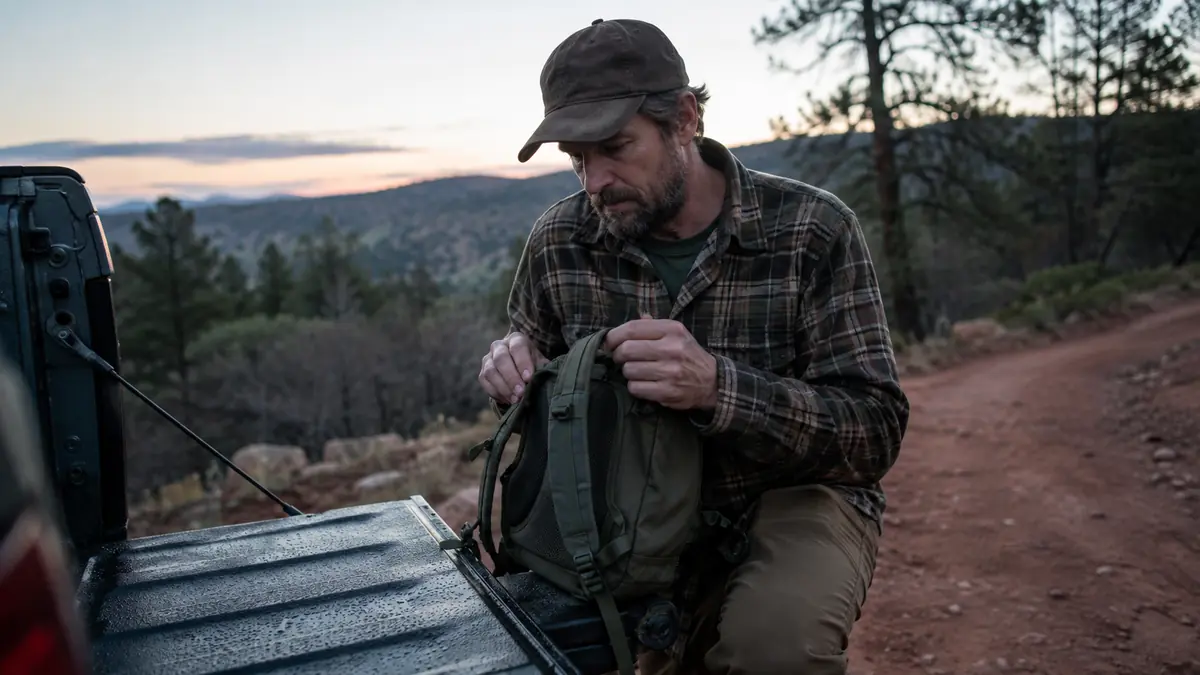
Read enough reviews of the G4Free daypack and you'd think it's a free lunch. A pack that costs next to nothing, folds down to nothing, and somehow does everything a bigger, pricier pack does. Some of that holds up. A lot of it doesn't, and the parts that don't are the parts nobody selling you the pack wants to talk about. I've carried mine on scouting walks before daylight, stuffed it flat into a duffel for a long weekend, and loaded it up heavier than I probably should have on a ridge trail that had no business being that steep. This is the honest version of what that actually looks like.
I'm not out to talk you out of buying the G4Free pack. For what it costs and what it's built for, a light day out with water, a rain shell, and lunch, it earns its spot in my truck. What I want to do here is tell you the parts that only show up after you've loaded it heavier than the box implies, worn it longer than a store aisle test, and dragged it through actual brush instead of a carpeted showroom. That's the review nobody selling this thing on Amazon has any reason to write.
The Quick Verdict
For light days under about ten to twelve pounds, this pack does what it says and costs next to nothing to find out. Load it heavier or drag it through real brush and the corners it cut to hit that price start to show.
Amazon Check Today's Price →The reviews all say 'great value.' They don't say what happens once you load it past ten pounds. I will.
The G4Free daypack is still worth a look for short hikes and travel days where you don't want to carry a real pack. Just go in knowing where the corners were cut. Check today's price and see if it fits how you actually hike.
Amazon Check Today's Price on Amazon →How I've Actually Used This Pack
I picked up the 15L version to use as a scouting pack, the kind of trip where you're not committing to an overnight but you want more than empty pockets. A rain shell, a liter bottle, a range finder, some jerky, maybe a folding saw if I'm clearing shooting lanes. That's the load I put in it most weekends for about six weeks, on ridge trails, along fence lines, and on one longer hike out to check a trail camera that turned into more of a bushwhack than I planned. I also ran the 10L version folded into a duffel bag on a work trip, just to see how it held up as the small travel bag the listing keeps calling it.
Neither trip was gentle. I don't baby gear, and a pack that markets itself as tough enough for hiking and travel both needs to survive normal handling, not just a photo shoot. It got tossed in a truck bed, crammed under an airline seat, snagged on cedar branches more than once, and left folded up damp in a duffel for two days after a wet morning. That's the kind of ordinary abuse any daypack should shrug off, and for the most part, this one did. Where it started to show its price is exactly where you'd expect, the parts that touch your body and the parts that touch the ground.
The Zippers and Pockets Do What's Advertised, No More
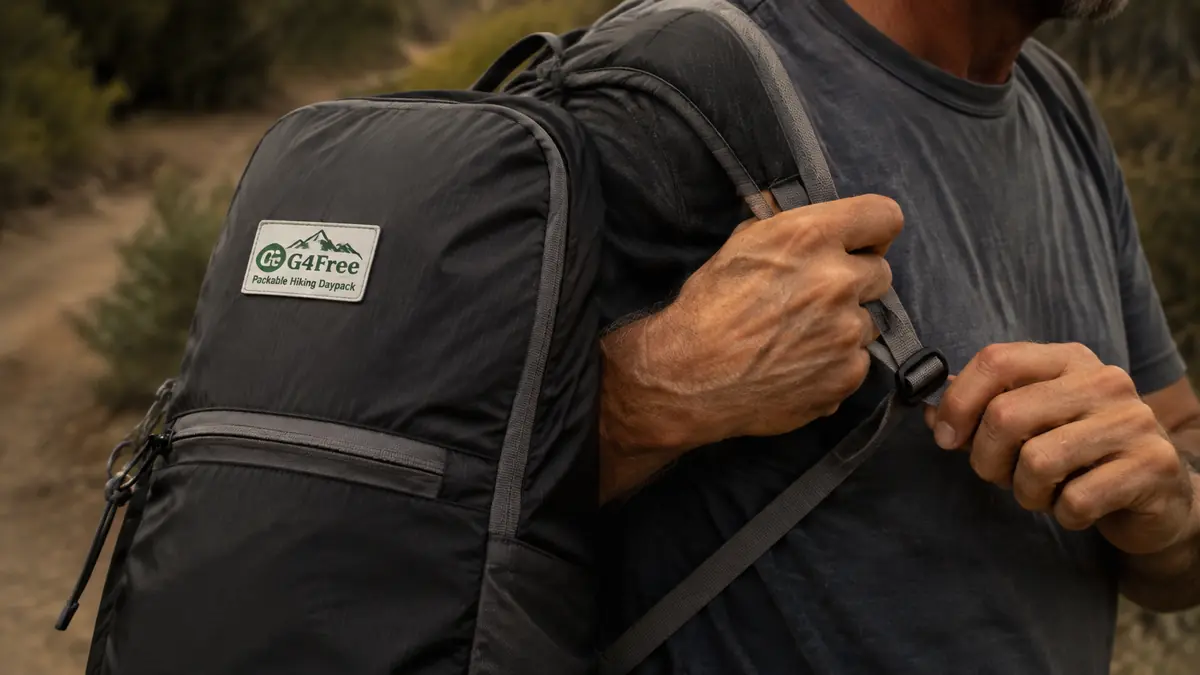
The main zipper pulls smooth enough, and after six weeks of trail dust and one soaking rain, it hasn't stuck or snagged on me. There's a front zip pocket for small stuff, a phone, a multitool, a lighter, and two side pockets sized for a standard water bottle, though getting a bottle back into the pocket one-handed while the pack is still on your back takes more fishing around than it should. The listing also calls this a shoulder bag, and it does convert that way, sling the main strap across your body and it rides fine for an airport walk or a quick trip into town. I wouldn't trust that single-strap carry with a heavier load though, the same thin strap that struggles under twelve pounds on your back struggles just as much cutting across one shoulder instead of two.
None of the hardware feels premium, and I don't expect it to at this price. The zipper pulls are small and plastic, the compression straps use basic plastic cam buckles instead of anything metal, and there's no dedicated port if you'd rather run a hydration bladder than a bottle. For a light pack that spends most of its life folded up in a truck console or a suitcase, that hardware has been fine. I wouldn't expect it to survive years of daily commuting abuse the way a pack built for that specific job would.
The Straps Are Fine Until They Aren't
The shoulder straps are thin, barely padded, and they do the job right up until the load gets real. With a light day load, under maybe ten or twelve pounds, I never noticed them. Add a folding saw, a full water bladder, and a jacket for changing weather, and by mile three my shoulders were telling me about it. There's no sternum strap to spread that load across my chest, and no meaningful hip belt to move weight off my shoulders onto my hips where it belongs. On a flat, easy trail that's a minor complaint. On the kind of uneven ridge trail I actually hike, where you're bracing and adjusting your stride constantly, thin unpadded straps turn into a real problem by the time you're heading back to the truck.
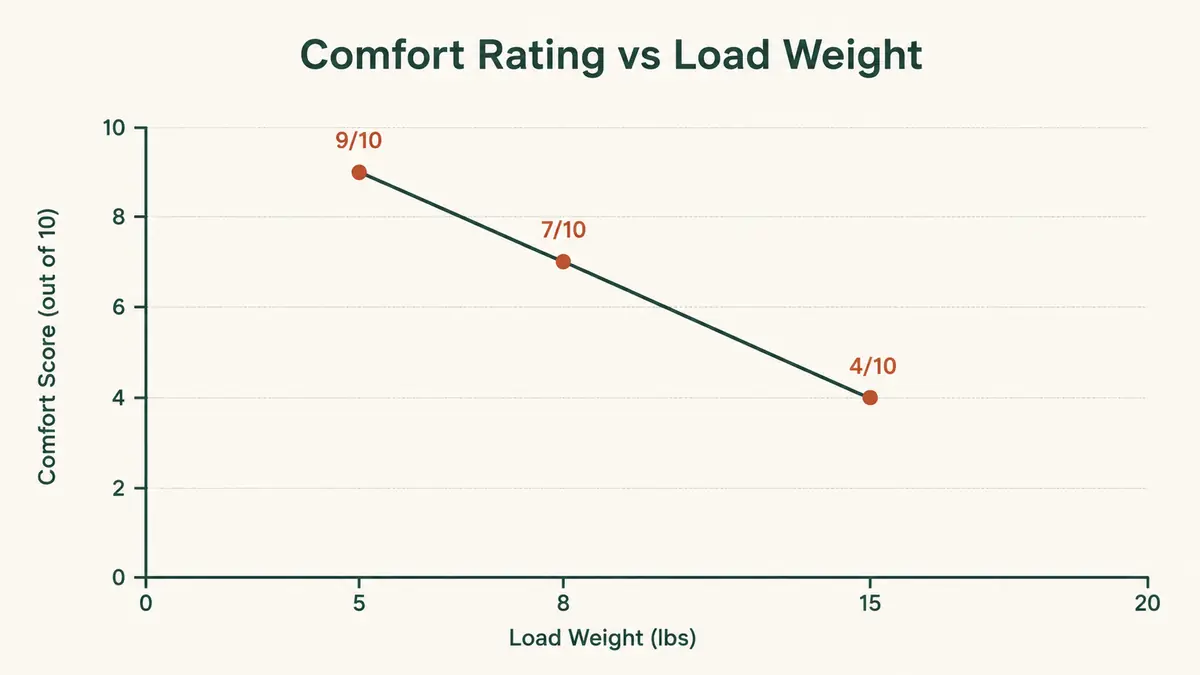
I started rating comfort out of ten every time I loaded it differently, mostly to check whether I was imagining the difference. It came out to a 9 out of 10 with about five pounds in there, a 7 out of 10 at eight pounds, and it dropped all the way to a 4 out of 10 once I hit fifteen pounds with the saw and a full water bladder in the mix. Past that roughly twelve-pound mark, comfort drops off fast, and no amount of cinching the compression straps fixes it.
There's No Frame in Here, and That Matters More Than the Weight Suggests
This is a soft pack through and through. No internal frame, no stiffener board in the back panel, nothing giving it shape beyond whatever you pack into it. Empty or lightly loaded, that's part of the appeal, it folds into a pouch about the size of a fist and disappears into a bigger bag. Loaded heavier, that same lack of structure means the pack sags against your back instead of holding its shape, and weight settles low and shifts with every step instead of riding steady. I noticed it most going downhill with the saw and water bladder in there, the whole load would slump and pull at my shoulders on every step down instead of staying put. A framed pack keeps weight close and stacked. This one just kind of hangs there once you push past a light load, and that's the honest tradeoff for how small it packs down.
I compared that sag directly against a framed daypack I already owned by loading both with the same gear, right around fourteen pounds split evenly between the two. The framed pack kept its shape and rode close to my back the whole hike. The G4Free bowed out at the bottom and pulled backward with every step, which is a small thing on a short walk and a real annoyance three miles into a ridge climb. That's not a flaw exactly, it's just what you get when a pack is built to fold flat instead of hold a shape.
10L or 15L, and Why the Listing Doesn't Make That Choice Easy
The listing sells both sizes side by side without doing much to help you pick. I ended up buying both to figure it out myself, and here's the short version. The 10L is genuinely a day-trip and travel bag, fine for a water bottle, a light layer, and a phone charger stuffed in a suitcase. The 15L is what you actually want if you're hiking with any real gear, rain layer, first aid, extra food, because the 10L runs out of room fast once you add more than snacks and a water bottle. If you're deciding between the two sizes, I'd skip the 10L unless travel packing is genuinely your main use, and go 15L for anything you'd call a real hike.
The stock photos show both sizes stacked next to each other and they look almost identical in the frame, which is exactly the problem. Side by side in hand, the difference is obvious, but you don't get that side by side in hand until the box shows up. If I had to do it again, I'd have just ordered the 15L to start and skipped the guessing, then decided later if a second, smaller one made sense for travel days.
Where the Fabric Meets the Real World
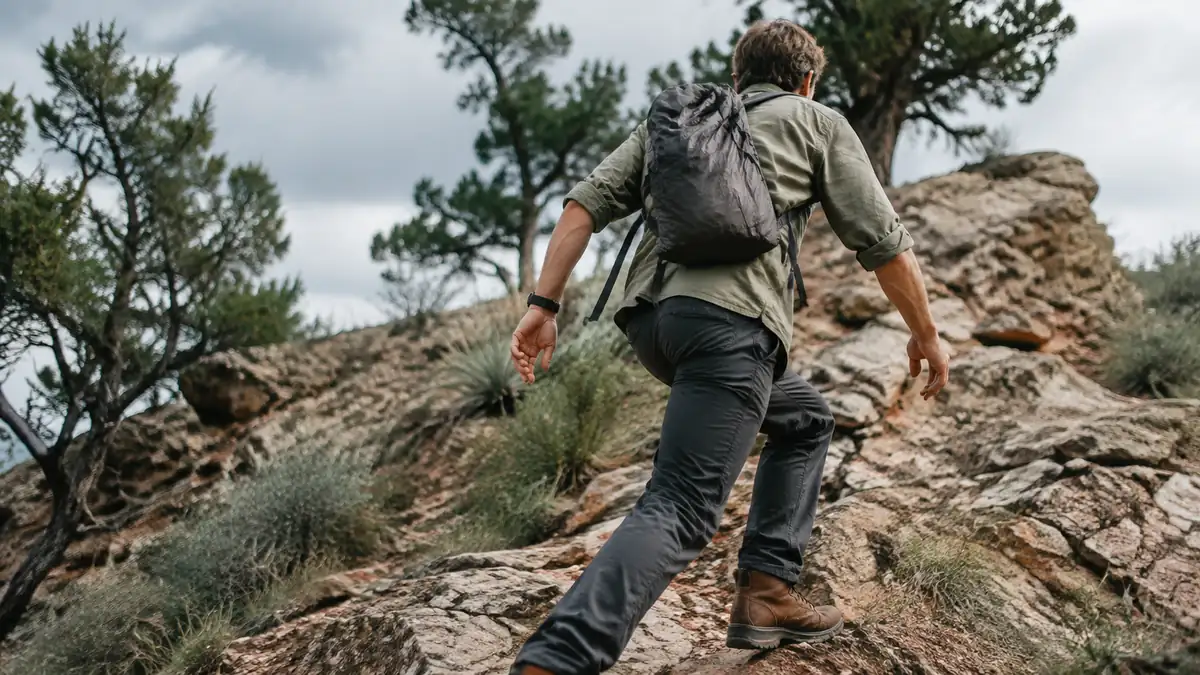
The nylon shell is light, which is the whole point of a packable design, but light comes with a tradeoff. Brush, cedar branches, rock edges at a creek crossing, all of it will mark this fabric in a way a heavier-denier pack shrugs off without a scratch. Mine picked up a couple of small snags and one thin scuff on a rock scramble that a stiffer canvas pack wouldn't have shown at all. Nothing tore through, and it's held up fine as a day pack for maintained trails and travel use, but I wouldn't drag it through heavy brush or off-trail bushwhacking expecting it to come back clean. If your hikes stay on maintained trail, this is a non-issue. If you're the kind of hiker who leaves the trail regularly, budget for some cosmetic wear that a tougher fabric simply wouldn't pick up.
The coating on the inside of the shell held up fine through one real rainstorm on that six-week stretch, nothing inside got soaked, though I wouldn't call it fully waterproof, more like it'll buy you twenty or thirty minutes in a steady rain before moisture starts finding its way through the seams. I keep anything electronic in a separate dry bag inside just to be safe, and I'd recommend anyone else do the same instead of trusting the shell alone.
I put it head to head against a name-brand competitor to see where the price difference actually shows up, and I go through that in detail in how it compares to the Osprey Daylite if you want the side-by-side. Short version here: the G4Free wins on price and packability by a wide margin, and loses on strap comfort and structure once the load gets real.
What I Liked
- Folds down to almost nothing, genuinely pocket-sized when empty
- Handles light loads, water, a shell, snacks, without complaint
- 15L size has real capacity for a half-day hike
- Held up fine to normal travel and truck abuse over six weeks
- Price makes it an easy pack to keep as a backup or loaner
Where It Falls Short
- Shoulder straps are thin and unpadded, comfort drops off past about twelve pounds
- No meaningful hip belt, so heavier loads ride entirely on your shoulders
- No internal frame or structure, loaded weight sags and shifts instead of riding steady
- Thin shell fabric picks up snags and scuffs against brush and rock
- 10L and 15L sizing isn't well explained on the listing, easy to pick wrong
Under twelve pounds this pack disappears on your back. Past that, the thin straps and missing frame start doing all the talking.
Who This Is For
If you keep your load light, water, a shell, snacks, maybe a camera, and your hikes stay on maintained trail, this pack does exactly what it promises and costs next to nothing to find out. It's also a genuinely good travel bag, the kind you fold into a suitcase and use as a daypack once you land. Anyone who wants a backup pack to keep in the truck for spur-of-the-moment walks, or a loaner for a buddy who shows up without gear, gets real value here. It's also the pack I hand a buddy who shows up to hunt camp without one of his own, because there's nothing about it precious enough to worry over if it comes back a little worse for wear. I've covered how mine has held up over a full season in my long-term field notes, and the honest answer is it earns its keep at that light-load job.
Who Should Skip It
If you're regularly loading past ten or twelve pounds, carrying a full water bladder plus gear, or hiking off-trail through brush on a regular basis, this pack will show you its price tag by the second or third mile. No hip belt means your shoulders take the whole load, no frame means that load doesn't sit still, and the fabric wasn't built for regular contact with branches and rock. Serious backpackers already know this isn't their pack, but if you're newer to hiking and shopping by price alone, it's worth knowing that spending a bit more up front on a pack with real support will save your shoulders on every trip past the easy ones. If that's your kind of hiking, spend more on a pack with a real hip belt and some structure, and keep this one in the truck for the light days instead of asking it to be your only pack.
Now you know where the corners got cut. Here's whether that trade still works for you.
The G4Free daypack still earns a spot in my truck for light days and travel, thin straps and missing frame included. Just don't ask it to be your only pack for heavier miles. Check today's price before you decide.
Amazon Check Today's Price on Amazon →