
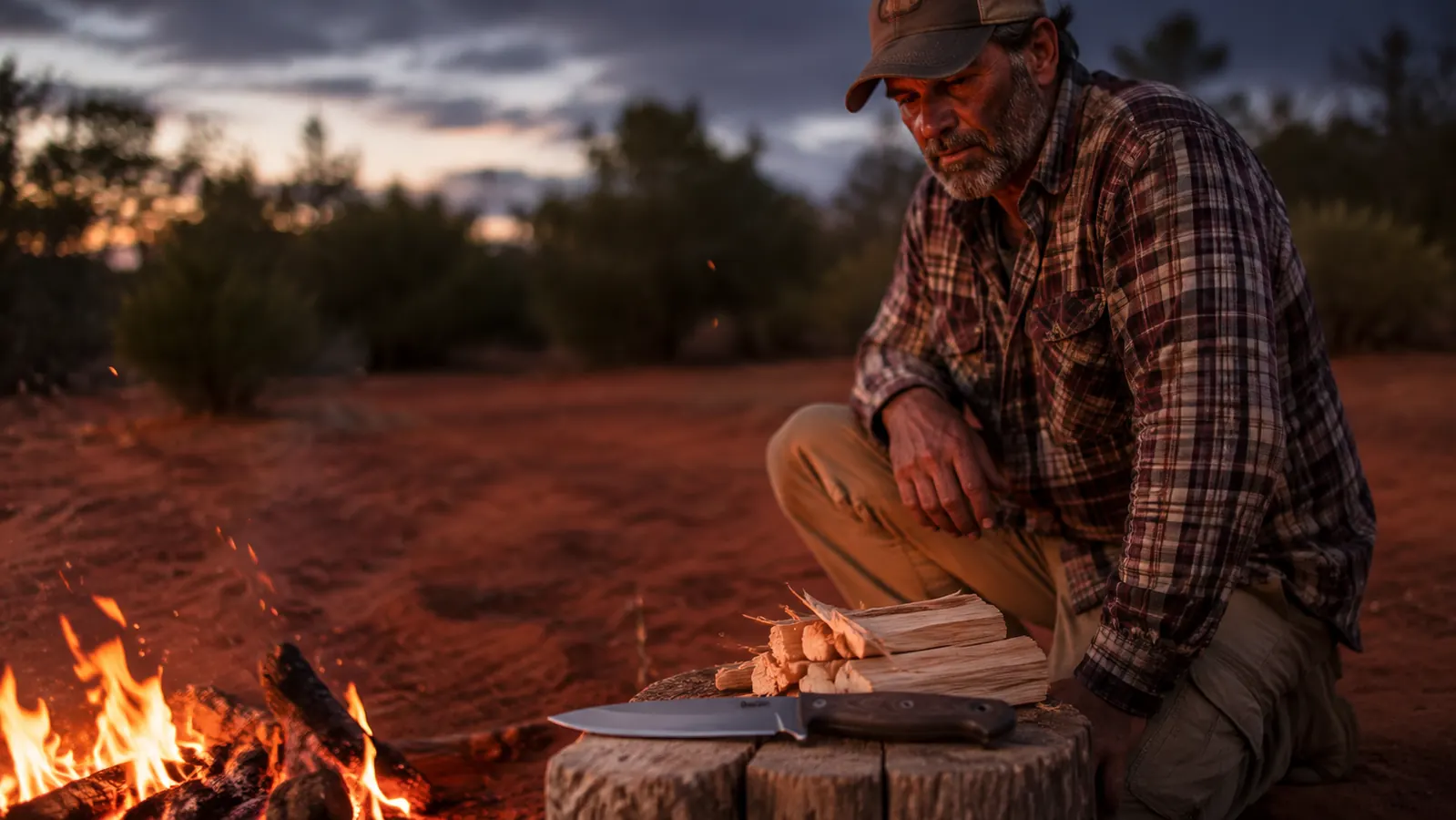
I picked up this 15-inch fixed-blade survival knife a little over a year ago after my old drop-point finally gave out on me mid-season, the tip snapped clean off trying to pry open a stuck latch on a deer stand, which is exactly the kind of dumb mistake that teaches you to buy a real knife instead of whatever was on sale at the feed store. I wanted something full tang, something with enough blade to baton kindling and enough handle to keep a grip on it with cold, wet hands. A year of camp chores, one deer season, and more trips to the back forty than I can count later, I've got a real opinion on this one, not a first-week impression.
This isn't a knife I keep in a drawer looking pretty. It rides in a truck console pocket most days and comes out for splitting kindling, notching stakes, field dressing, and the general run of camp chores a fixed blade actually gets used for out here in Oklahoma. That's the only kind of review that ever helped me buy anything, so it's the only kind I'm going to write. The Mossy Oak knife is branded Mossy Oak, which surprised a few guys I hunt with since they mostly know that name from camo patterns and not from cutlery, but the Mossy Oak knife itself doesn't ride on the logo. It has to earn its keep on steel and handle alone, and after a year, here's where it stands.
The Quick Verdict
A genuinely capable full-tang fixed blade for the money, with real limits on edge retention and sheath quality that anyone considering it should know going in.
Amazon Check Today's Price →Still carrying a folder that can't take real camp abuse?
This 15-inch fixed blade has ridden in my truck and my pack for a full year now, through kindling, field dressing, and everything in between. Check today's price and see why it earned a permanent spot in my kit.
Amazon Check Today's Price on Amazon →How I've Used It
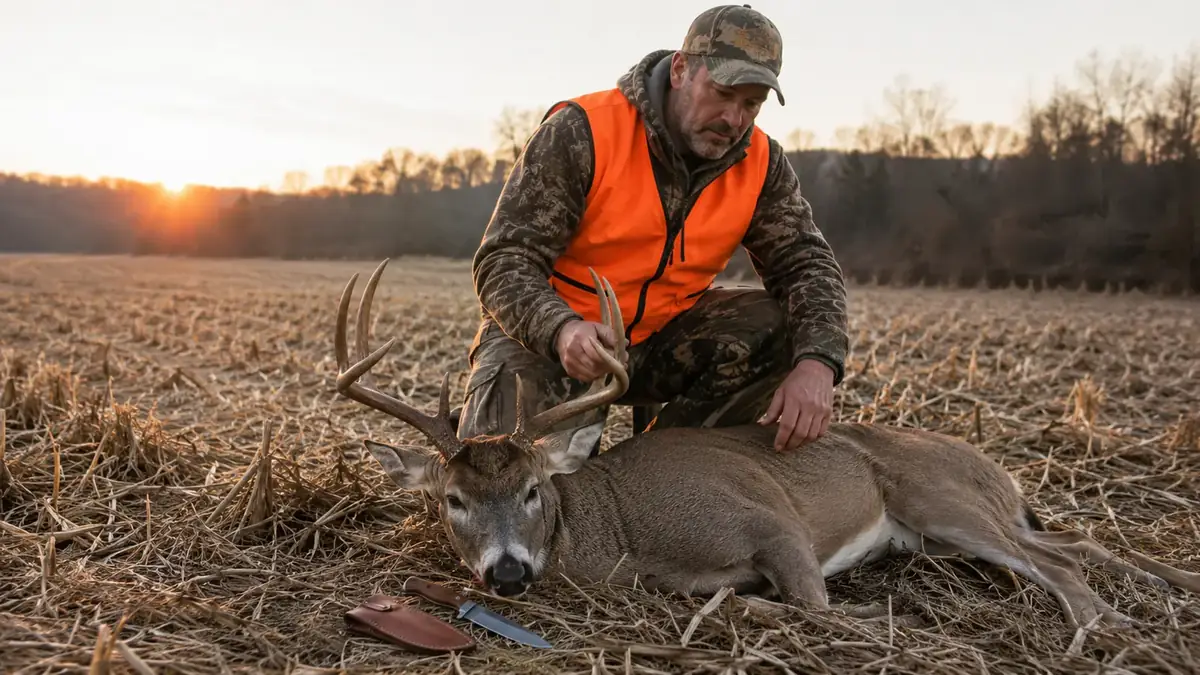
My use case is pretty typical for anyone who spends real time outdoors rather than just talking about it. I use this Mossy Oak knife for splitting fatwood and kindling at camp, cleaning up small branches for a fire lay, notching tent stakes, opening feed bags, and once a season, field dressing a deer. That's a wide range of jobs for one blade, and it's exactly the range this knife was built to cover. I've also used it for the less glamorous stuff, cutting paracord, breaking down cardboard at the barn, prying open a stuck cooler latch, the kind of jobs that would chip a cheaper blade or bend a folder's lock.
I didn't baby it. It's ridden loose in a truck console next to loose change and gravel, gotten rained on more times than I can count, and spent a couple of nights forgotten on a tailgate before I remembered it and went back for it. That's the kind of real-world test that actually tells you something about a tool, not a controlled bench review under lab conditions.
I want to be upfront about something before I go further. A knife this size is not a toy, and it's not something to hand a kid without direct supervision. I keep mine sheathed except when it's actually in use, I always cut away from my body and my hands, and I never baton wood with anyone standing close enough to get hit if the blade kicks out. None of what follows is worth much if you're not handling a blade this size with real respect for what it can do.
The Steel and Edge Retention After a Year
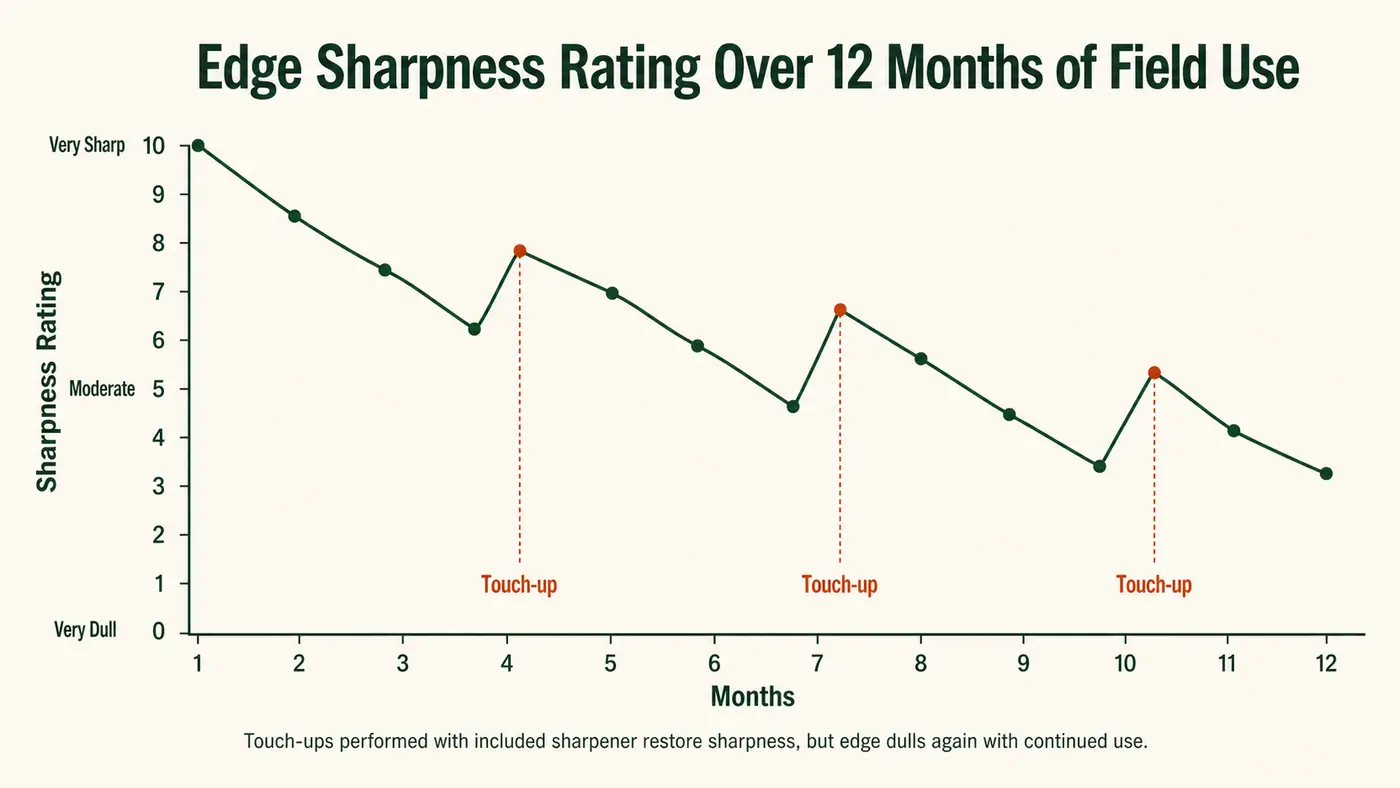
This knife came out of the box shaving-sharp, which isn't unusual for a new blade, but I've had enough cheap knives arrive sharp and then dull out inside a week to know that first impression doesn't mean much. A year in, here's the honest truth. The stainless steel holds a working edge reasonably well through normal cutting, rope, cardboard, small branches, but it does not hold an edge anywhere near as long as a premium high-carbon steel would once you start batoning through knots or hitting anything with grit on it, like a stake driven into rocky ground.
I noticed the difference most clearly the first time I used it to clean up a stack of scrub oak that had been sitting in the dirt. The blade came away noticeably duller after that session than it did after an equal amount of time cutting clean, dry pine. That's not a knock unique to this knife, most stainless blades in this price range behave the same way, but if you're expecting the kind of edge retention you'd get from a high-end bushcraft knife with premium steel, you'll want to adjust your expectations before you buy.
What I will say in its favor is that the edge is easy to bring back. It doesn't take heavy force or a long session to restore a working edge, which matters more day to day than raw retention numbers do. A knife that holds an edge forever but takes twenty minutes on a stone to sharpen isn't necessarily better for camp use than one that needs a quick touch-up every few outings but takes it fast.
The Included Sharpener and Fire Starter: Honest Take
The knife ships with a built-in sharpener and a ferro rod fire starter tucked into the sheath, and I've genuinely used both, which is more than I can say for most bundled accessories that come with budget gear. The sharpener does the job for a quick field touch-up, it's not going to give you the same edge as a proper whetstone session at home, but it's brought my blade back from dull-and-frustrating to workable more than once when I was out and didn't have anything else on hand.
The ferro rod works as advertised for starting a fire, though like any ferro rod it takes a little practice to get a consistent shower of sparks and good tinder underneath it. I wouldn't rely on it as my only fire-starting method on a trip that actually mattered, I always carry a backup, but as an included extra bolted onto the sheath at no additional cost, it's a genuinely useful add rather than a gimmick meant to pad the box.
Handle Grip and Comfortable Long Sessions
The handle is where this knife impressed me more than I expected going in. It's got enough length and enough texture to hold onto with wet or gloved hands, which matters a lot more than people realize until they're trying to baton kindling in a light rain with cold fingers. I've used it bare-handed in the summer heat and gloved in December cold, and in both cases the grip stayed secure without feeling like I had to white-knuckle it.
The full tang construction runs the length of the handle, which you can feel in the balance. It's not a blade-heavy knife that wants to twist in your hand under load, and that balance made a real difference the first time I used it to baton through a knotty piece of oak. It didn't feel like the handle was going to separate from the blade or flex under the impact, which is exactly the kind of confidence you want from a survival knife when you're actually relying on it.
The Sheath: Where It Shows Its Corners Cut
If there's one place this knife shows where the price got saved, it's the sheath. It's functional, it holds the knife securely and it's where that ferro rod and sharpener live, but the material isn't going to hold up to years of hard daily carry the way a quality leather or Kydex sheath would. After a year of being clipped to a belt, tossed in a truck, and occasionally set down on rough ground, mine shows real wear at the stitching and the retention snap isn't quite as snug as it was on day one.
It still does its job, I haven't had the knife come loose or fall out unexpectedly, but if you're the type who wants gear that looks and feels premium at every touchpoint, the sheath is where you'll notice this is a budget-friendly knife rather than a boutique bushcraft piece. I'd recommend anyone who plans to carry this daily for years consider a aftermarket Kydex sheath down the road, which is a cheap fix for the one weak point in an otherwise solid package.
Batoning Kindling and Camp Chores
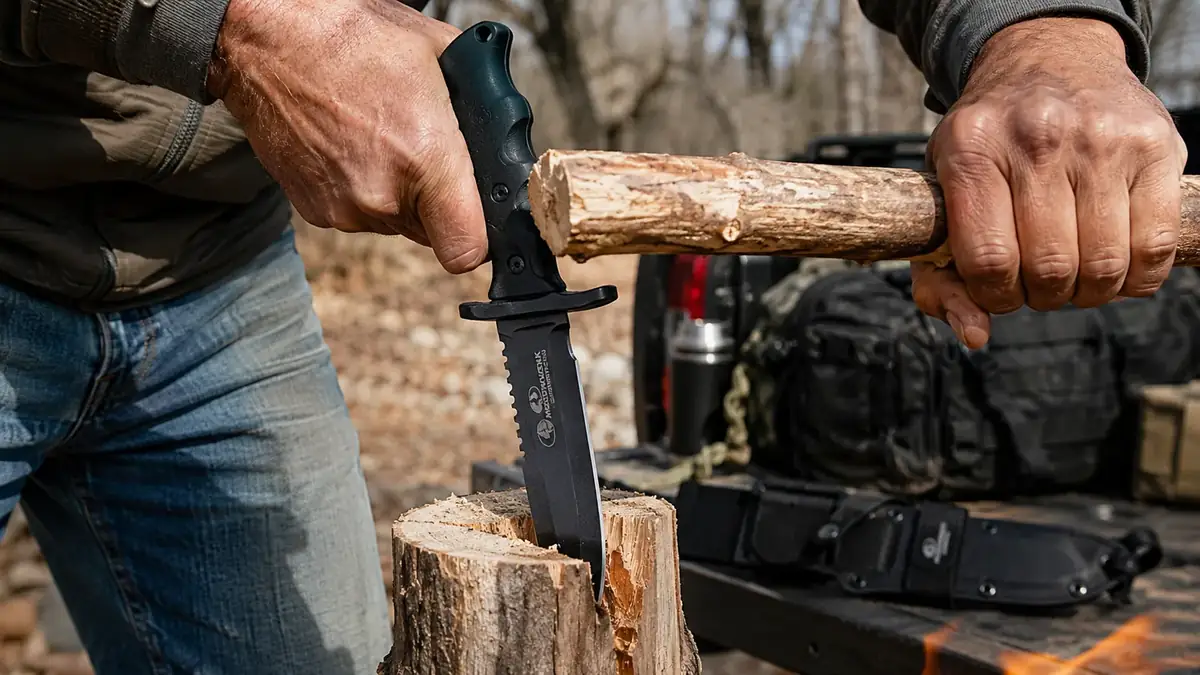
This is where the knife spends most of its working life with me, and it's genuinely good at it. The spine is thick enough to take repeated baton strikes without any flex or worry, and the length gives you real leverage splitting down a log into kindling-sized pieces. I've split everything from soft pine to stubborn oak knots with it, and while the oak takes more strikes and dulls the edge faster like I mentioned earlier, the knife has never chipped, cracked, or shown any sign it wasn't built for the job.
A word on safety here because it matters. When I baton, I always strike straight down onto the spine with a wooden baton, never a metal hammer, I keep my off hand well clear of the blade path, and I baton on a stable stump or log rather than the ground where the blade could deflect toward my leg. A 15-inch fixed blade under impact is not something to get casual with, and the handful of knife injuries I've heard about from other hunters almost always trace back to skipping one of those basics.
Alternatives I Considered Before Buying
Before landing on this one, I looked hard at a Morakniv, which a lot of serious bushcraft guys swear by for its steel quality and edge retention. It's a fine knife and I'll get into that comparison in more detail elsewhere, but it's a smaller blade without the built-in sharpener and fire starter, and for the range of camp chores I actually do, the extra length and included extras here won out. I also considered a couple of tactical-style fixed blades in the same general size, but they leaned harder into a combat aesthetic than a practical camp tool, and the price climbed fast for features I wasn't going to use.
What I Liked
- Full tang construction with a handle that grips securely wet, gloved, or bare-handed
- Thick spine and solid balance make it genuinely capable for batoning kindling and knotty wood
- Built-in sharpener and ferro rod fire starter are both actually useful, not just box-checking extras
- Handled a full year of rough truck-and-pack carry without chipping or structural issues
- Easy to bring back to a working edge with minimal effort
- Strong value for a full-size survival knife with this many included features
Where It Falls Short
- Edge retention lags behind premium steel, especially cutting through gritty or knotted wood
- Sheath material and stitching show real wear after a year of daily carry
- The built-in sharpener is fine for field touch-ups but won't replace a proper whetstone at home
- Not a knife for casual or unsupervised handling given its size and weight
It doesn't hold an edge like a premium steel would, but it's never once let me down on the jobs I actually needed it for, and it brings its own sharpener along for the ride.
Who This Is For
If you want one solid fixed blade that covers camp chores, light field dressing, and general outdoor use without buying a specialized knife for each job, this one earns its spot in a truck console or a pack. It's a smart pick for a hunter or camper who wants a full-size, full-tang blade with a sharpener and fire starter built right into the sheath, so you're not carrying three separate tools for jobs this one handles reasonably well on its own. First-time fixed-blade buyers who don't want to overspend before they know how much they'll actually use a knife like this will get real capability here for the money.
Who Should Skip It
If you're a dedicated bushcrafter who spends serious time in the backcountry and needs a blade that holds a working edge through days of hard use without a touch-up, you'll eventually want to step up to a premium high-carbon steel where edge retention matters more than upfront cost. And if you want a sheath that looks and wears like it belongs on a boutique knife for years without any stitching wear, this one will disappoint you there specifically. This knife is built for a working outdoorsman covering a wide range of camp and field jobs, not a specialist chasing the last word in steel performance.
A year of kindling, knots, and one deer season later, this one's still riding in my truck.
If you're tired of a folder that can't handle real camp abuse, this 15-inch full-tang fixed blade, sharpener and fire starter included, is worth putting in your own hands. Check today's price before your next trip.
Amazon Check Today's Price on Amazon →