
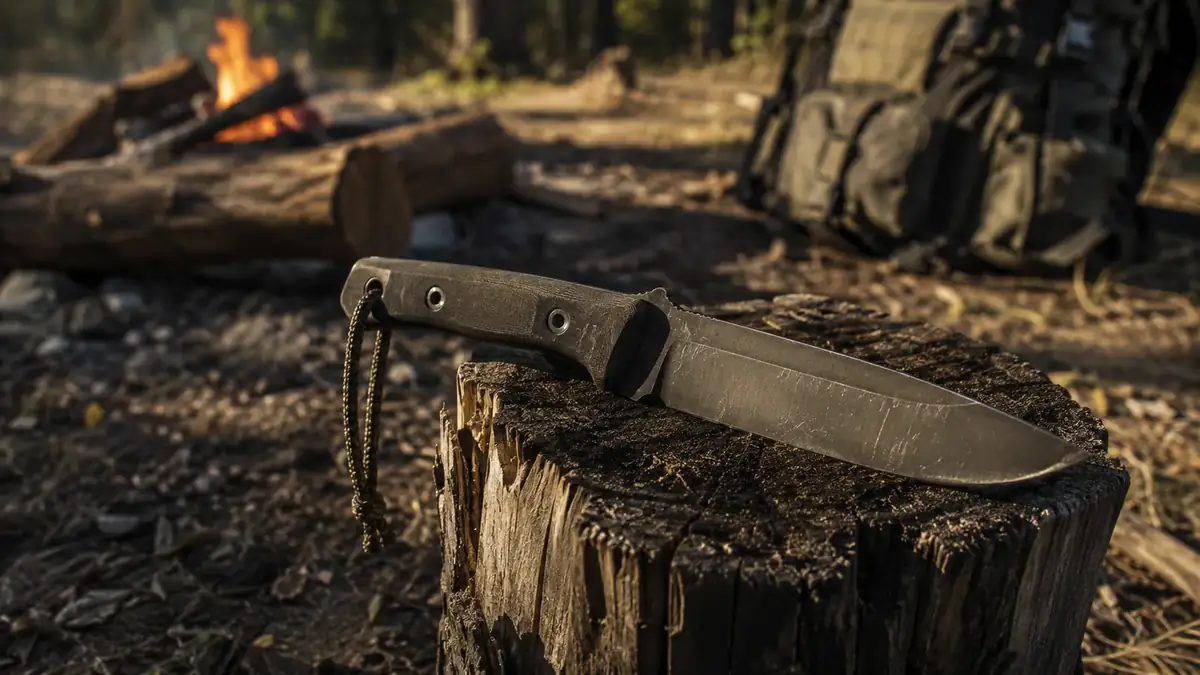
I've carried a folding knife in my pocket since I was about twelve years old, and for a long stretch of years that's all I figured I needed. Then somewhere around my mid-thirties, after a bad afternoon field dressing a whitetail with a blade that kept folding shut on my knuckles, I started carrying a fixed blade every time I walked into the woods, waded a creek bank, or worked cattle out on the back forty. That one change did more for how I handle myself outdoors than almost any other piece of gear I own.
A fixed blade isn't flashier than a good folder, and it sure isn't lighter. But it's tougher, it's faster to use with cold or wet hands, and it holds up to real work instead of just cutting open a box of shells. The knife I keep coming back to for camp chores, skinning, and general field work is the Mossy Oak 15-inch survival knife, mostly because it does the job without asking me to babysit it. Here are ten reasons a fixed blade earns its spot in your pack, not just your truck bed.
The Fixed Blade I Actually Reach For
If you're still running a folder for everything from firewood to field dressing, the Mossy Oak 15-inch fixed blade is the upgrade most of us should have made years ago. Full tang, a sheath with a built-in sharpener and fire starter, and a blade that doesn't ask you anything before it goes to work.
Amazon Check Today's Price on Amazon →It Won't Fold on Your Fingers
A folder has a pivot pin, and a pivot pin can fail. I've had a cheap lockback close on my hand mid-cut while dressing a deer in the cold, and it's not an injury you forget. A fixed blade has no moving parts between the tip and the handle. That's not a small thing when your hands are wet, numb, or covered in grease. Carry it in a good sheath, keep the edge covered when it's not in use, and you remove one whole category of field accident from your day.
Full Tang Means It Takes Real Abuse
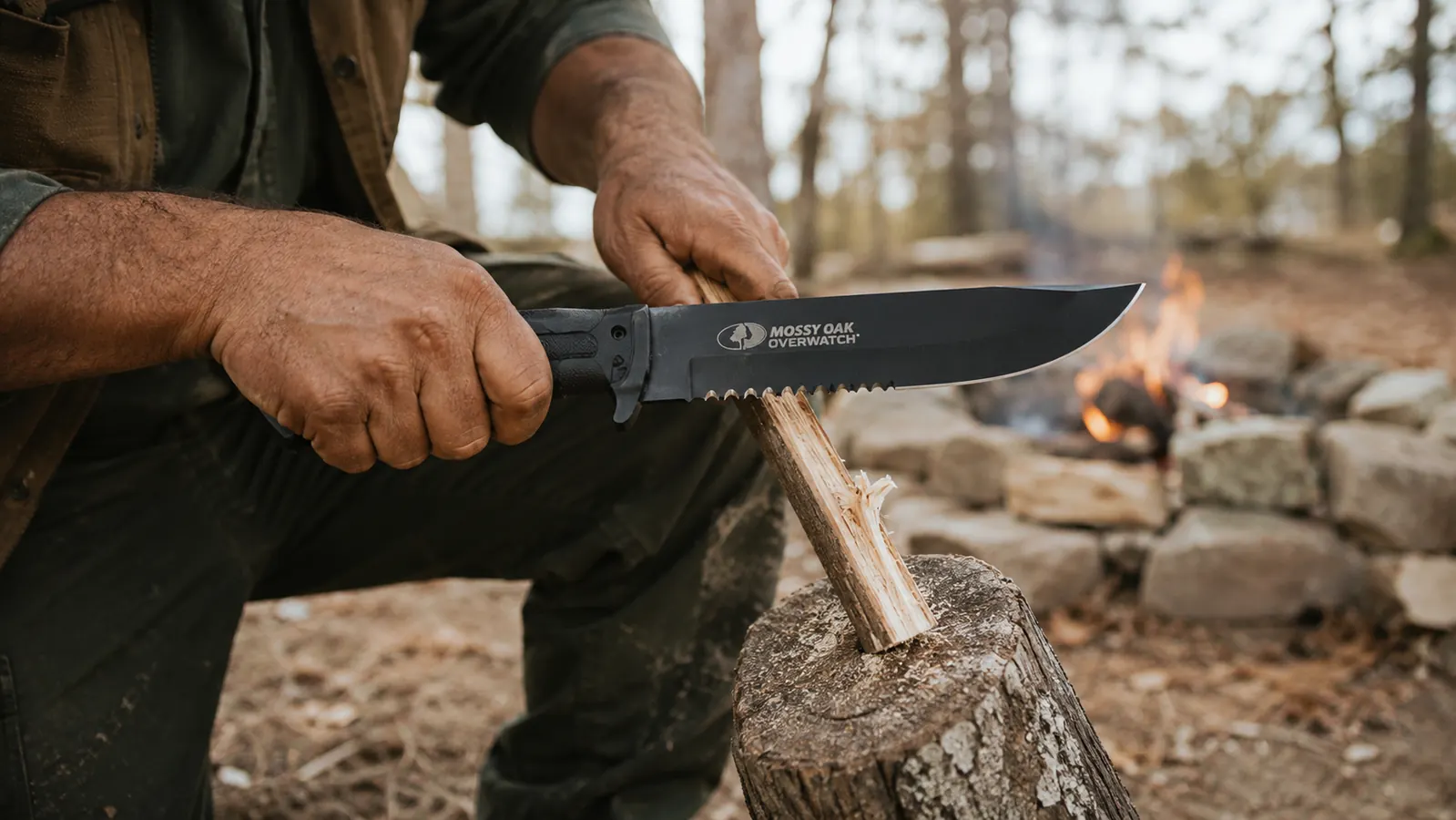
Full tang just means the steel runs the entire length of the handle, not a stub welded or pinned to a plastic grip. That construction is what lets you baton through a piece of oak for kindling without worrying the handle is going to snap off in your hand. The Mossy Oak knife is built full tang, and I've leaned on it hard for splitting kindling, digging out a stuck tent stake, and prying open a stubborn cooler latch more than once.
Faster to Draw With Cold, Wet Hands
Try opening a folder one-handed with numb fingers at 5 AM in November and you'll understand why a sheath knife wins here. A fixed blade comes out of leather or kydex in one motion, no thumb stud to find, no lock to disengage. When a bird flushes, a line goes tight, or you just need to cut cordage fast, that half-second matters more than you'd think until you're the one fumbling.
It Handles Field Dressing Cleaner
A drop-point or clip-point fixed blade with a real edge gives you better control on the gut cut and around joints than most folders manage. Less sawing, fewer nicks in the hide, cleaner meat. I've field dressed elk, whitetail, and hogs with the Mossy Oak blade, and the extra length past the guard gives you room to work without your knuckles ending up in the cavity. Always work slow and keep your off hand clear of the edge path.
It Doubles as Your Camp Knife
Feather sticks for a fire start, notching a tent stake, cutting through paracord, splitting kindling down to something that'll actually catch. A fixed blade shrugs off camp chores that would chip a thinner folder blade or work the pivot loose over a season. I use the 15-inch Mossy Oak for exactly this most weekends, and it hasn't rolled an edge on me yet doing routine camp work.
Fewer Crevices, Easier to Keep Clean
Blood, sap, and grit love to hide in a folder's pivot and liner. A fixed blade is one solid piece of steel and one handle, so a quick rinse and a wipe-down actually gets it clean. That matters more than people think, because a dirty pivot is how a folder starts binding up right when you need it to open smooth. Less to maintain in the field means less that can go wrong.
Better Grip Control for Hard Use
A full-size handle gives you more surface area to grip than the stub handle on most folders, which means less hand fatigue when you're working through a long task like processing a deer or splitting a stack of kindling. The wrapped handle on the Mossy Oak knife stays grippy even when my hands are wet or bloody, which is exactly when you need the most control, not the least.
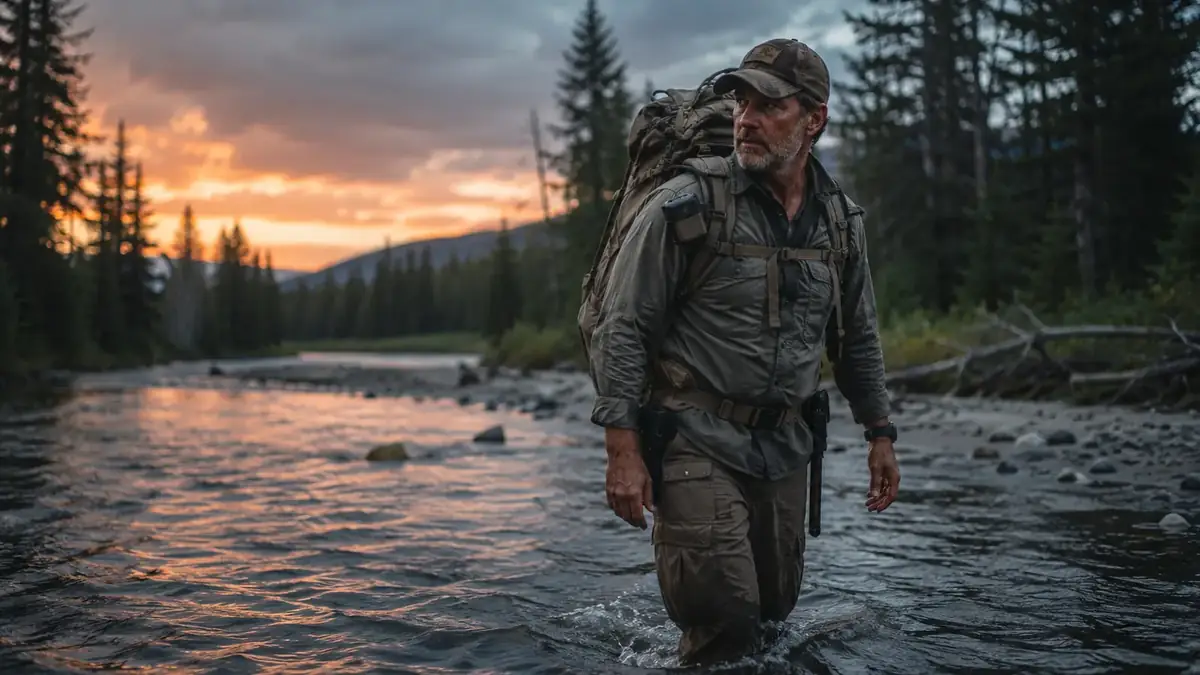
Sheath Carry Keeps It Secure, Not Buried in a Pocket
A knife you have to dig for in a pack pocket is a knife you won't reach for in a hurry. A belt sheath keeps a fixed blade in the same spot every single time, accessible and secure, without the wobble of a folder rattling around loose against your gear. Just make sure the sheath has a solid retention snap or strap, and always sheath the blade fully before you set it down or hand it to someone else.
Built-In Extras Add Real Utility
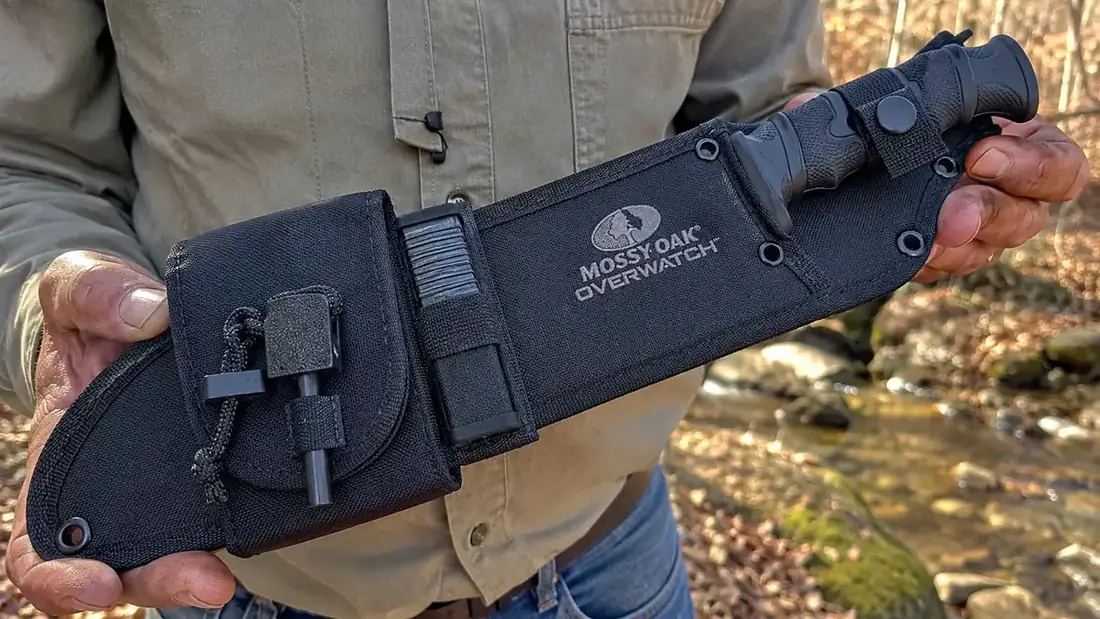
The sheath on the Mossy Oak fixed blade carries a small sharpener and a fire starter rod tucked right alongside the knife, so you've got a way to touch up the edge and start a fire without packing two more items. It's a small detail, but on a long day in the field, having your sharpener exactly where your knife lives means you'll actually use it instead of leaving it in a drawer at home.
It's the One Tool You Reach for in a Bad Spot
Cutting a tangled line, freeing a stuck strap, building an emergency shelter, splitting wood when the weather's turning. A fixed blade is the tool most likely to still be working after everything else in your pack has failed you, and it's the one I'd want on my belt if a normal day turned into a long one. Learn to use it safely, keep it sharp, and it'll outlast a dozen cheaper folders.
What I'd Skip
Not every fixed blade on the shelf is worth the belt space. I'd skip anything with a stamped, thin blade that flexes when you press down on it, and I'd skip a sheath with no drainage hole, because a wet leather sheath left against a steel blade overnight is how you get rust. I'd also skip carrying a 15-inch blade for tasks that call for something smaller, a knife this size is built for camp chores and field dressing, not for whittling or fine kitchen work, so most of us are better served keeping a smaller folder or paring knife around too. And I'd skip handing a fixed blade to anyone, kid or adult, who hasn't been shown how to carry it, draw it, and pass it safely, edge away, handle first, every time.
A fixed blade doesn't ask permission to work. That's exactly why it earns the weight.
Ready to Carry Something That Won't Let You Down
A fixed blade should be the tool you trust without thinking twice, not the one you're babying along. The Mossy Oak 15-inch survival knife has earned a permanent spot in my pack for camp chores, field dressing, and the days that don't go as planned.
Amazon Check Today's Price on Amazon →