
I bought my first two-pack of Etekcity lanterns the same week the power went out at the house for the better part of two days after a spring storm rolled through red-dirt country and took half the county's lines down with it. I'd been meaning to replace the pair of dollar-store lanterns rattling around in my camp tote for a while, the kind that eat batteries and throw a light about as useful as a nightlight, and that outage forced my hand. What started as an emergency purchase turned into gear I've now hung in a wall tent, set on a truck tailgate, and used to light a skinning station more nights than I can count since.
This isn't a spec sheet rundown. I'm not going to quote you a lumen number off the box and call it a day. I'm going to tell you what it's like to actually rely on these lanterns, trip after trip, because that's the only kind of review that ever helped me decide what's worth packing.
The Quick Verdict
After a full season of camp use and one real power outage, the Etekcity lanterns earn their keep on battery life and packed size alone, though the plastic hardware and light hangers are worth knowing about before you buy.
Amazon Check Today's Price →Tired of a headlamp beam that only lights up whatever you happen to be staring at?
The Etekcity lanterns are what I reach for now whether I'm setting up a wall tent camp or just riding out a power outage at the house. Check today's price and see why a two-pack replaced three different flashlights in my truck.
Amazon Check Today's Price on Amazon →How I've Used It
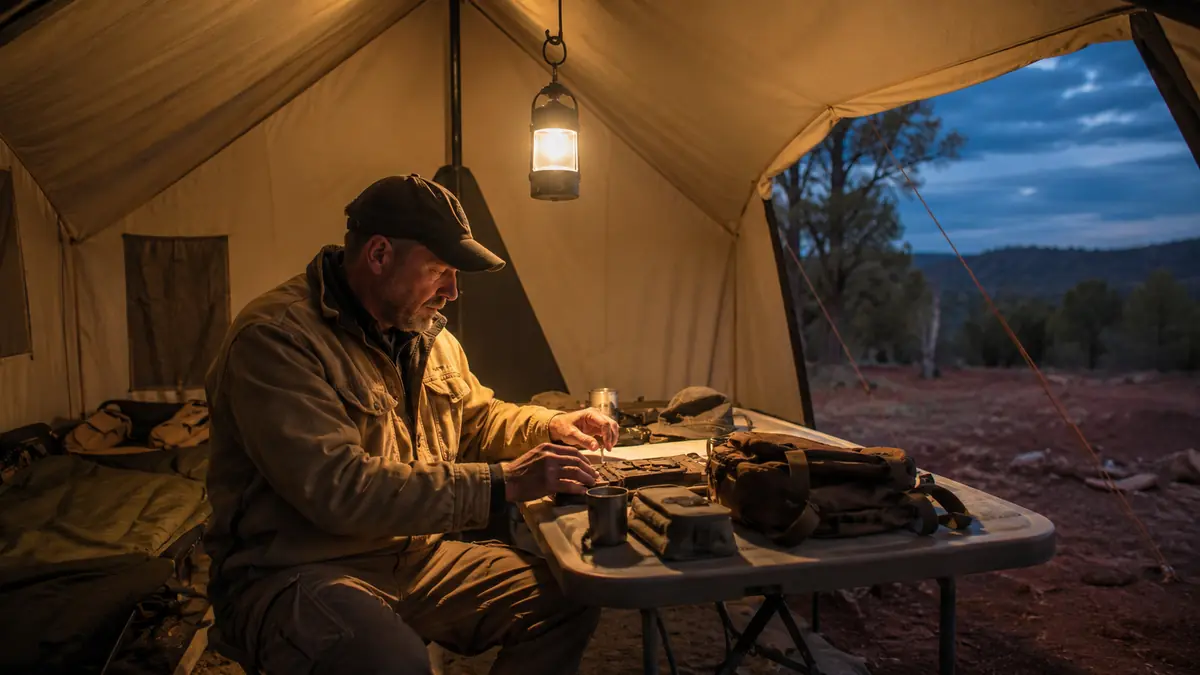
My use case is pretty ordinary for anyone who spends real nights outside. I hang one lantern from the ridge pole of my wall tent during rifle season, I keep one on the truck tailgate whenever we're camped off a forest road for a weekend, and I've used the pair together more than once to light a field-dressing station after dark when a hunt ran later than planned. The wall tent itself is nothing fancy, just the tent I hang it in every October, and it has held up fine through wind and one hard sleet storm. Add in the power outage that started this whole thing, plus a handful of nights just sitting around a truck bed camp with the family, and I've put these lanterns through somewhere close to fifty separate uses over the last several months.
I haven't babied them either. They've ridden loose in the bed of the truck under a tarp, gotten kicked over once while I was fumbling around a dark camp looking for my knife, and spent plenty of nights crammed into a duffel bag next to boots and a rain jacket. That's the kind of handling that tells you something a store display never will.
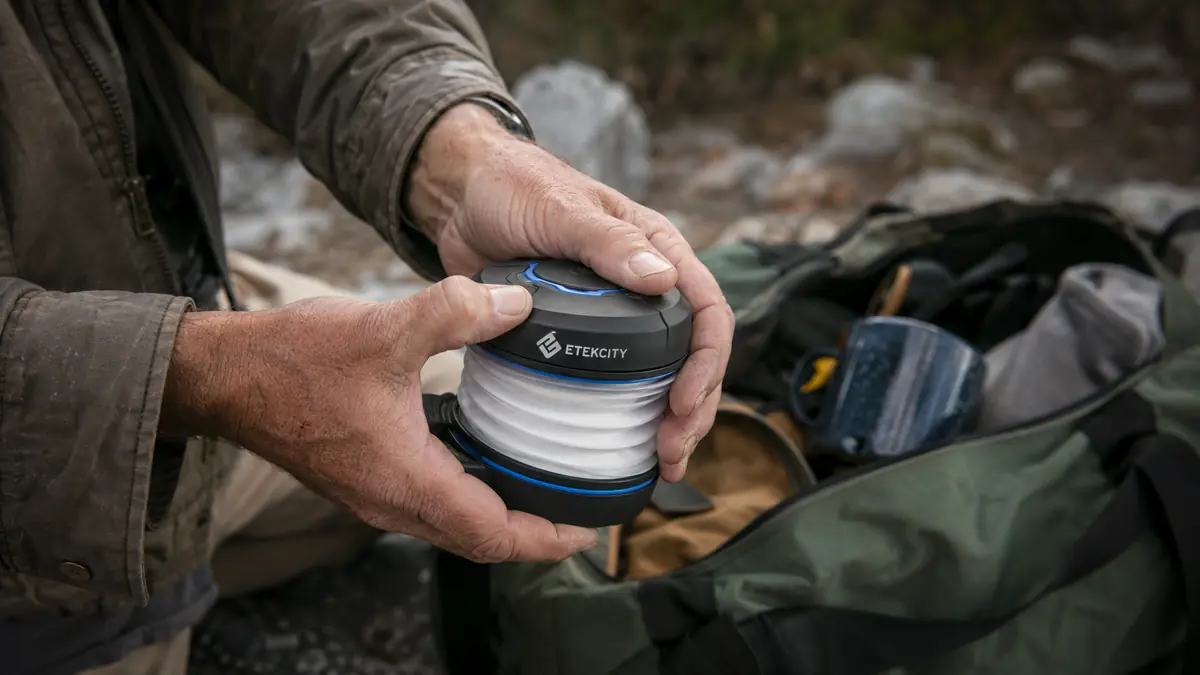
For anyone who hasn't handled one, the Etekcity lantern is a collapsible design, meaning it folds down flat for storage and pulls up into a globe shape when you want light. It runs on batteries rather than a rechargeable pack, which was actually part of the appeal for me. I don't always trust a charge to hold through a long weekend, and I'd rather swap in fresh batteries at camp than hunt for an outlet or a solar panel. It comes as a two-pack, which matters more than it sounds like it should, because having a backup lantern already in the bag has saved more than one evening when the first one got left on overnight and drained down.
Battery Life: Where the Etekcity Actually Earns Its Reputation
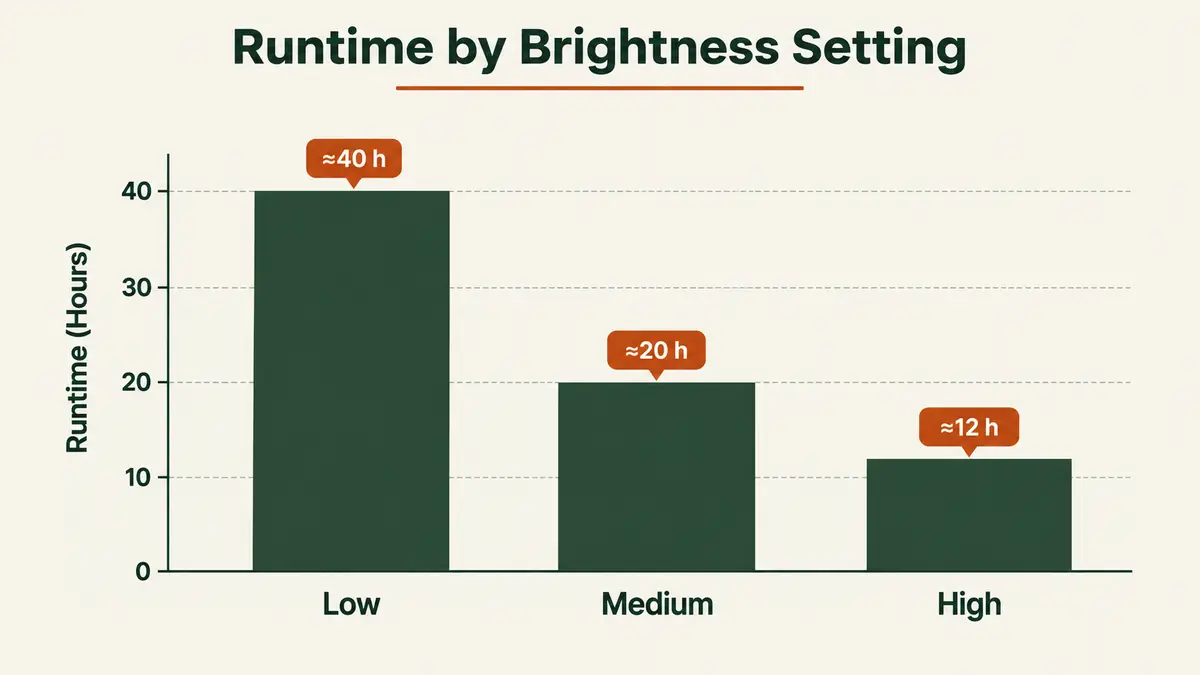
Battery life is the whole reason I switched away from my old dollar-store lanterns, and it's where this thing has genuinely impressed me. On the low setting, I've gotten a lantern to run most of a long weekend camping trip without swapping batteries, which is a real difference from gear that needs fresh ones every single night. On the higher setting, which throws noticeably more usable light across a camp table or a skinning station, the runtime drops off quite a bit faster, closer to a single long evening before I start seeing the light dim.
That tradeoff between brightness and runtime is nothing new, every battery-powered light works that way, but the range on the low end is what sold me. I ran one lantern on low from Friday evening through most of Sunday at a wall tent camp in October and it was still putting out usable light when we broke camp, just visibly dimmer than when we'd started. That's the kind of margin that matters when you're three miles off a forest road and the nearest gas station with batteries is an hour away.
The medium setting has become my default. It's bright enough to actually cook by or sort gear without squinting, and it stretches well past a single overnight without needing a battery swap. If I know I'm setting up for more than two nights, I default to low and just accept the dimmer light in trade for not touching the batteries again until we're packing out.
Build and Collapsible Design, What a Season of Handling Does to It
The collapsible design is genuinely the best part of owning these, and also where I've got my one real complaint. When it's folded flat, a lantern takes up barely any room in a duffel or a truck console, which is a big deal when your camp gear already fills every square inch of the bed. Pulling it up into shape takes a couple seconds, no fumbling, no assembly, just extend it and hang it or set it down.
Where I've noticed real wear is at the folding hinge points. After months of collapsing and extending these lanterns, mine now have a slightly looser feel at the fold than they did new, not loose enough to worry me yet, but enough that I've started being a little more deliberate about how I fold them down instead of just jamming them flat and tossing them in the bag. The plastic housing is light, which is great for packing but does mean it's not something I'd want to sit on or drop off a tailgate onto rock. I haven't cracked one, but I've come close enough on a couple of fumbled catches to be careful with them now. The built-in hanging hook is a small feature that's made a bigger difference than I expected. Being able to hook a lantern straight onto a tent ridge line or a low tree branch instead of setting it on the ground and losing half its light to shadows underneath changes how usable the light actually is around camp. It's held up fine through the season, no bending or cracking at the hook itself.
Brightness in the Field, Wall Tent to Truck Bed
In a wall tent, one lantern hung centrally does a solid job of lighting the whole interior for reading, cooking, or sorting gear before bed. It's not daylight, and you'll still want a headlamp for anything close-up like field-dressing detail work, but for general camp light it's more than enough. Two lanterns hung on opposite sides of a larger tent removes almost all the shadow, which I noticed the first time I set both of the two-pack up together during that October wall tent trip.
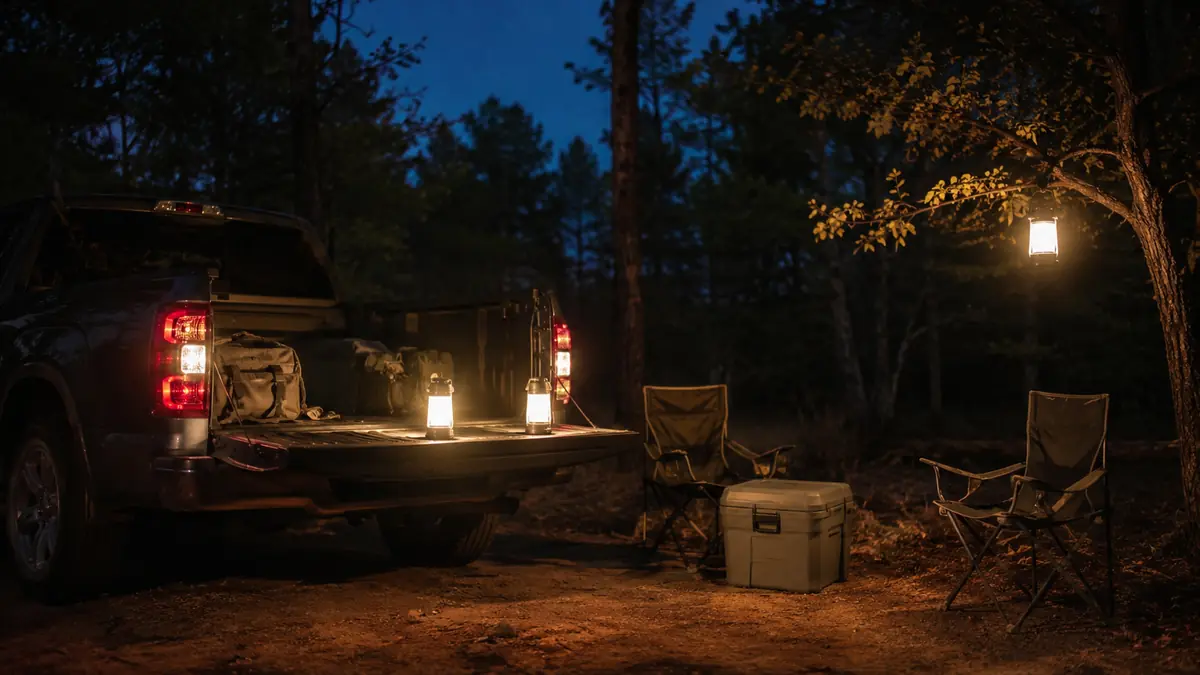
Out at a truck bed camp, the story is a little different since there's no fabric to bounce and diffuse the light. One lantern set on the tailgate lights a decent circle around the truck, enough for cooking and sitting around, but it falls off fast past ten or fifteen feet. That's where having the second lantern in the pack matters, hanging one from a tree branch a little further out stretches the useful light considerably and keeps the whole camp from feeling like a single spotlight in the dark.
During that power outage back at the house, I ran both lanterns on medium in the kitchen and living room for two evenings straight, and it was genuinely enough light to cook dinner and get the kids through homework without pulling out candles. That's really the moment I stopped thinking of these as camp gear and started thinking of them as a household backup I keep charged and ready, batteries included, sitting in the same tote as my flashlights.
What I Liked
- Battery life on the low setting genuinely stretches through a long weekend of camp use
- Collapsible design packs down small enough to disappear into a duffel bag
- Built-in hanging hook makes a real difference lighting a tent or camp instead of setting it on the ground
- Two-pack means a backup is already in the bag if one gets left on overnight
- Works just as well as a household emergency light as it does at camp
Where It Falls Short
- Folding hinge points have loosened slightly after months of regular collapsing and extending
- Lightweight plastic housing isn't something you want to drop or sit on
- High brightness setting drains batteries noticeably faster than low or medium
- Light falls off fast past ten or fifteen feet with no fabric or walls to bounce off of
- Battery-operated means you're buying and packing batteries rather than charging a built-in pack
This isn't a rechargeable lantern, and that's part of why I bought it. I'd rather swap in fresh batteries at a dark camp than hunt for an outlet three miles off a forest road.
Alternatives I Considered Before Buying
Before I settled on the Etekcity two-pack, I'd been running a single rechargeable lantern I picked up a couple years back, and I'd also looked hard at a headlamp-only setup a hunting buddy of mine swears by. The rechargeable lantern threw good light when it had a full charge, no argument there, but I'd forget to charge it between trips more often than I'd like to admit, and there's nothing worse than pulling gear out at a dark camp and finding a dead lantern with no way to fix it until you're back near power. That single point of failure is exactly what pushed me toward battery-powered gear I can restock from any gas station.
The headlamp-only approach is worth mentioning too, since it's how I ran things for years before switching. A headlamp is great for close work and walking a trail in the dark, but it lights up whatever you're looking at and nothing else, which makes it a poor fit for lighting a whole camp or a table where several people are working. I still keep a headlamp on me for field-dressing and walking out after dark, but it's a poor substitute for something that lights a whole tent or tailgate at once. I've written more about why I ditched my headlamp-only setup for camp lighting in general if that's a decision you're weighing too.
There's also a Lepro lantern I nearly bought instead, similar price range and a similar collapsible design on paper. I ended up going with the Etekcity based on review count and the two-pack value, but I put together a closer look at how it compares to the Lepro lantern for anyone trying to decide between the two before buying.
Who This Is For
If you're the kind of camper who needs real light around a whole tent or campsite, not just a narrow headlamp beam, these lanterns are a smart, affordable pick. They're also worth keeping in a truck or a house for emergency use, hurricane season or a bad storm knocking the power out for a night or two is exactly the situation these were built for. Anyone who's tired of buying cheap dollar-store lanterns that die halfway through a trip will notice the difference on the first weekend out.
Who Should Skip It
If you need serious close-up light for detail work like field dressing or reading fine print, you'll still want a headlamp or flashlight alongside these, they're built for filling a space with light, not focusing a beam. Same goes for anyone dead set on a rechargeable-only setup who doesn't want to buy or pack batteries, and anyone rough enough on gear that a lightweight plastic housing feels like a liability rather than a convenience. For most camp and emergency use though, that's a narrow list of people.
A power outage and a full season of wall tent camps later, this is still the lantern in my truck tote.
If you're tired of a dead flashlight or a dollar-store lantern letting you down at the worst time, the Etekcity two-pack is worth putting to the test yourself. Check today's price before your next trip or the next storm rolls through.
Amazon Check Today's Price on Amazon →