

A 4.7-star average off fifty thousand ratings is the kind of number that makes you stop scrolling and just add it to the cart. That's basically what I did the week before an ice storm was supposed to roll through here in Oklahoma and knock power out for who knows how long. Two Etekcity lanterns showed up two days later, still in the plastic, and I didn't think much more about them until the lights actually went out.
That storm turned into three days without power, and between that stretch, a deer camp trip in a wall tent the following month, and a summer of hauling these things around in the truck for chores after dark, I've got a real opinion now, not just a star rating I copied off the listing. This is the honest version. Not a takedown, just the stuff the review count doesn't tell you before you buy.
The Quick Verdict
It's a genuinely useful battery lantern for the price, and the two-pack logic is smart. It's not a rechargeable setup, it's not gas-lantern bright, and the collapsible top has a hinge you'll want to treat with some care. Know that going in and you'll be happy with it.
Amazon Check Today's Price →The listing photos won't show you the battery door or the hinge. I will, before you're the one finding out at 9pm with no power.
The Etekcity lantern earned its spot in my truck door, but a few things about it aren't obvious until you've owned one a while. Check today's price and read the honest version below before you decide.
Amazon Check Today's Price on Amazon →What I Actually Used These For
The three-day power outage was the real trial by fire. Two adults, two kids, no power, February cold, and one lantern hung in the kitchen while the other lived in the hallway bathroom so nobody was fumbling for a light switch out of habit at 2am. That's not a camping scenario, that's a house full of people trying to function normally with no grid, and it's the situation Etekcity actually markets these for right there on the box, hurricane prep and power outages before camping even gets a mention.
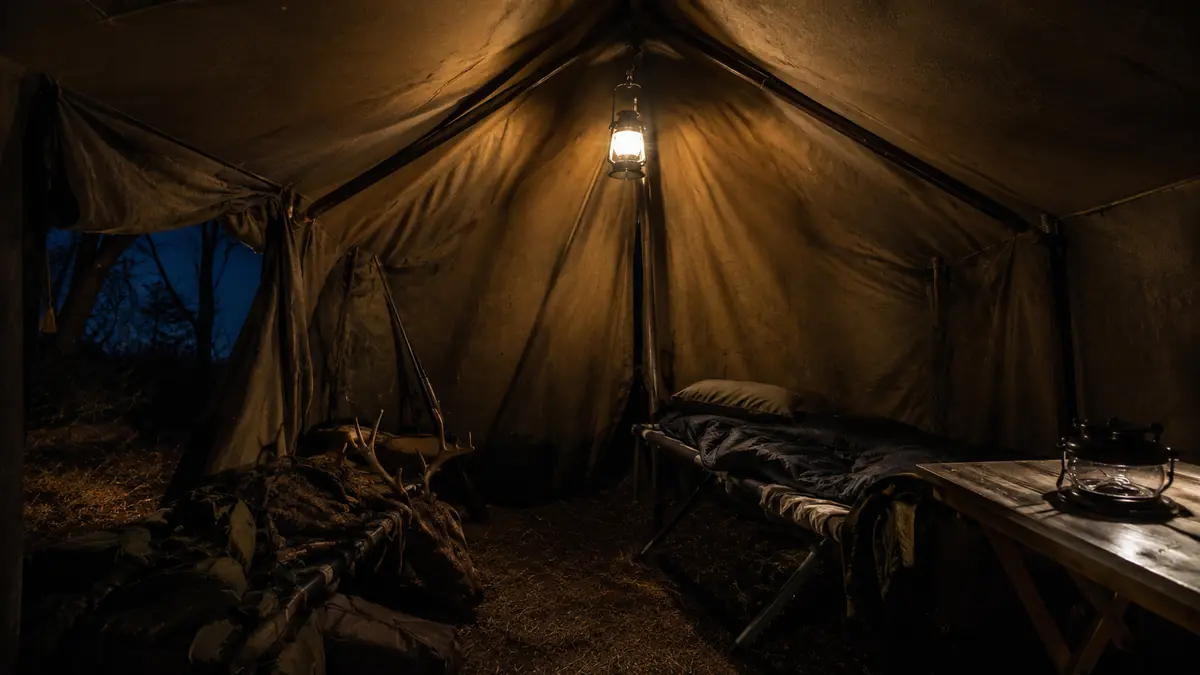
After that I put them to more familiar use. One rode along to a deer camp in a canvas wall tent, hung from the ridge pole where a propane lantern usually goes when I don't want to deal with the hiss and the fuel canister. The other one stayed in the truck for the rest of spring and summer, getting pulled out for anything from checking a stock tank float valve after dark to holding a flashlight-free conversation with a buddy in the driveway while we worked on a trailer hitch.
That range, house, tent, tailgate, garage, is where the honest picture shows up. A lantern that's great in one of those settings and mediocre in the other three isn't actually the all-purpose light the marketing implies, and I wanted to know which one this was before I told anybody else to buy it.
I also ran them through the kind of abuse nobody puts in a review on purpose. One rode loose in a milk crate in the truck bed for a month, banging against a toolbox and a spare fan belt on every washboard road on the ranch. The other got knocked off a camp table onto packed dirt twice in one weekend, once by me and once by a dog that shall remain nameless. Neither one cracked, and the collapsible top popped back into shape both times without me having to fuss with it. That's the kind of everyday carelessness a lantern actually has to survive, not the padded-box treatment it gets in the unboxing photos.
Battery Operated Means Battery Operated, and That Changes the Math
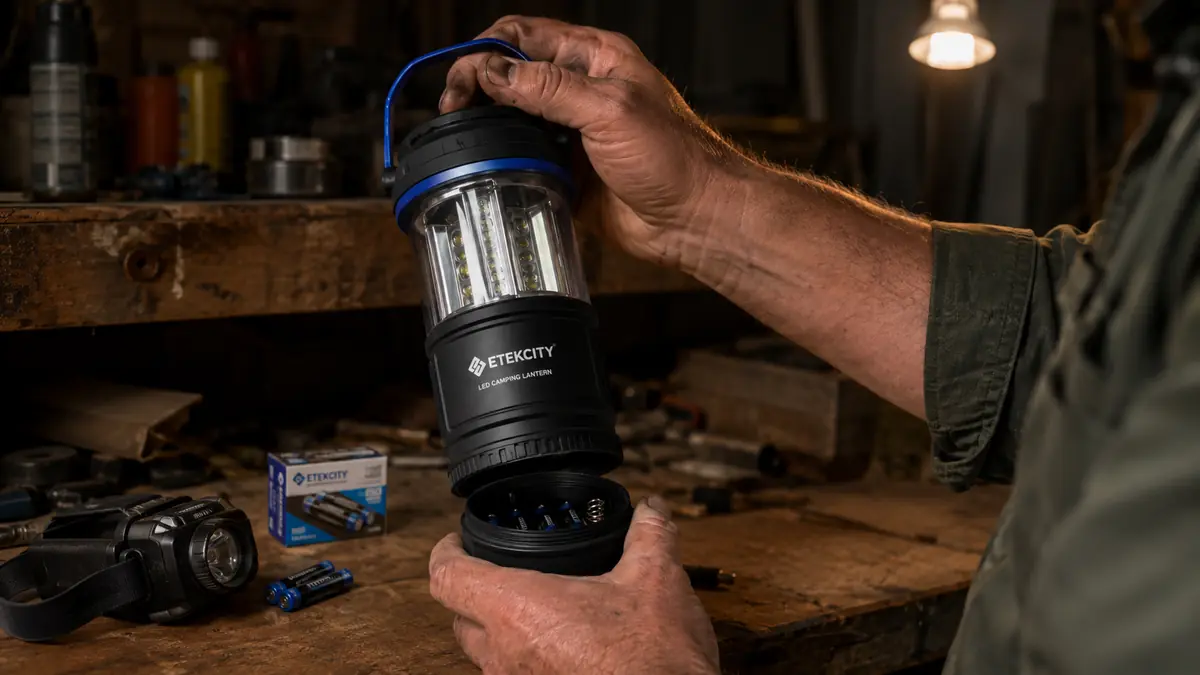
This is the first thing I'd tell a buddy standing in the Amazon listing on his phone. These are battery operated lanterns, not rechargeable ones. No USB port, no charging cradle, no way to plug it into the wall and top it off overnight. You open the base, load in batteries, and when they're dead you're buying more or you're in the dark. That's true of a lot of lanterns at this price, but it's easy to skim past when you're reading the feature bullets and not really absorbing what battery operated actually means for two lanterns running at once.
For the power outage that meant I needed a real stash of batteries on hand before the storm hit, not after. I'd bought a fresh pack the same day the lanterns arrived, mostly on instinct, and I was glad I did, because running two lanterns for several hours a night, three nights running, chews through them faster than you'd guess sitting in a store aisle doing the math in your head. If you're buying these for emergency prep, buy the batteries at the same time you check out. Don't assume you'll remember later, because the whole point of an emergency lantern is that it works the one time you didn't plan ahead.
The upside of no rechargeable pack is that these aren't dead on arrival if they've sat in a closet for two years. A battery lantern with the batteries pulled out is basically shelf-stable, which matters if this is going in a hurricane kit you hope to never open. I keep mine loaded with a fresh set and check them every few months, and that's a lower-maintenance routine than remembering to top off a rechargeable battery bank on a schedule.
Collapsible Is Great Until You Actually Collapse It
The collapsible design is genuinely clever. The whole top folds down flat for storage, which is the reason two of these pack down small enough to live in a truck door pocket or a glove box without eating real space. I liked that immediately, and it's a big part of why one lantern permanently lives in my truck now instead of getting left in a drawer at home.
What nobody mentions is that the collapsing action runs through a plastic hinge, and plastic hinges that get worked repeatedly are exactly the kind of part that loosens over time. Mine still work fine after a season, but I've already noticed the one that rides in the truck, the one that gets collapsed and popped back open more often, has a slightly looser feel than the one that mostly just hangs in the garage. It's not broken, it's not wobbly enough to complain about yet, but I can feel the difference between the two, and that tells me where the wear eventually shows up first.
If you're rough on gear the way I tend to be, treat the collapsing feature the way you'd treat any folding mechanism on cheap gear: use it when you need it, don't fidget with it out of habit, and don't expect it to feel brand new after a hundred open-and-close cycles. It's a plastic build doing a job a metal hinge would do better and last longer at, and the price reflects that tradeoff.
The Light Itself: Good Enough, Not a Real Lantern
I want to be straight about this because it's the part most reviews gloss over in favor of talking about the price. This is a plastic LED lantern, and next to an actual gas lantern like the Coleman I grew up with at deer camp, the light quality just isn't in the same class. The Etekcity throws a flat, slightly bluish light that's plenty functional for reading, cooking, or finding your boots in the dark. It doesn't have the warm, full-room glow of a real mantle lantern, and it doesn't throw light nearly as far outward into open ground.
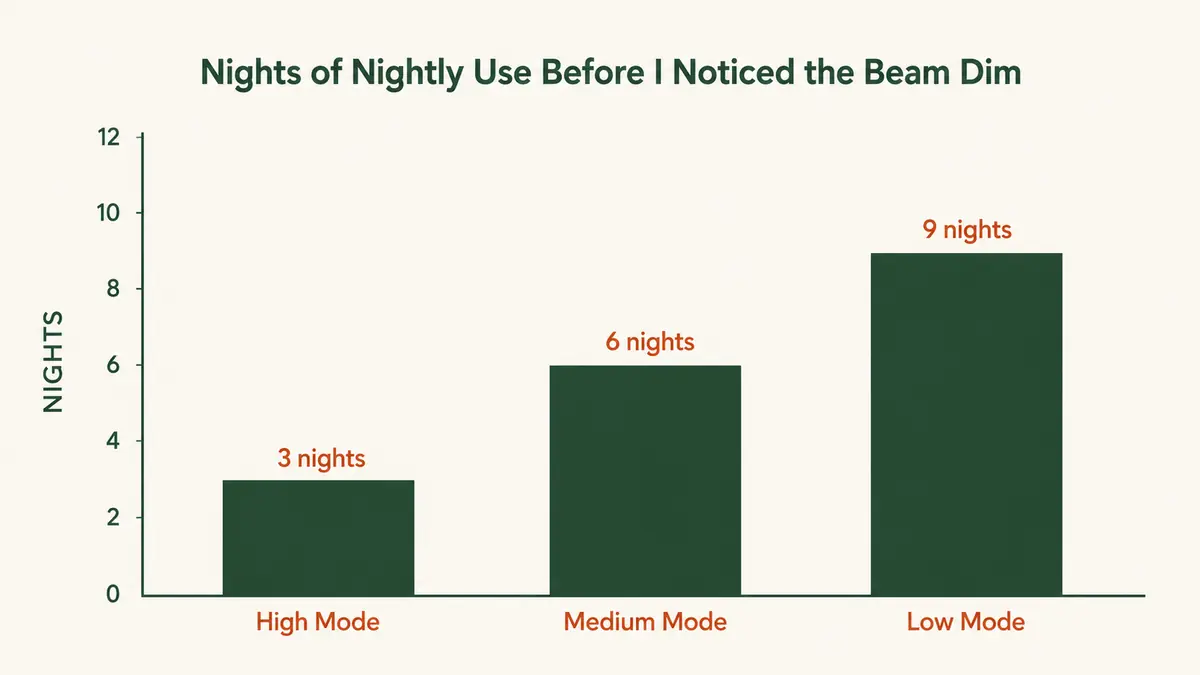
I ran the numbers on my own use because I wanted more than a gut feeling. Running the lantern a couple hours a night on high, I started noticing the beam looking noticeably dimmer at 3 nights on one set of batteries. Switched down to medium, that stretched out to 6 nights before the same drop showed up. On low, which is honestly still enough light to move around a tent or a kitchen without stubbing a toe, I got a full 9 nights before it started fading. That held up consistently enough over two separate battery changes that I trust it as a rule of thumb rather than a one-time fluke. Brightness costs you battery life fast, and the high setting looks great in a five-minute demo in the store but isn't what you want to run all night if you're trying to stretch a single set of batteries through a three-day outage.
For camp use, where you mostly want ambient light in a tent rather than a spotlight, low or medium is the setting I'd actually recommend running most nights. Save high for the moments you need to actually see something clearly, like digging through a pack or checking a knot.
Why the Two-Pack Actually Matters More Than the Price Tag
This is the part of the listing that reads like a throwaway detail but turned out to be the smartest thing about the product. You're not buying one lantern, you're buying two, and that changes how you actually use it. One stays put, whether that's the kitchen during an outage or the wall tent at deer camp, and the other one travels, riding in the truck for whatever comes up. I never would have set up my house that way with a single lantern, because I'd have been stuck choosing which room mattered more during that ice storm.
It also means a battery swap in one doesn't leave you totally dark. When the lantern in the tent started fading around night six on medium, I grabbed the second one out of the truck instead of digging through gear in the dark trying to change batteries by feel. That kind of built-in redundancy is worth more than the individual brightness numbers, and it's the reason I'd tell a buddy to buy this specific listing over a single premium lantern at a similar total price.
If you're weighing this against other battery lanterns on the market, I put together how it stacks up against the Lepro side by side, same conditions, and the two-pack logic still came out ahead for me there too.
What I Liked
- 4.7 stars off fifty thousand ratings isn't a fluke, the base experience holds up
- Two-pack setup gives real redundancy, house and truck covered at once
- Collapsible design packs down small enough for a truck door or glove box
- Low battery drain, shelf-stable for emergency kits when batteries are pulled
- Genuinely useful across power outages, tent camp, and truck bed chores
Where It Falls Short
- Battery operated only, no rechargeable option, budget for a battery stash
- Plastic collapsible hinge shows early wear on the one that travels most
- Light quality is flat and cool compared to a real gas lantern
- High mode drains fast, real usable stretch is on medium or low
- No case or bag included for the two-pack, they just rattle around loose
It's not a rechargeable lantern and it's not gas-lantern bright. Know both of those things going in and this becomes exactly the light you wanted, not a disappointment.
Who This Is For
If you want a genuinely useful, budget battery lantern for hurricane prep, power outages, or basic camp and truck duty, and you're realistic about keeping a battery stash on hand, this is a smart buy, especially with two in the box instead of one. Anybody setting up an emergency kit that might sit unused for a year or two benefits from the fact that it doesn't rely on a rechargeable pack that could be dead when you actually need it. I keep my long-term field notes on how these held up over a full season if you want the longer view before you decide.
It also suits anybody who wants light in more than one place at once, a tent and a truck, or a kitchen and a hallway during an outage, without buying two separate products. Anybody who camps a couple weekends a season and just wants dependable ambient light without fussing over a fuel canister will get plenty of use out of this too, as long as they're not expecting it to replace a real gas lantern at base camp.
Who Should Skip It
If you're chasing the warm, wide throw of an actual gas lantern for a base camp setup, this isn't that, and no amount of brightness setting fixes that difference in light quality. Same goes for anyone who wants a single rechargeable light they can top off from a power bank instead of managing loose batteries, or anyone rough enough on gear that a plastic collapsible hinge worries you more than it should. For that crowd, a sturdier fixed-body lantern is worth the extra weight and the extra few dollars.
Now you know what fifty thousand ratings don't tell you. Here's the buy.
The Etekcity two-pack earned a permanent spot in my truck and my emergency kit, batteries and hinge quirks included. Check today's price and grab a battery stash while you're at it.
Amazon Check Today's Price on Amazon →