
The first time I loaded up a PLUSINNO telescopic rod hard into a hookset, I felt something I didn't expect. A little bit of play right where the third section meets the fourth. Not a crack, not a snap, just a soft give that told me these joints aren't cut to the same tolerance as a one-piece graphite blank. Nobody mentions that in the five-star reviews, and I want to start there instead of burying it on page three like everybody else does.
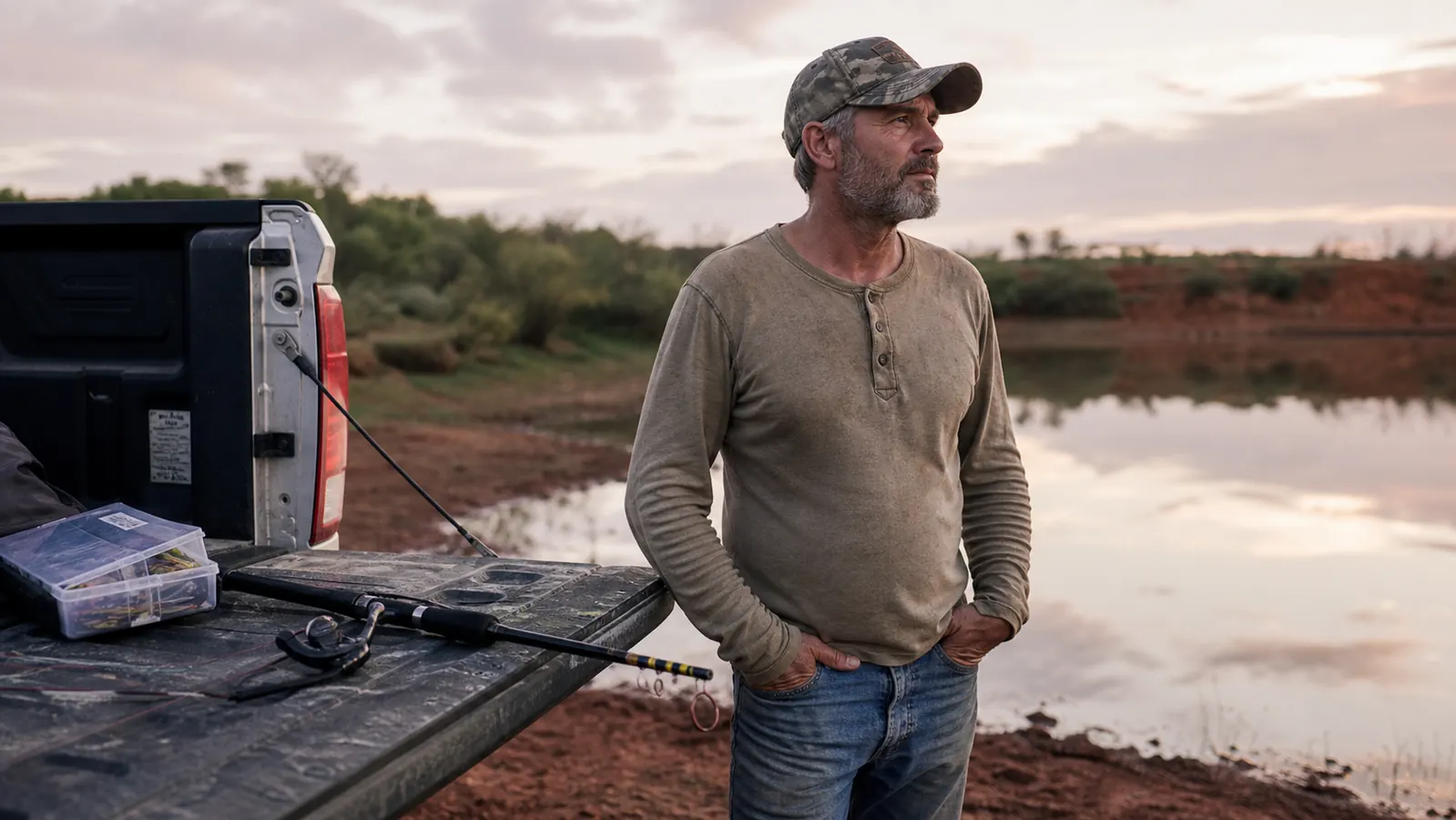
I'm Cole Merrick. I've fished red-dirt ponds and green Ozark creeks in eastern Oklahoma for going on thirty years, and I've gone through enough cheap combos to know the difference between a real flaw and a Tuesday-afternoon complaint from somebody who's never actually bent a rod into a real fish. My wife Sara thinks I own too many rods already, and she's probably right, but that means I've got a real basis for comparison when I say something is or isn't worth your money. This is the honest rundown on the PLUSINNO combo, the stuff that doesn't show up in the bullet points on the product page, written by somebody who actually fished it instead of just photographing it on a tailgate for a review.
The Quick Verdict
A genuinely capable telescopic combo for casual bank fishing and truck-bed duty, held back by real unit-to-unit guide alignment variance and a middle-section wobble you'll feel before you ever see it.
Amazon Check Today's Price →Before You Add This to Cart, Read What I Found in the Guides
I bought three of these to see if my first unit was a fluke. It wasn't entirely, but it also wasn't a dealbreaker. See the current listing, check the seller's return window, and read the rest of what I found below before you decide.
Amazon See Today's Price on Amazon -> →How I Put It Through Its Paces
I bought my first PLUSINNO combo in March, right when the ponds around Okmulgee started warming up enough for bass to move shallow. Over the next seven months I fished it on roughly forty outings, split between three farm ponds I have standing permission on, a stretch of the Deep Fork river, and two weekend trips to Grand Lake where I mostly used it for panfish off the dock while my son Wyatt ran the bass gear. I wasn't testing it in a lab. I was testing it the way most guys actually use a rod like this, which is to say hard, often, and without much babying.
Alongside that first unit, I ordered two more identical combos in June specifically so I could compare quality control across units rather than judge the whole line off one rod. That's where a lot of what follows comes from. Between the three rods I've got somewhere north of a hundred combined outings, more hooksets than I bothered counting, and at least a dozen fish over four pounds landed on them. I kept a rough log in a notebook I keep in the truck console, mostly so I wouldn't be relying on memory when it came time to write this.
What Nobody Tells You Before You Order One
The unboxing is fine. The rod feels lighter than it looks in photos, the case zips shut, and the reel spins smooth right out of the plastic. But two things need attention before your first cast, and the listing doesn't tell you either one. First, the reel seat threads come from the factory a little gritty, like there's dried grease in there instead of fresh. A drop of reel oil and a few turns fixes it, but if you don't do that, the seat feels rougher than it should for the next month of trips, and you'll notice it every time you snug the reel foot down before heading out.
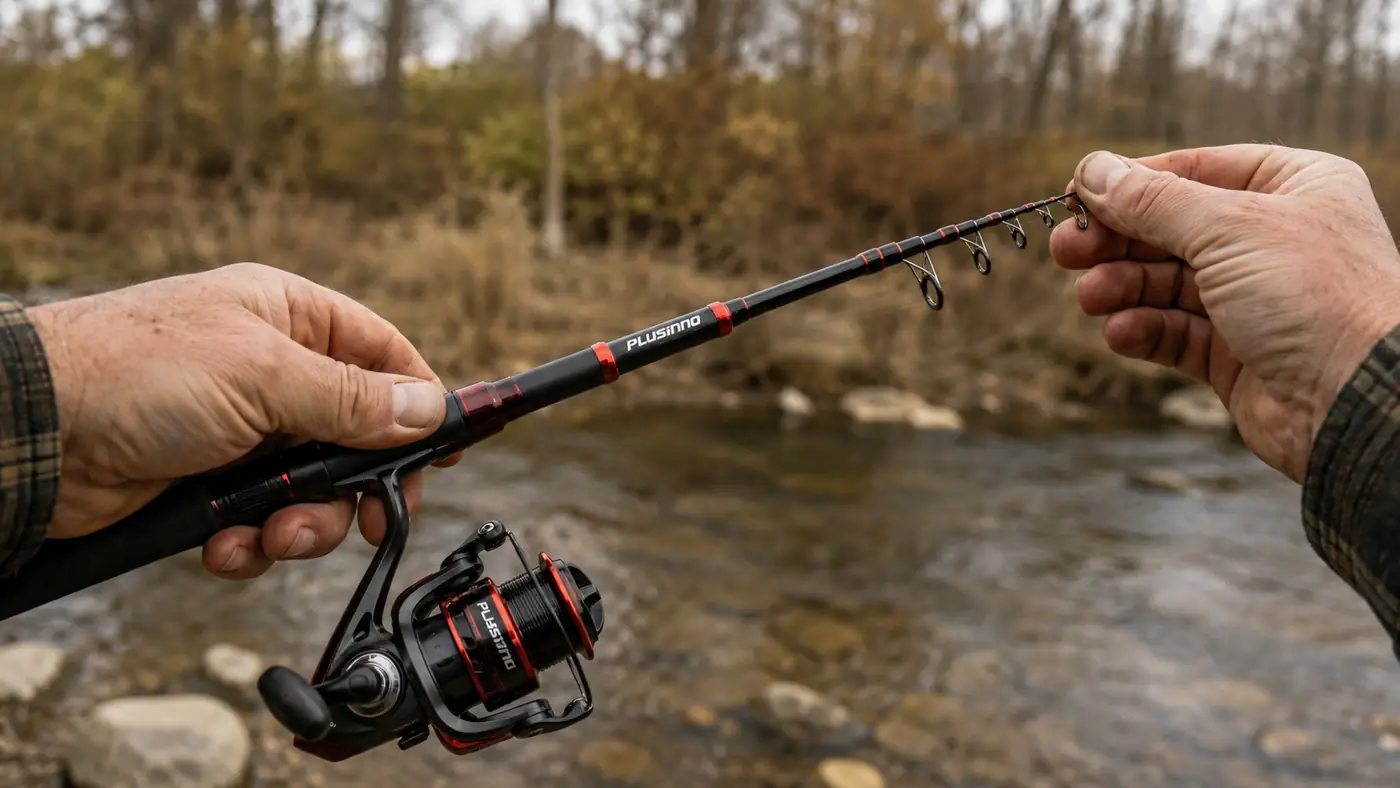
Second, and this is the bigger one, check every guide alignment before you extend the rod to full length for the first time. On my first unit, the second-from-tip guide eyelet sat canted maybe eight degrees off the line path. It's a small thing, but it will chew line coating over a season of casting if you don't catch it and twist it back into line by hand. PLUSINNO doesn't mention this because most buyers never look closely enough to notice, and by the time the line starts fraying near that guide, they blame the line instead of the rod.
None of this makes the combo unusable. It makes it a combo you inspect for two minutes before the first trip, the same way you'd walk around a used truck before you drive it off the lot. Skip that step and you might get lucky. I didn't, on unit one anyway, and I've talked to two other guys at my local bait shop who found the same canted-guide issue on their own units bought months apart, so it's not just bad luck on my end.
The Wobble Nobody Mentions
Here's the part that actually matters for how the rod fights a fish. Telescopic rods work by nesting sections that lock with a friction collar, not a solid blank. Under a normal cast and a normal retrieve, you'll never feel it. But set the hook hard on a stubborn bass buried in brush, or horse a channel cat off the bottom, and you'll feel a faint spring-back right around the third joint down from the tip. It's not dangerous and it's not going to snap on you under reasonable pressure, but it's there, and a one-piece graphite rod in this price range doesn't have it.
I noticed it most on hooksets past twenty feet, less on short pitches to the bank. It also got slightly more noticeable after about four months of regular folding and unfolding, which makes sense since the collars are wearing against each other every single time you collapse the rod for the truck. By August, on my most-used unit, I could feel the wobble on almost any hookset with real weight behind it, not just the hard ones. It never got bad enough to make me stop using the rod. It just stopped surprising me.
For what it's worth, I don't think this is unique to PLUSINNO. Every telescopic rod I've owned in this price bracket has developed some version of this same collar play over time. It's the tradeoff you make for a rod that collapses down to seventeen inches and fits behind a truck seat. If that tradeoff bothers you, telescopic just might not be the right category for you, regardless of which brand name is stamped on the blank.
How the Reel Actually Performs Under a Real Fish
PLUSINNO leans hard on the 12 plus 1 shielded bearing count in their marketing, and on paper that sounds like reel-shop money. In practice, bearing count isn't the whole story, and I've fished plenty of high bearing-count reels that still felt gritty inside a year. Retrieve feels smooth and mostly gritless on panfish and small bass, the kind of fish that never really tests the drag. Where it gets interesting is once you hook something with real weight behind it, and that's the part the spec sheet can't tell you.
I ran three separate drag tests this season: a 2 to 3 pound crappie and small bass class, a 4 to 6 pound channel cat and decent bass class, and a handful of 7 pound-plus flathead runs off a jug line I was tending nearby on the Deep Fork. The drag stayed smooth and predictable through the first two classes. Past that, on the bigger flathead pulls, the drag started to stick and release in small jerks instead of a clean, steady give. Nothing catastrophic happened, the line held, but it's not the buttery pull you'd get from a reel twice the cost.
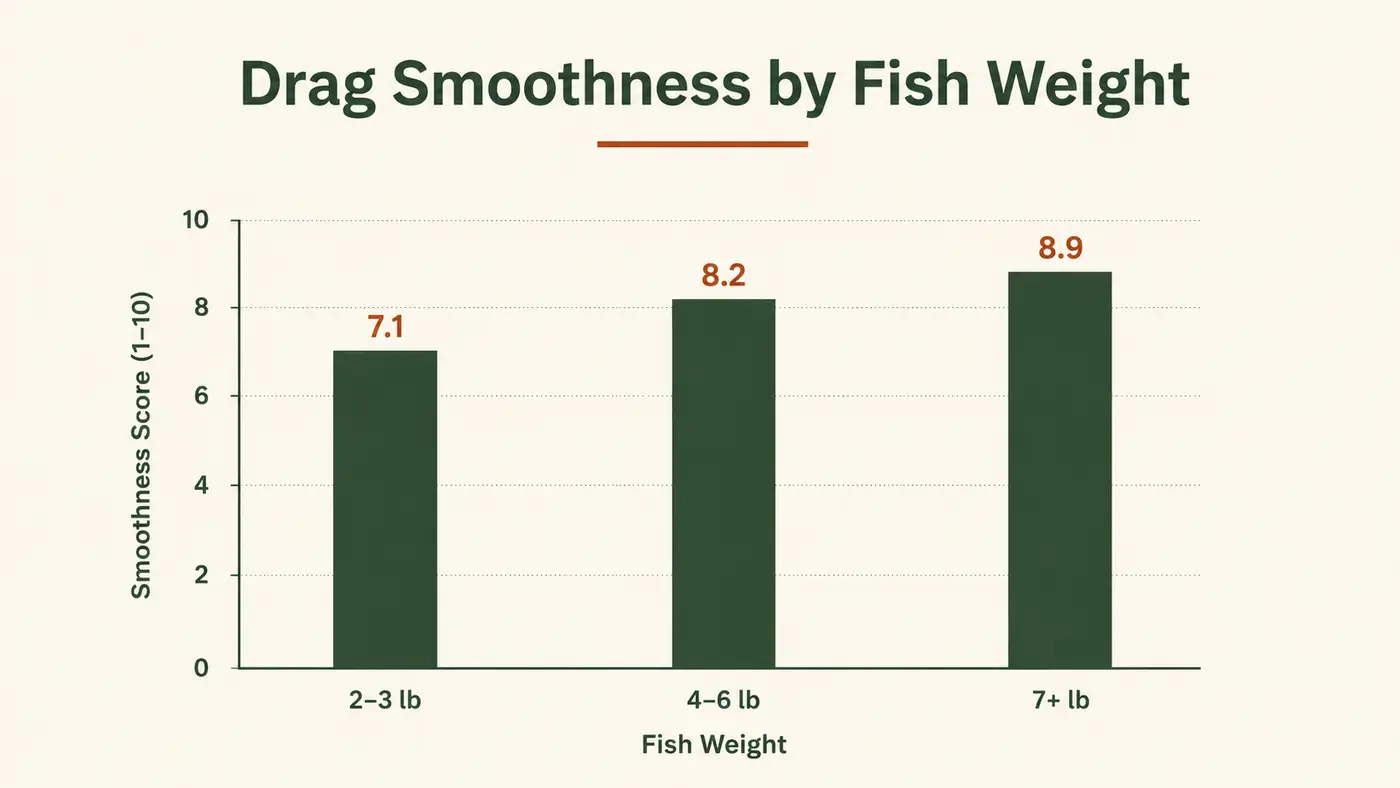
So the honest read is this: for the fish most casual anglers are actually catching, panfish, average bass, average catfish, the reel performs like it should. Push it into genuinely big-fish territory and you'll feel where the corners got cut to hit this price point. I'd put the reel's real ceiling somewhere around a 5 or 6 pound fish before the drag starts talking back to you.
Guide Alignment: The Part That Actually Matters
I ordered three of these combos specifically to see if my first unit's canted guide was a one-off or a pattern. Out of three, one was dead-on straight from the box, one had the same minor cant I described earlier, and one had a guide wrap that looked slightly uneven under close inspection, though it didn't affect casting. That's real quality control variance, unit to unit, and it's the single biggest honest knock I have against this combo.
It's a five-minute fix each time. Extend the rod fully, sight down the guide train against a straight edge or just eyeball it against a fence line, and gently twist any guide back into true. But you shouldn't have to do that on a new rod, and PLUSINNO's own materials don't warn you it might be necessary. If you're the type who never inspects gear before using it, this is the reason to build that habit here specifically, because a misaligned guide left uncorrected will eventually groove your line and cost you a fish at the worst possible moment.
I've started doing this check every time now, not just on new rods. Line groove from a bad guide shows up as a faint fuzzy patch on the line if you run it slowly through your fingers, and once you know what to feel for it takes about ten seconds per guide. Cheap insurance against a line failure on a fish you actually want to land.
What Held Up After Real Use, and What I'd Consider Instead
The EVA foam handle held up fine through a full season of mud, pond water, and getting tossed in the truck bed more times than I want to admit. No cracking, no peeling, grip stayed solid even wet. The reel foot and drag knob show zero corrosion after regular exposure to red-dirt pond water and a few brackish creek trips, which is better than I expected at this price.
The included carrying case is the weakest part of the whole package. The zipper on my second case started catching after about six weeks, and the foam padding inside compresses down fast if you're stuffing it in a truck console or under a seat. I replaced mine with a cheap rod sleeve from the hardware store and never looked back. Budget for that separately if you're rough on gear like I am.
I did look hard at the Ugly Stik GX2 as an alternative before settling back into the PLUSINNO for truck duty. The GX2 is a sturdier one-piece build with none of the telescopic wobble, but it doesn't collapse down for a pack or a small truck cab the way this combo does, and it costs more for that peace of mind. If you want the packable convenience, PLUSINNO is still the more sensible pick. If you never plan to collapse the rod at all, a one-piece build will outlast it.
What I Liked
- Genuinely affordable for a carbon fiber telescopic build
- Good sensitivity for panfish and average bass
- Packs down small enough for a truck console or backpack
- Reel stays smooth and gritless on small to medium fish
- Handle and reel foot held up well against mud and water over a season
Where It Falls Short
- Telescopic joint develops a faint wobble under hard hooksets over time
- Guide alignment varies unit to unit right out of the box
- Drag gets jerky instead of smooth once you're into bigger fish
- Included carrying case wears out faster than the rod does
- Not built for saltwater or heavy braid duty
This isn't a rod you baby. It's a rod you keep in the truck bed and forget about, and most days that's exactly what you want.
Who This Is For
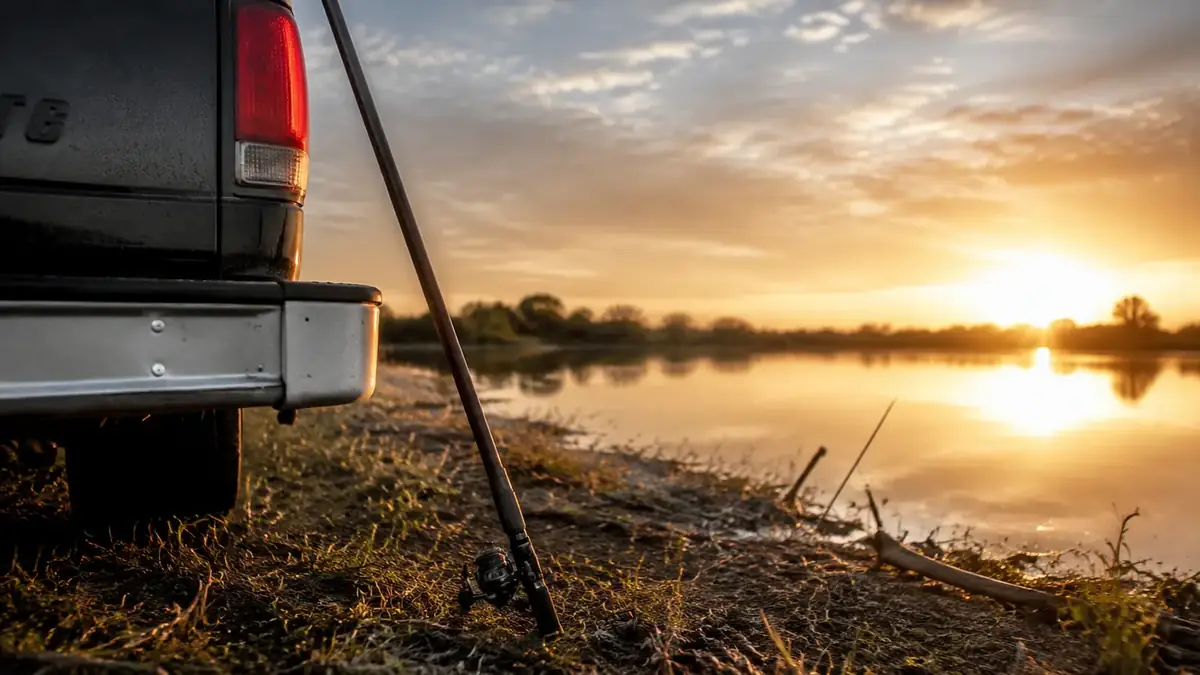
If you're a casual bank angler who fishes ponds, small lakes, or creeks a few times a month and wants something that packs down small enough to live behind the truck seat, this combo earns its keep. It's also a solid pick for backpackers who want a rod that doesn't take up real pack space, and for teaching a kid to fish without handing them something you'd cry over if it got left in the grass overnight. If you check the guides once before your first trip and oil the reel seat, you'll get honest use out of it for a full season or more.
Who Should Skip It
If you're chasing bigger fish on a regular basis, running heavy braid, or fishing saltwater where corrosion and drag reliability actually decide whether you land the fish, spend more and get a one-piece rod with a sealed drag system. Tournament anglers and anyone who wants gear that never needs a once-over before it goes in the water should also look elsewhere. This combo rewards a little bit of maintenance and forgives a lot of rough handling, but it isn't a rod that disappears into the background the way a premium setup does. If inspecting a guide or oiling a reel seat before your first trip sounds like more hassle than you're willing to take on, you'll be happier paying more for something that skips that step entirely.
Check Today's Price Before You Decide Either Way
Between the wobble, the guide variance, and the drag behavior on bigger fish, this combo isn't perfect. For casual bank fishing and truck-bed duty, it still earns its spot. See the current listing and current price on Amazon before you make the call.
Amazon See Today's Price on Amazon -> →