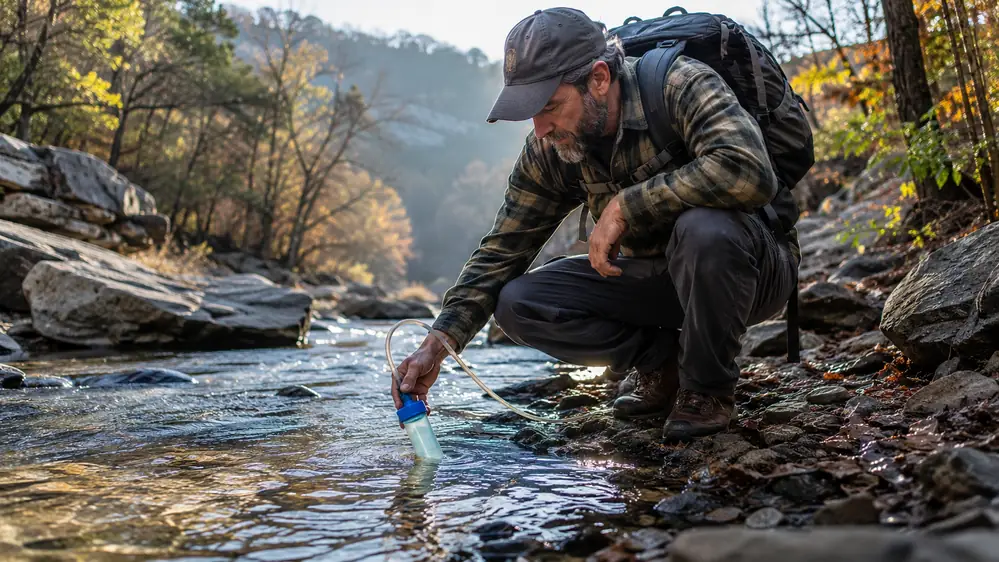
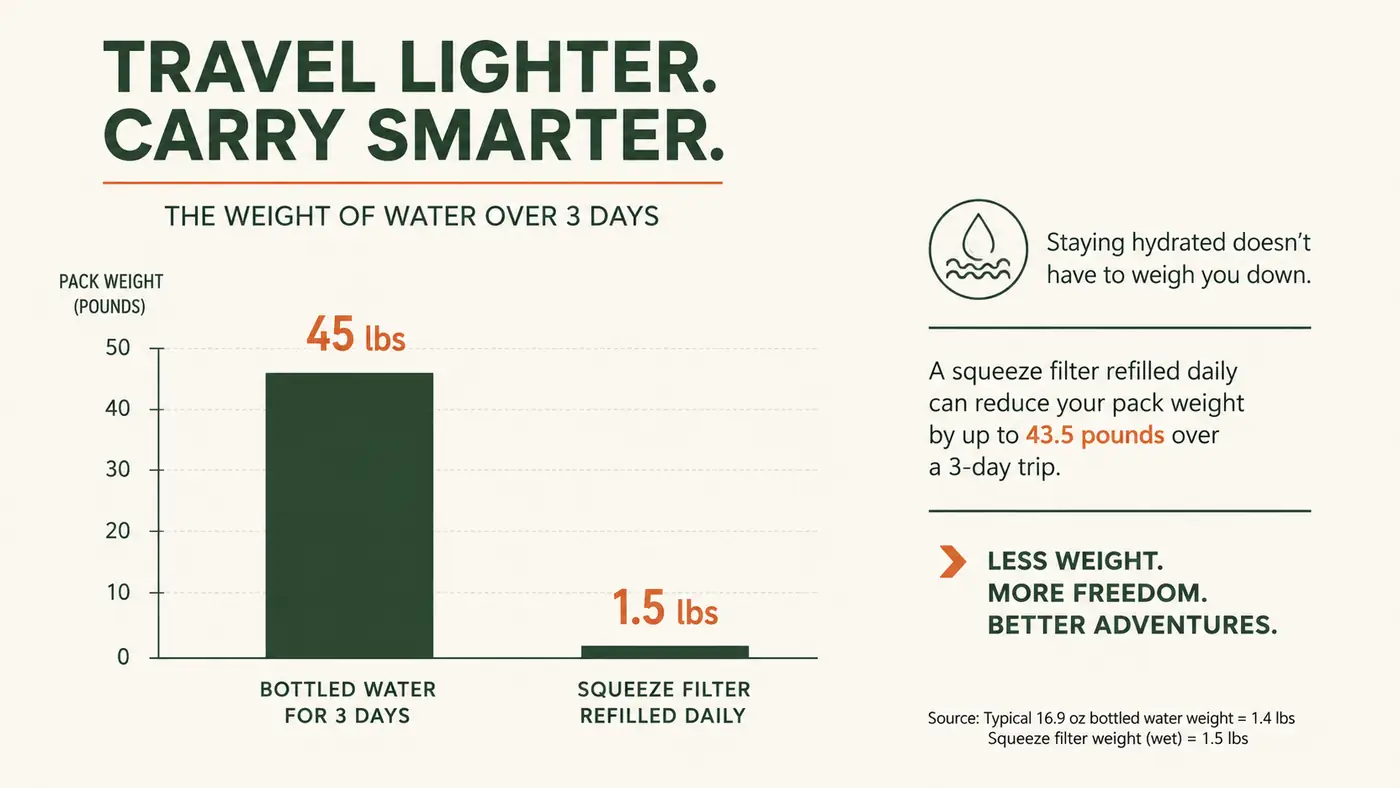
I used to load six bottles of water into my pack before a three-day trip through the Ouachitas, figuring more was safer than less. By the second afternoon my shoulders were raw from the strap weight and I still ran short crossing a dry stretch above Winding Stair Mountain. I sat down on a rock, dumped my pack, and did the math right there. Six bottles of water weigh close to nine pounds before you've hiked a single mile, and none of that weight does you any good once it's gone. I finished that trip on a half-empty canteen and a bad attitude, rationing sips for the last four miles back to the truck. That was the trip that finally pushed me to buy a squeeze filter instead of hauling my water supply in from town.
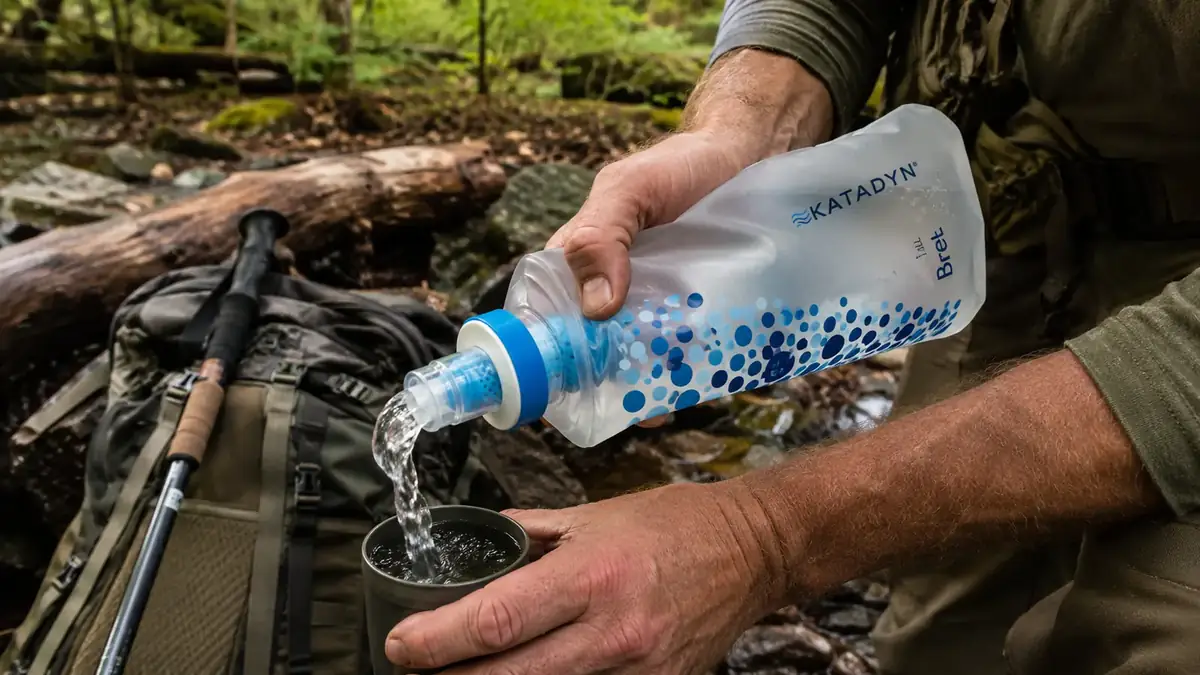
The filter I carry now is the Katadyn BeFree, a one-liter collapsible flask with a hollow-fiber filter built into the cap. It rolls up to the size of a pack of cards when it's empty and gives me clean water from any creek, spring, or lake I cross. These are ten reasons, based on real miles and real mistakes, why I think a squeeze filter beats bottled water on the trail almost every time.
Stop carrying your water supply on your back
The Katadyn BeFree is the flask I've had in my hip pocket every trip since that day in the Ouachitas, and it packs flat when you're not using it.
Amazon Check Today's Price on Amazon →You Stop Carrying Weight You've Already Used Up
A full bottle of water is dead weight the second you finish drinking it, but you're still carrying the empty container until you find a trash can. A squeeze filter flask like the BeFree collapses down to nothing once it's drained, so the only weight in your pack is water you haven't used yet. On a six-hour push through rolling hill country, that difference in what's riding on my back is the kind of thing I feel in my knees by the last mile.
You're Never Limited to What You Packed In
Bottled water runs out. It doesn't matter how many you brought, there's a number where you're out and still have miles left. With a squeeze filter, every creek, spring, and clear pool along the route is a refill station. I've topped off the BeFree at a trickle coming off a sandstone bluff that wouldn't have filled a cup by hand, and it still gave me a full liter of clean water in under two minutes.
The Flow Rate Beats Sucking Through a Straw Filter
I tried a straw-style filter for a season before switching, and drawing water through it uphill after a climb left me lightheaded more than once. Squeezing the BeFree pushes water through the hollow-fiber membrane with your own grip strength, not your lungs, so you get a real stream of filtered water without gasping for it after a hard stretch of trail. A fresh one fills a liter in under a minute and a half once you get the grip pressure right, and it doesn't slow down until the membrane actually needs a backflush.
It Packs Flat Instead of Fighting You for Space
A hard-sided bottle takes up the same cylinder of space whether it's full or empty, and it doesn't compress to fit around your sleeping bag or your stove. The BeFree's soft flask folds down when it's drained, so it tucks into a side pocket or squeezes between gear instead of forcing everything else in the pack to work around it.
You Never Run the Numbers Wrong Again
I've watched hiking partners guess low on bottled water for a weekend trip and spend the last five miles rationing sips, dry-mouthed and irritable. A squeeze filter takes that math out of the equation entirely, since you're not estimating gallons for three days, you're just refilling as the terrain gives you water. That one change removed an entire category of planning mistakes from my trips.
It Filters Out What Untreated Water Actually Carries
Backcountry water looks clear right up until it isn't, and giardia doesn't announce itself before it puts you flat on your back for a week. The BeFree's hollow-fiber filter is rated to remove bacteria and protozoa down to 0.1 microns, which means the same creek that looks clean enough to drink straight actually gets treated before it hits my mouth. Bottled water only protects you until it runs out, and then you're drinking whatever's in front of you anyway, treated or not, because thirst doesn't wait for a better option.
You're Not Hauling Trash Out With You
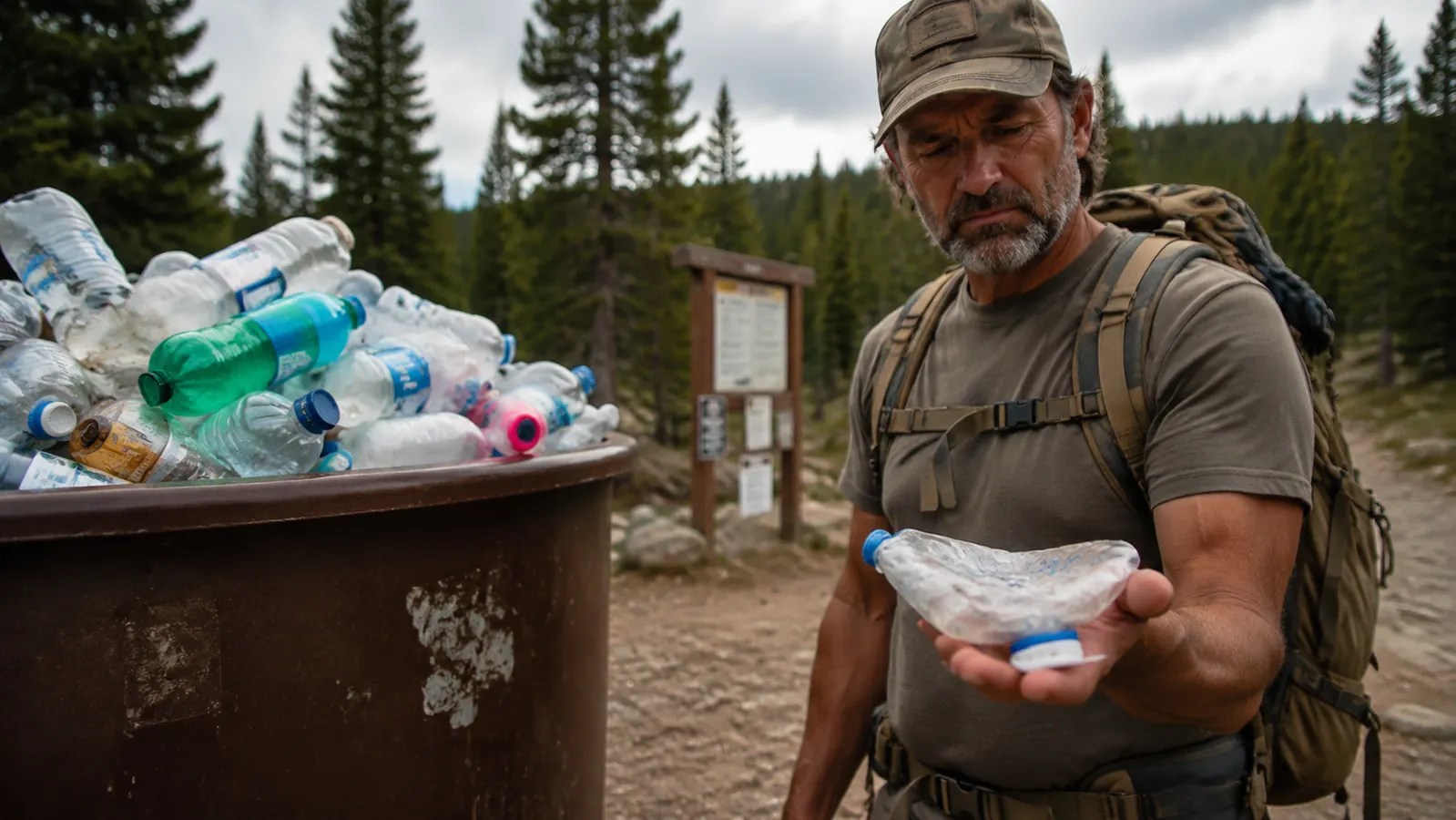
Every bottle you pack in is a bottle you either pack out or leave behind at a trailhead can, assuming there is one. On a multi-day trip that adds up to a small pile of plastic riding in your pack the whole way home. With a squeeze filter, there's nothing to pack out, no empty bottles rattling around in the bottom of your bag on the drive home.
It Handles Heat Without Cracking Like Rigid Bottles Do
I left a hard plastic bottle in a hot truck bed once and it came out warped enough that the lid never sealed right again. The BeFree's soft flask is flexible by design, so it doesn't split or crack under heat the way a rigid bottle can. It's held up through a dozen trips in Oklahoma summer heat without a single leak at the seams.
One Filter Replaces a Whole Shopping Trip Before Every Hike
Before I switched, every trip started with a stop for a case of bottled water, one more errand wedged between packing gear and loading the truck. Now I fill the BeFree from my own tap before I leave and refill it from the land once I'm out there. It's one less thing standing between me and actually getting on the trail, and one less thing I forget at the store the morning I'm trying to get out the door.
It Pays for Itself Trip After Trip
A case of bottled water isn't expensive once, but it's an expense every single trip, season after season, for as long as you hike. The BeFree is a one-time purchase that just needs the filter cleaned or replaced on schedule. Two years in, mine has outlasted more cases of bottled water than I can count, and it still fits in the same hip pocket it did on day one.
What I'd Skip
I'd skip pump filters for solo trips, they work fine but they're bulkier and slower than a squeeze setup for the amount of water one hiker actually needs. I'd also skip UV pens that depend on batteries, because a dead battery twenty miles from the truck leaves you with untreated water and no backup plan. And I'd skip trusting any water source that looks clear without running it through something first, since the water that gets people sick is almost always the water that looked perfectly fine going down. I'd also skip buying a filter and never using it before a real trip, because the first time you learn a filter's quirks shouldn't be twelve miles from the trailhead.
The best water system on the trail isn't the one you packed the most of. It's the one that keeps working no matter how far you've walked.
Two years in, this is still what's in my hip pocket
If you're tired of hauling bottled water uphill, the Katadyn BeFree is the piece of gear I tell every hiking partner to buy before their next trip.
Amazon Check Today's Price on Amazon →